It’s Raining, It’s Pouring: Stories About Rain

Rain books by Jonas and Alyssa

Rain books by Jonas and Alyssa

I’ve lived in the Bay Area now for almost 15 years, and I still don’t understand the weather.  The only things I know for certain are that it’s good to bring a jacket, even when it’s seventy degrees outside, because ten minutes from now it might be twenty degrees colder.  September is often hot.  June is often cold.  And winter is always rainy.  Until now.  Now the reservoirs are so low that we’ve all been urged to cut our water usage by twenty percent, and many towns across the state are in danger of running out of water entirely.

So, in lieu of a rain dance, I did a rain storytime.  The weather report now says it’s going to rain all this weekend, so maybe it worked!  Here’s what we read:
rain

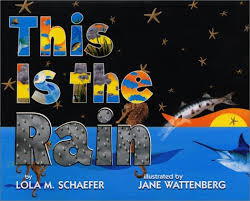
This is the Rain by Lola M. Schaefer; illustrated by Jane Wattenberg (Amazon.com link)

There’s a new goal in our library system to incorporate more nonfiction into storytimes, so I gave it a try tonight.  This book is actually a cumulative poem about the water cycle.  It starts with “This is the ocean, big and vast/that holds the rainwater from the past.”  Each page adds a new part of the cycle: water vapor, clouds, and then a depiction of water running down streams back into the ocean.  I had to explain some of the terminology, like “vapor,” and talk a bit about what was happening.  I don’t think it was the best book I could have chosen in terms of giving a clear explanation of what makes the rain, but the kids loved the illustrations!  Jane Wattenberg has filled the book with funny visual jokes: dinosaurs in the ocean (to represent the past); starfish in place of stars; birds holding umbrellas. The kids were all clambering around me, pointing and explaining over every page, and the book was quickly snatched up at the end.
ready

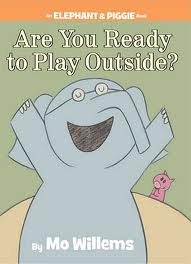
Are You Ready to Play Outside? by Mo Willems (Amazon.com link)

Mo Willems makes my job so easy.  All of his books are so much fun to read aloud, but especially the Gerald and Piggie books.  They are written ostensibly as beginning readers, with very simple text, usually with a fair amount of repetition.  But they are also hilarious.  They are especially fun to read with a partner, and they would be perfect for small groups of kids to act out.  In this one, Piggie is upset when it starts raining, ruining her plans to play outside.  Then she and Gerald discover how much fun it can be to play in the rain… just as the rain stops.  Luckily, Gerald saves the day by creating a rain shower of his own.  I got lots of laughs over this one, and a small tugging match ensued at the end over who was going to get to check it out.

rainy

Rainy Day! by Patricia Lakin and Scott Nash (Amazon.com link)

This book also reads like a beginning reader, with simple, rhyming text.  Four crocodiles named Sam, Pam, Will and Jill are all bored on a rainy day.  They decide to go outside anyway, and wind up playing mini-golf and baseball (with hailstones!), finding a dog, and going to the library.  The kids liked the rabbit librarian, cowering in terror from the crocodiles.
patterson

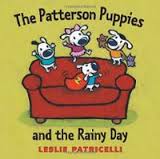
The Patterson Puppies and the Rainy Day by Leslie Patricelli (Amazon.com link)

I brought this one out in my stack, but I hadn’t planned to read it because it was so similar to Rainy Day, but several of the kids spotted the cover and begged to hear it.  I was glad because it was a hit!  This book is about four puppies who are bored on a rainy day, who decide to pretend they are at the beach.  In the end, they pour water all over the living room floor, and have a wonderful time playing in the “ocean,” until their parents walk in the room…

SONGS AND ACTIVITIES:

If All the Raindrops

I used this song a lot when my daughter was a toddler, to get her to open her mouth for the toothbrush.  For storytime, I sang the first verse through normally, then asked the kids what they would like the snow and sunbeams to be.  We added their suggestions into the second and third verses, so we had sunbeams made of lemonade and butter (and hair!).   These are the original lyrics (click on the arrow above to hear the tune):

If all the raindrops
Were lemondrops and gumdrops
Oh, what a rain that would be!
Standing outside, with my mouth open wide
Ah Ah Ah Ah Ah Ah Ah Ah Ah Ah!
If all the raindrops were lemondrops and gumdrops,
Oh, what a rain it would be!

If all the snowflakes
Were candy bars and milkshakes…

If all the sunbeams
Were bubblegum and ice cream…

Making a Rain Storm

This is such a simple activity, but always fun.  I ask the kids to do what I’m doing in order to make a rainstorm.  First we rub our hands together, then click our tongues (to sound like drops of rain), then clap our hands, then slap our knees, then stomp our feet.  Finally I have them all stand up, and we all jump at the same time to make a thunderclap, and then we do all of the actions in reverse to make the rain “stop.”

CRAFT: Rain on the Green Grass Book

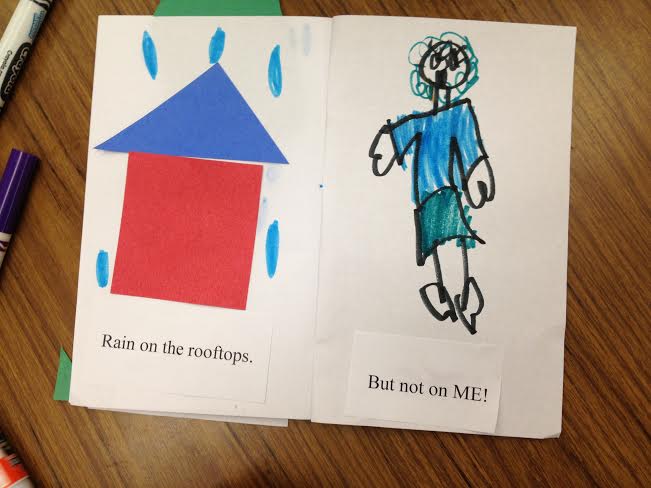
photo (72)Rain book by May

Rain book by Olivia

Rain book by Olivia

I got the idea of making a book from my coworker, Reeba Lynn.  I was almost kicking myself for not doing one earlier.  In Kindergarten, my son was so proud of his “keep box,” a little collection of simple paper books he made throughout the year.  And my daughter has made several similar books in her preschool class that she loves to read to me.

The book Reeba showed me had a more complicated rain poem, but I decided to do the nursery rhyme Rain on the Green Grass (Rain on the green grass/Rain on the tree/Rain on the rooftops/But not on ME!).  I cut out Reeba’s umbrella picture (there are lots of other ones online), and printed out the words to go on each page (here’s a Word document for the text: Rain on the green grass).  For the rest of the illustrations I cut out basic shapes from colored construction paper: jagged green strips for the grass; lumpy round green shapes for the treetops; brown strips for the tree trunk; red squares for the house; and blue triangles for the roof.  It did take a fair amount of prep, but I was able to do a lot of the cutting with the paper cutter.

I folded two sheets of white paper to make each book, and stapled them along the side.  I had an example for the kids to follow, and for the most part, they did a good job (there were a couple of kids who accidentally made their books read from left to right, but I explained that’s how books are made in Japan, so they could either read it that way, or consider it a whole new rhyme).  If I had more time, I would have glued the text on ahead of time, so they could just add the pictures.  I had them glue the umbrella on the cover, along with the title, “RAIN! by ________.”   Then they glued the text and pictures on each page, and added rain with markers.  For the last page (“But not on ME!”), I asked them to draw a picture of themselves.  Each book turned out a little bit differently, and they all seemed engaged by the process of making them.

OTHER BOOKS ABOUT RAIN:

There were lots of other books I could have read (I had originally planned to read the new California Young Reader Medal nominees, but some of the books didn’t come in time, so I had to change topics, and work with the rain books that were available in our small local branches).  Anyway, here are a few others:

Down Comes the Rain by Franklin Branley; illustrated by James Graham Hale (Amazon.com link)

Franklin Branley writes wonderfully clear science books for early elementary school children.  This one explains every step of the water cycle with a few simple science experiments to illustrate some of the concepts.

Storm is Coming! by Heather Tekavec; illustrated by Margaret Spengler (Amazon.com link)

When the animals on a small farm hear there’s a storm coming, they all think Storm must be a scary monster.  They hide in the barn in terror, and then are happy when wind, rain, lightning and thunder apparently scare Storm away.  Cute story with colorful illustrations.

Umbrella by Taro Yashima (Amazon.com link)

Such a sweet story, I wish I had been able to get it in time to share.  A little girl can’t wait to wear her new red rain boots and carry the umbrella she receives for her birthday, but her parents insist she has to wait for a rainy day.  It’s not only a lovely story about rain, but about the small steps kids take towards growing up.

Red Truck by Kersten Hamilton; illustrated by Valeria Petrone (Amazon.com link)

Perfect for toddlers, this is about a red tow truck who pulls a school bus from a deep puddle.  There are lots of fun truck noises for the kisd to join in on.

Cloudette by Tom Lichtenfeld (Amazon.com link)

A little cloud worries that she is not big enough to make a difference, until she finds her own way to save the day.   I’ve read this one several times, and the kids always love it.  The illustrations are adorable.

Come On, Rain! by Karen Hesse; illustrated by Jon J. Muth (Amazon.com link)

This one was a little too long for my group, but it sums up how I’ve been feeling through this dry winter.  A little girl in a hot city neighborhood can’t wait for the rain.  When it finally comes, she and her friends go out dancing in their bathing suits, and so do their mothers!

Thunder Cake by Patricia Polacco (Amazon.com link)

This one was also a little too long, but it’s one of my favorite picture books.  A little girl is afraid of the thunder, until her grandmother teaches her how to make thunder cake.  I’ve never tried the recipe on the last page, but it looks delicious.  The story also teaches kids how to count the seconds between the lightning and thunder to see how close the storm is.  We very rarely get thunder here (I actually miss it!), but this is a lovely story about overcoming your fears.

It’s Raining, It’s Pouring by Kin Eagle; illustrated by Rob Gilbert (Amazon.com link)

An extended version of the nursery rhyme, featuring an old man in a wide variety of weather and precarious situations.  The illustrations are colorful and funny.  I’ve used this many times for baby and toddler storytimes.

The Aunts Come Marching by Maurie J. Manning (Amazon.com link)

A clever parody of the Ants Go Marching song (which would also have been a good one to include for storytime).  This is a counting book about a little girl and her aunts who go marching through town in the rain.  Lots of great drum noises, and fun to sing.

What are your favorite books about rain?  Please share them in the comments.

Confessions of a Library Thief

beauty

When I was 12 years-old, I stole a book from the middle school library.

It wasn’t a grand heist.  I didn’t shove it under a heavy sweater and scale the electronic gates like a ninja.  I doubt the library even had electronic gates.  I simply never returned the book, and when the school librarian asked about it, I swore up and down that I had brought it back.  And maybe because I was a good student, or maybe because my mother was a teacher, or maybe because she was tired of nagging students about overdue books: whatever the reason, she chose to believe me, and took it off my record.

The book was Beauty, a first person retelling of Beauty and the Beast by Robin McKinley.  I couldn’t bear to return it.  It was my favorite book.

Thirteen years later, as a newly-minted children’s librarian in a public library, I was anxious to add Beauty to our juvenile fiction collection.  Since I was new and the branch was small, all of my purchases were screened, and I was not allowed to purchase an older title like Beauty.  Instead I bought a copy with my own money and sneaked it surreptitiously onto the shelves.  I then proceeded to rave about it to every middle grade girl who walked in the door.  It was like introducing an old friend.  I was so happy to see it getting checked out to this whole new generation of girls.

And then one of the little stinkers stole it.

One day it simply wasn’t there.    I hope whoever took it loved it as much as I did.  Maybe she became a librarian.  Karma truly is a bitch.

In any case, I now have my own copy (another one I bought for myself many years ago).  I’m saving it to give to my daughter when she’s old enough.  Already she asks me, whenever I read her a book, “Is this from the library?”  She hates returning books.  I know she’s not going to want to let this one go either.

There are many other books I am saving for her.   When I think about them as a group, I realize they are all about girls, and each of those girls became part of the girl I was hoping to be: part Pippi Longstocking (by Astrid Lindgren), strong and unflappable (the bag full of gold would also be nice); part Sara Crewe of A Little Princess by Frances Hodgson Burnett, kind and stoical with a story for every situation; part Alanna of Trebond from the Song of the Lioness series by Tamora Pierce, a girl brave enough to disguise her identity in order to pursue her dream of becoming a knight.

I am sincerely enjoying my daughter’s preschool years, and dreading some of the times ahead that I know may be hard for both of us.  But I am itching to introduce her to my favorite books.  I hope that she loves and lives in them the way that I did.   Here are just a few:

The Wonderful Wizard of Oz by L. Frank Baum

I loved the movie The Wizard of Oz so much that in Kindergarten I told the teacher my name was Dorothy, and for a day or so (so I’m told) I refused to answer to any other name.   I blew through this whole series a few years later, and although I’ve forgotten a lot, I’ll never forget the startling ending of The Marvelous Land of Oz, the princess with thirty interchangeable heads in Ozma of Oz,  or Polychromethe, The Rainbow’s Daughter from The Road to Oz (I insisted on dressing as her for Halloween one year.  There was definitely no commercial costume available for that, but my mom kindly made me one.)

The Lion, the Witch, and the Wardrobe by C.S. Lewis

Another fantasy world I spent a lot of time in as a child was Narnia.  I loved the idea that the time spent there was like no time at all in our world, making it the best kind of escape.  Although the series has been rearranged since then, and now starts with The Magician’s Nephew, to me the wardrobe will always be the best way in.

Emily of New Moon by L. M. Montgomery

I will probably read Anne of Green Gables with my daughter first, because it’s so much funnier, and was definitely one of my favorite books too.  But I loved Emily Starr, a more serious, dreamy orphan who lives in her own stories, and has a mystical attachment to the natural world around her.  I wonder if my daughter will identify with her as much as I did, but I suspect she’ll be drawn more to fiery, spirited Anne, with her hilarious mishaps and rich imagination.

The Hero and the Crown by Robin McKinley

Winner of the 1985 Newbery Medal.  An unforgettable fantasy novel about Aerin Firehair, a king’s daughter who battles a dragon.  I loved this one almost as much as Beauty, and I had a crush on the the character of Luthe (one of the many fictional characters I pined after).

Howl’s Moving Castle by Diana Wynne Jones

The Wizard Howl was another one of my literary crushes.  Plus this book made me laugh out loud.   A fairy tale about Sophie, the eldest of three daughters, who enrages the Witch of the Waste and is turned into an old woman.  I can’t tell you how many times I read this. I know it was a lot.

A Wrinkle in Time by Madeleine L’Engle

I always loved mousy, brilliant Meg, and her genius brother Charles Wallace.  I was terrified by IT, the evil pulsating brain, and fascinated by the idea of the tesseract.  I think this was probably the first science fiction novel I read as I child.  It was a wonderful gateway into the genre, and one I will never forget.

These are just a few of the books that I read and reread and dreamed about. I don’t know if my daughter will have the same tastes in books that I do, and of course, there’s a whole world of new books out there to feed her imagination. But I’m hoping as she gets older she will love at least a few of my old friends, although I hope she is never compelled to steal one.

The Results Are In! Reading the 2014 Caldecott Award Winners

locomotive

This past Monday, I woke up early to catch the ALA Youth Media Awards online.  I was most curious about the Caldecott Medal because I had promised to read the medal winner and the Caldecott honor books to two classes of third graders later that morning.

I’ll confess that I was a little dismayed by the results.  Yes, they were all wonderful choices, but the winning book was extremely wordy, and all three of the honor books were wordless, or nearly wordless.  Sharing wordless books with a large group is a bit of a challenge. But a promise is a promise, so I shared all four books with both classes that day, and with two classes of second graders later that week.

I was especially nervous about reading the Medal winner, Locomotive by Brian Floca.  It’s a mini-history lesson that recreates a trip from Omaha, Nebraska to Sacramento, California by train in the 19th century.  Floca packs an enormous amount of detail into the text, including how the railroad was built, how the train was operated, and the range of landscapes it passed through.  It’s too long to share with the toddler and preschool groups I usually read to, so I had never read it aloud to a group, and wasn’t sure if it would hold the kids’ interest.  I was relieved to find that it did.

Floca knows his audience well.  Amid all the facts about the train and the railroad, he throws in little details to grab kids’ attention.  All four classes were gleefully disgusted by the idea that the toilet dumped out onto the tracks, and that you could tell if a switchman (the man responsible for hitching the engine to the train) was new to his job if he still had all his fingers.  Floca also portrays visually the rickety terror of the narrow wooden trestles, the darkness of the rough-hewn mountain tunnels, and the dangers that could befall a train with a careless engineer.

By the time I read to the second grade, I was actually looking forward to sharing the journey.  I told the kids we were going to go on a train ride.  I showed them the map on the inside cover, illustrating how the track was built in two parts that met in Promontory Summit in Utah.  And then I read the book.  Along the way, we talked about the different landscapes, and what it would have been like to travel them by wagon before the railroad was built.  We talked about the telegraph, and what it meant to be able to send messages quickly across the country.

The kids seemed truly engaged by the book, exclaiming over the details, and asking questions about the illustrations and the current state of the railroad (I just read that most of the original track is gone, but parts of it are still in use.  Here’s a wikipedia article with a lot more detail).  But I wasn’t sure how the book had gone over until yesterday, when I ran into the mother of one of the second grade boys.  She said, “My son said you read the best book to his class!  Something about a locomotive.  He never tells me anything that happens in school, so it must have really made an impression on him.”

So kudos to Brian Floca for making history so exciting that kids even want to talk about it after school!

journey

I did “read” the Caldecott Honor books to the classes as well, and they loved them.  They exclaimed over every page of Journey by Aaron Becker, a beautiful wordless story about a girl’s adventure with a magical red crayon.  I loved that in every class, around the fourth or fifth page, the light would dawn across the group, and they’d all start saying things like: “This is like…” “This reminds me of…”  “That book!”  “The kid with the purple crayon!”  And I’d have to stop while they put the pieces together, until finally someone would shout out, “Harold and the Purple Crayon!”  It was so much fun to see them making connections, and getting excited about the story as it unfolded.

My favorite part was when the bird brings the captured girl her red crayon, and she draws a rectangle on the floor of her cage.  “What is she drawing?” I asked.  “An escape hatch!” someone would shout.  “A door!” And then I’d turn the page, and as a class they would exclaim, “A flying carpet!” and you could hear the wonder and excitement in their voices.  Sharing this book made me feel like a magician.  I loved every minute of it.

flora

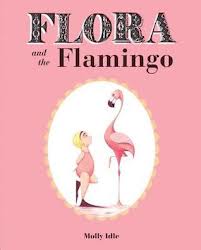
Since the kids had been sitting for a while by now, for Molly Idle’s Flora and the Flamingo I had them stand up and try to emulate the motions of the flamingo, the way the little girl in the book does.  This got lots of giggles, especially when they had to put their heads between their legs, the part that makes the little girl fall down. This is a charming book, especially for fans of ballet, and several kids (admittedly mostly girls) said it was their favorite.

wuffles

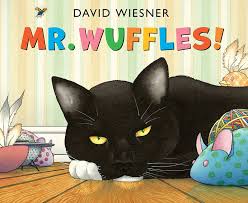
All four classes loved Mr. Wuffles by David Wiesner.  I explained that David Wiesner had won the Caldecott Medal three times already (for Tuesday, The Three Pigs, and Flotsam) and a Caldecott Honor for Sector 9.  Clearly he knows what he’s doing.  Mr. Wuffles is a comic book-style story about a spaceship full of tiny green aliens who nearly fall prey to a big black-and-white cat named Mr. Wuffles.  The portrayal of the cat, who disdains all of his actual toys, but torments the poor aliens, is spot on.  The kids loved the confab between the aliens and the ants, who plot out an escape plan together.  And it’s fascinating to think about an ant civilization, complete with history that they record on the walls.  I wasn’t sure if I would be able to convey the story to such a large group, since there is so much tiny detail in the illustrations, but they loved it.

At the end of the classes, I asked them to vote on the book they liked the best.  All the books had several votes, but Mr. Wuffles was the clear winner.  Granted, I had read that one last, so it was freshest in their memories.  But I figure David Wiesner is kind of the Meryl Streep of the Caldecott Awards.  We all know everything he does is award-worthy, but they can’t give him the award every year.

Anyway, in spite of my trepidation at sharing what seemed like four challenging books, the kids loved all of them, and I ended up having a blast.  Many thanks to the members of this year’s Caldecott Award Selection Committee!

The Year of the Horse

Paper Rocking Horse by Kiki

Paper Rocking Horse by Kiki

This year, Chinese New Year begins on January 31, and it’s the year of the Horse (you can find a list of all the animal signs and dates on TravelChinaGuide.com).

I didn’t know much about Chinese New Year until we moved to the Bay Area, but it’s such a fun and colorful celebration.  At my son’s school, each Kindergartner decorates a box in bright colors, with holes in the front so they can wear the box on their heads and still see out.  One of the teachers wears a big dragon’s head, and the kids line up behind her, making a huge 60-person dragon that winds around the play-yard, while the first graders pop big sheets of bubblewrap behind them.  It’s something the whole school looks forward to every year.

For storytime this week, I read books about horses and Chinese New Year.

dragon dance

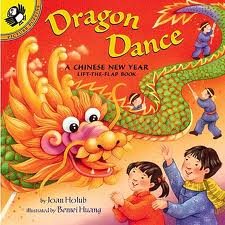
Dragon Dance: A Chinese New Year Lift-the Flap by Joan Holub; illustrated by Benrei Huang (Amazon.com link)

This one was new to me, but the kids always love Lift-the-Flaps (although they argue over who is going to get to open them).  It’s a simple rhyming book that explains the different parts of the New Year celebration: sweeping away the old year, buying fish and flowers at the market, getting red envelopes, and of course, enjoying the big dragon parade.  The illustrations are warm and colorful.  A good introduction to the holiday for toddlers on up.

clip

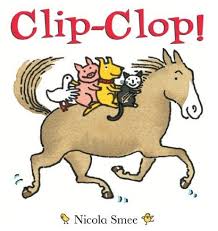
Clip Clop by Nicola Smee (Amazon.com link)

This is actually a board book, and unfortunately out of print, but it’s a great horse book, especially for younger kids (I read it again today to both a preschool class, and a toddler storytime, and they all loved it).  Mr. Horse offers a cat, a dog, a pig and a duck a ride on his back, but when he gallops too fast, and then stops suddenly, they all fly off into a haystack.  The kids enjoy saying the repeated, “Clip Clop!  Clippety Clop” lines.

unicorn

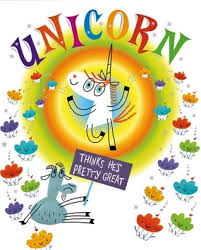
Unicorn Thinks He’s Pretty Great by Bob Shea (Amazon.com link)

Okay, I know unicorns are not horses, but I thought the kids would love this one, and they did.  It was the clear favorite of the evening, for the 5 year-olds especially.  Goat is jealous of Unicorn, and why wouldn’t he be?  Not only can Unicorn fly, he makes it rain cupcakes!  But when Goat finally meets Unicorn, he finds that he’s got some special talents of his own that Unicorn admires, and to Goat’s surprise, they end up becoming friends.  I love all of Bob Shea’s books, especially I’m a Shark and Oh, Daddy!

my pony

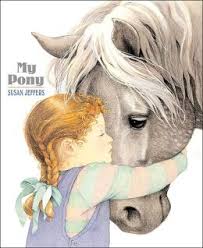
My Pony by Susan Jeffers (Amazon.com link)

This is the book for little girls who love horses.  I would have been all over it as a kid.  The little girl in this story wants a pony more than anything else in the world, but her parents say a pony is too expensive, and they don’t have room for it.  So she draws a pony instead, a beautiful dapple-gray she calls Silver, and together they fly through the sky and meet lots of other ponies.  The illustrations are gorgeous.

SONGS:

Giddy-up!

I do this one often as a bouncing rhyme for babies and toddlers.  This time I had the kids gallop in a line around one of the bookshelves.  They especially liked the sudden “Whoa!” when we would all stop short. You sing it to the tune of The William Tell Overture:

Giddy-up, giddy-up, giddy-up-up-up!
WHOA, Horsie!

Old MacDonald Had a Farm

INSTRUMENT PLAY WITH A CD: Hop Up, Ladies from Putumayo Folk Playground (Amazon.com link)

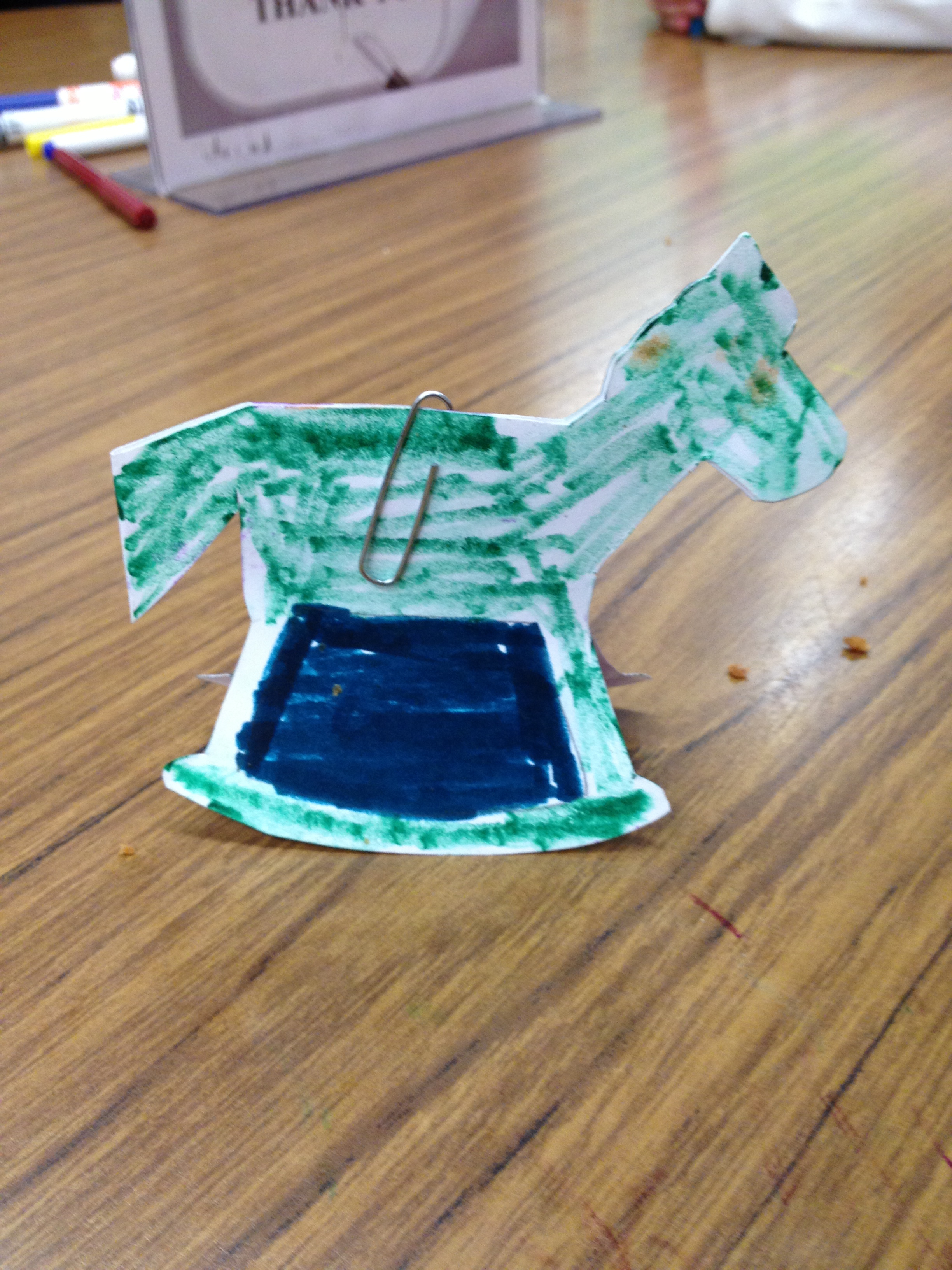
CRAFT: Paper Rocking Horses

photo (67)

Paper Rocking Horse by Kiki

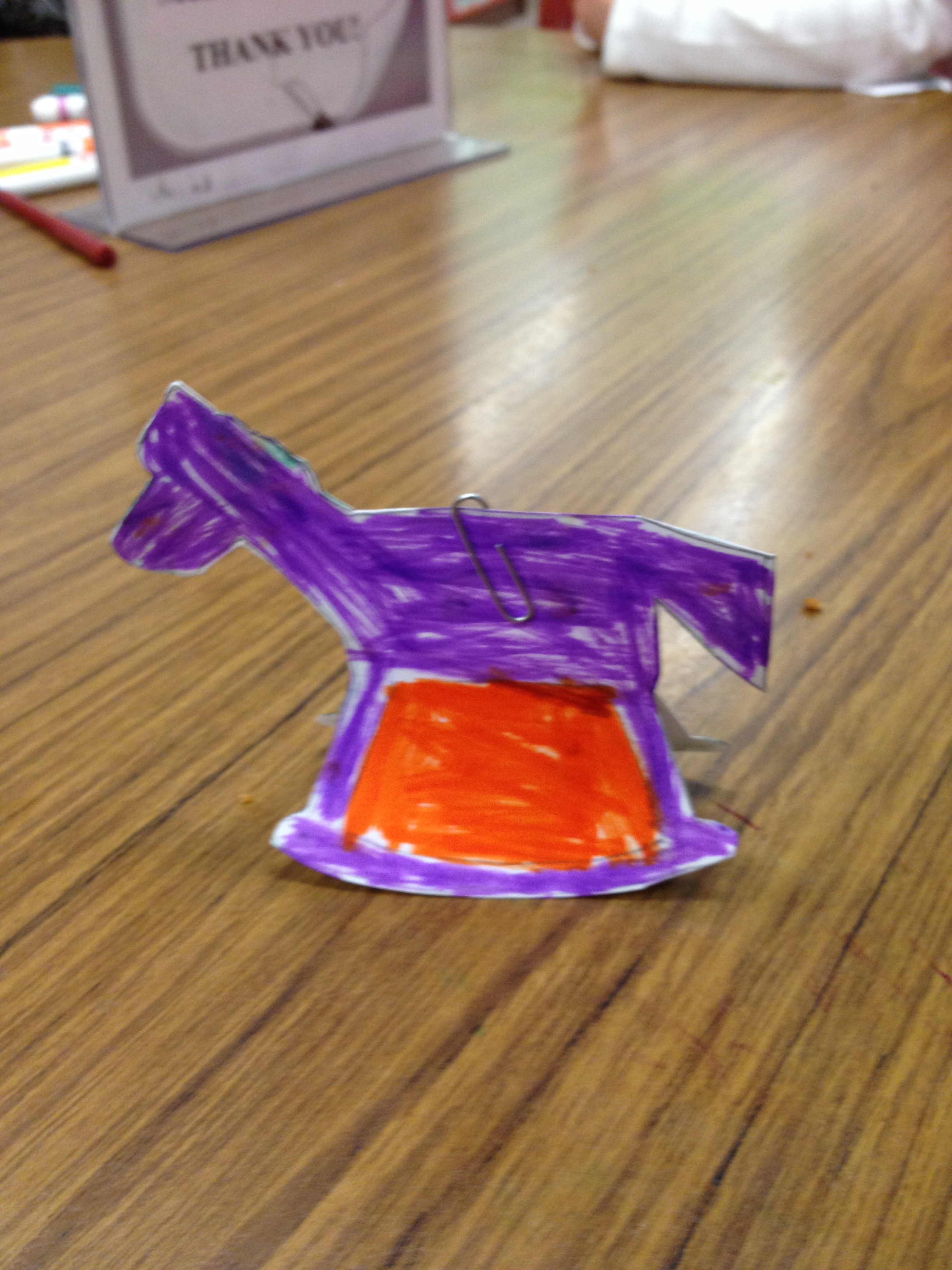
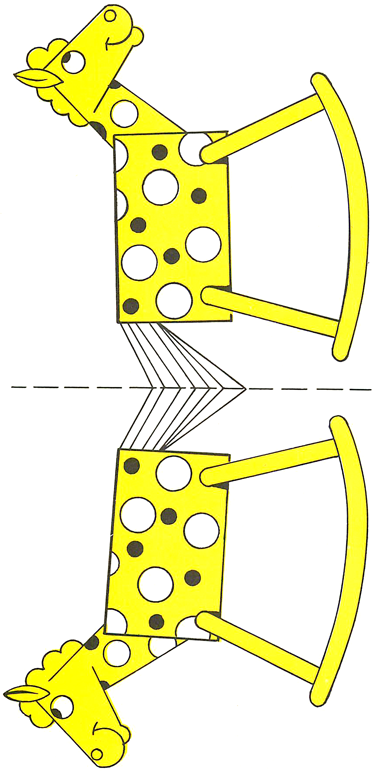
I adapted this craft from AHC Arts & Crafts, which has a tremendous number of craft ideas.  I printed their template, but since I wanted the kids to be able to color their rocking horses however they liked, I traced the template onto white card stock and cut it out (I had to redraw the lines for the base).  I folded the paper in half before I cut it, so it would make a mirror image of the horse.  Then I folded it over, so the two horse shapes lined up.

I gave each child a pre-folded horse to color in with markers on both sides, and a paperclip to put on the back, clipping the two horse shapes together.  If you bend the bottom of the two horses slightly apart, it will stand up.  If you touch the tail lightly, it will rock just like a real rocking horse.

Other Chinese New Year Books:

Bringing in the New Year by Grace Lin (Amazon.com link)

This is the book I usually read for Chinese New Year, and I still love it.  It’s shows a family preparing for the New Year by sweeping their house, making get-rich dumplings, getting haircuts, and looking forward to seeing the dragon, which is presented on pages that fold out into a big spread at the end.  In the past, I’ve brought bubblewrap for the kids to pop on the page with the firecrackers.  Simple enough to work for toddlers as well as preschoolers and older kids.

This Next New Year by Janet S. Wong; illustrated by Yangsook Choi (Amazon.com link)

I didn’t get this book in time for my storytime, but it’s a good one.  A Chinese-Korean boy shares what the New Year means to him and his friends from other cultural backgrounds.  I like that the story gives a sense of having a fresh start: a chance to clear away all the mistakes of the past and look forward to the future.  A little too lengthy for toddlers, but I think this would work well for preschoolers and elementary school kids.

My Lucky Little Dragon by Joyce Wan (recommended by Sapphira Edgarde)

Sapphira writes, “Our daughter is a dragon, but this book describes a child who has a good trait from each of the signs. Then at the end it says how lucky the reader is to have this particular baby, and there’s a heart-shaped mirror on the last page, which is always a big hit.”

Other Horse Books:

Are You a Horse? by Andy Rash (Amazon.com link)

When Roy gets a saddle for his birthday, he sets out to find a horse.  The problem is, he doesn’t know what a horse looks like.  Kids like shouting out the names of the other animals he thinks might be a horse, including a snake, a crab, a lion, and a zebra.  Plus it has a funny surprise ending.

What are your favorite horse or Chinese New Year picture books?

Who Will Win the 2014 Caldecott Medal?

The winners of the 2014 Caldecott Medal (along with the other ALA Youth Medal Media Awards, including the Newbery) will be announced on Monday morning at 8am.  You can watch a live webcast of it here: ALA – Webcast 2014.  The fashions are a little different than the Academy Awards, but I’m looking forward to it.

As I gaze into my crystal ball, I predict that my favorite books of the year won’t be in the winner’s list.  But here they are anyway:

exclamation

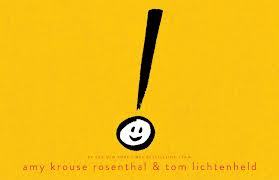
Exclamation Mark by Amy Krouse Rosenthal and Tom Lichtenheld (Amazon.com link)

The story of an exclamation mark in a world of periods.  No matter how hard he tries to fit in, he always stands out.  Then one day, he meets a new punctuation mark, who asks him LOTS of questions.  He is so overwhelmed by her, he shouts, “STOP!”  He didn’t know he had it in him.  After that, he discovers he has a whole range of abilities, and goes off to make his mark.  The illustrations, set against a background of elementary school writing paper, are simple, funny, and whimsical.  I loved this book so much I gave it to my son’s third grade teacher at the end of the school year, because she is one of those amazing people who celebrates each student’s unique personality and talents.  Of course, it also works brilliantly as a lesson in punctuation.

count

Count the Monkeys by Mac Barnett; illustrated by Kevin Cornell (Amazon.com link)

If my four-year-old were on the Caldecott Committee, this book would win hands down.  I can’t tell you how many times she’s begged me to read it.  It’s also the book I’ve read the most for storytimes.  It’s time to count the monkeys.  The trouble is, the monkeys have been scared away by 1 King Cobra.  More and more animals and odd characters (6 beekeepers, 8 lumberjacks) appear on every page.  The narrator’s asides are hilarious, and so are the bright, colorful illustrations.  This is an ideal book for storytime.

dark

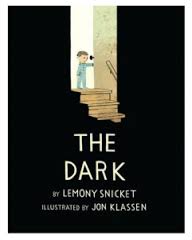
The Dark by Lemony Snicket; illustrated by Jon Klassen (Amazon.com link)

“You might be afraid of the dark, but the dark is not afraid of you. That’s why the dark is always close by.”  Laszlo is afraid of the dark, until the dark calls to him, and summons him down into the basement.  I love the deliciously creepy language of this book, and the idea of the dark being alive.   Jon Klassen won the Caldecott last year for This is Not My Hat, so I doubt this book will win, but it was one I personally savored.

idea

That is NOT a Good Idea by Mo Willems (Amazon.com link)

Mo Willems is a picture book rock star.  He has a genius for writing books that are perfect for sharing with kids of almost any age.  This one is about a sly fox who invites a demure goose to dinner.  Kids love joining in on the repeated chorus, “That is NOT a good idea!”  And there is a surprising twist at the end.

invisible

The Invisible Boy by Trudy Ludwig; illustrated by Patrice Barton (Amazon.com link)

My daughter loves this book, and it’s been a great tool for discussing how different things that come up at her preschool (not including someone in a game, talking about an upcoming birthday party with a child who wasn’t invited) might make people feel.  Brian feels invisible.  When kids in his class choose teams, he is left out.  When kids talk about the fun party they went to, he was never invited.  But then a new boy arrives in school, and Brian makes a shy effort at friendship.  And when the new boy is accepted as part of the class, he reaches out to Brian, and makes him no longer invisible.   The beauty of this book is in the artwork.  Brian is drawn in black-in-white, with small hints of color whenever he feels “seen.”  A lovely book.

This year, there were a number of wonderful wordless, or nearly wordless picture books, several of which are top contenders on several of the Best of the Year lists.  These books are hard to share at storytime, but they are still great adventures for kids to enjoy on their own. The one that seems most likely to win is:

journey

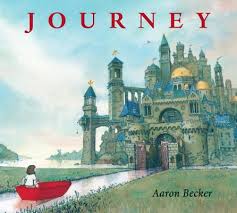
Journey by Aaron Becker (Amazon.com link)

If Hiyao Miyazaki (the filmmaker behind My Neighbor Totoro and Spirited Away) were to make a movie of Harold and the Purple Crayon, it would resemble this book.  A girl with a red marker draws a door on her bedroom wall, and escapes into a beautiful world of lights and castles.  The girl draws a boat, a balloon, and a magic carpet, but then she is captured.  She is rescued by the creations of a boy with a purple crayon, and the two set off together.  A magical book for kids (and adults) of any age.

Other books that I loved were:

Flora and the Flamingo by Molly Idle (Amazon.com link)

A wordless lift-the-flap ballet between a flamingo and a little girl who tries to emulate him.  I shared this with a group of preschoolers and had them try to do the motions along with the girl.  They had a blast!

The Day the Crayons Quit by Drew Daywalt; illustrated by Oliver Jeffers (Amazon.com link)

Duncan’s crayons are unhappy, and jealous of each other.  They have each written him a letter complaining that he uses them too much, or too little.   A brilliant story idea that would also be a wonderful intro to a lesson on letter-writing.

Little Red Writing by Joan Holub and Melissa Sweet (Amazon.com link)

Terrific lesson on the elements of story, with lots of tips on writing, all packed into a fun story.  This is a retelling of Little Red Riding Hood, about a pencil who has to take on a dangerous pencil sharpener, called the Wolf 3000.  My daughter loves this book too.

The Boy Who Loved Math: The Improbable Life of Paul Erdos by Deborah Heiligman and LeUyen Pham (Amazon.com link)

My favorite nonfiction picture book of the year is this biography of quirky genius Paul Erdos.  As a boy Paul loved numbers.  At age four, he would ask people what day they were born, then calculate how many seconds they had been alive.  Since he never learned how to cook or do laundry, as an adult, he travelled around the world living out of hotels and working with other mathematicians.  Fascinating and fun.

So there you have it.  My favorite picture books of 2013.  What are yours, and which book do you think will win the Caldecott Medal?

Who Was Randolph Caldecott?

This is Not My Hat Collage by Geovanni

This is Not My Hat Collage by Geovanni

Every January, I try to do a series of storytimes related to the upcoming announcement of the newest winner of the Caldecott Medal.  This year’s winner will be announced on Monday, January 27 at the Midwinter Meeting of the American Library Association.

This week, I read some of my favorite Caldecott Medal Winners from previous years, both for my Family Storytime, and to two classes of second graders.  But before I get to those, it occurred to me that I had never thought to wonder who Randolph Caldecott was, and how the award came to be named after him.  So I looked him up.

According to the Randolph Caldecott Society UK web page, Caldecott was a British artist, who lived from 1846-1886, and was known for his children’s book illustrations.  Every year, he would select or write a collection of stories and rhymes, which he would illustrate and publish at Christmastime.  The books were enormously popular, and brought him international fame.  Like many of the best children’s authors and illustrators (Dr. Seuss, Maurice Sendak, Margaret Wise Brown, and Beatrix Potter to name a few), Caldecott never had children of his own.   Sadly, he suffered from heart problems and gastritis, and died a few weeks before his 40th birthday, while traveling in St. Augustine, Florida.

I haven’t been able to find an explanation for why the American Library Association in 1937 decided to name the medal after Randolph Caldecott.  After all, according to the guidelines, the award-winning artist “must be a citizen or resident of the United States,” and Caldecott was British.  Why not name it after an American illustrator like Johnny Gruelle, Wanda Gág or N.C. Wyeth?  My only guess is that it had to do with the quality of Caldecott’s illustrations, and the seamless way he integrated them with the text.  Maurice Sendak is quoted as saying, “Caldecott’s work heralds the beginning of the modern picture book. He devised an ingenious juxtaposition of picture and word, a counterpoint that never happened before. Words are left out—but the picture says it. Pictures are left out—but the word says it.”  And that is the quality that defines the best picture books.

I just learned about a new book by Leonard Marcus entitled Randolph Caldecott: The Man Who Could Not Stop Drawing.  I will have to check it out to find out more, especially after reading this intriguing conversation between Leonard Marcus and Brian Selznick, winner of the 2008 Caldecott Medal (I love to show kids Selznick’s book The Invention of Hugo Cabret, which is not a picture book, but a 533 page heavily illustrated novel).  In the meantime, you can see samples of some of Caldecott’s illustrations on the Randolph Caldecott Society web site.

But now, back to the storytime.   After I explained the Caldecott Medal to the kids, and showed them the seal on the covers of the winning books, I read these:

hat

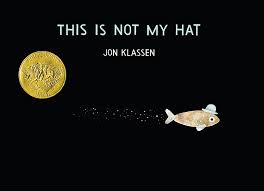
This is Not My Hat by Jon Klassen (Amazon.com link) 2013 Caldecott Medal

It amazing the range of reactions I get whenever I read this book aloud.  I remember sharing it with some second grade classes last year where some of the kids were very nervous.   In one class, every time the little fish bragged about his certainty that the big fish whose hat he stole would never find him, this one boy would say, “No!  Don’t say that!  He’s going to eat you!”  This year, though, all the second graders laughed.  The Kindergartners at storytime, however, looked concerned.   The fish is so shockingly naughty and brazen (although, of course, most of the best and most memorable children’s book heroes are naughty).  The beauty of the book, though, is that the ending is unspoken.  Klassen leaves you with the image of the big fish wearing his hat, and leaves the rest to your imagination.   So when I asked my storytime group what happened at the end, they said, “The big fish got his hat back.”  The second graders, on the other hand, said, “The little fish got eaten.”

officer

Officer Buckle and Gloria by Peggy Rathmann (Amazon.com link) 1996 Caldecott Medal

I think about this book every time I stand on a swivel chair, which I do often, in spite of this being in part a cautionary tale about that very thing.  My only complaint about this book is that it’s really one you want to sit down with and pore over by yourself, to enjoy all the humor in the illustrations, and some of that gets lost in a storytime setting.  But the kids love it anyway.  At my family storytime, many of them exclaimed over it when they first saw me pull it out of the stack, so clearly they had heard it before (and hopefully had a chance to look at it up close).  Officer Buckle’s safety speeches suddenly become a big hit at schools when he is partnered up with a new police dog named Gloria, until Officer Buckle discovers why.  This is a wonderful story about a friendship and the importance of working together, and it has great safety tips besides.

kitten

Kitten’s First Full Moon by Kevin Henkes (Amazon.com link) 2005 Caldecott Medal

I remember being surprised the first time I saw this book, because the style was so drastically different from Henkes’ other books like Chysanthemum and Lilly’s Purple Plastic Purse.  But since then, this has become one of my favorite read-alouds (along with A Good Day, which is perfect for toddlers).  The language in this book is so simple, and compelling: ”It was Kitten’s first full moon. When she saw it, she thought, there’s a little bowl of milk in the sky. And she wanted it.”  The story is funny because of all of Kitten’s mistakes and accidents, but you also feel her frustration, so it is deeply satisfying when she comes home wet and exhausted to find her own bowl of milk on the porch.  There was a little tussle over who was going to get to check this one out after I read it.

amos

A Sick Day for Amos McGee by Philip C. Stead; illustrated by Erin H. Stead (Amazon.com link) 2011 Caldecott Medal

I’ll admit, I hadn’t ever noticed the mouse and the red balloon that appear several times throughout this book, until one of the second graders pointed them out.  And then I was instantly transported back to reading Goodnight, Gorilla by Peggy Rathmann with my son when he was small, and trying to find the red balloon and mouse on every page.  It’s a subtle reference, but I loved it.  The kids loved the pictures of the zoo animals packed into the bus to visit their sick zookeeper friend, and the idea of the owl being afraid of the dark.

SONGS:

1,2,3,4,5, I Caught I Fish Alive

B-I-N-G-O  To go along with Officer Buckle and Gloria, I brought out the library’s St. Bernard hand puppet (who likes to lick people’s faces), and we barked the missing letters.

INSTRUMENT PLAY WITH A CD: Old MacDonald Had a Farm by Rufus Thomas from Sing Along with Putumayo (Amazon.com link)  This rock-and-roll version of Old MacDonald is always fun.

CRAFT: This is Not My Hat Collage

olivia

For this craft, I cut out pieces for the kids to color and assemble the little fish from This is Not My Hat, and brought some plants from my yard for them to glue down.

I originally had a crazy idea for taping the fish to a piece of yarn, and cutting a slit in the paper, so it would look like the fish was disappearing behind the plants when you pulled the yarn.  But I would have needed thicker paper, and it seemed to complicated for the short time the kids had to assemble the craft.  Still, I mocked it up with my daughter, and even though we tried it with construction paper, which is flimsy, she still had a lot of fun playing with it.

I drew the fish shapes freehand, and they’re not great, but if you’d like the template, you can print it out here: fishtemplate

OTHER BOOKS:

Along with A Sick Day for Amos McGee and This is Not My Hat, I read these four books to some second grade classes this week:

The Man Who Walked Between the Towers by Mordicai Gerstein (Amazon.com link) 2004 Caldecott Medal

This is one of my absolutely favorite Caldecott winners to read aloud, although I usually share it with older kids.   In 1974, Philippe Petit walked, danced, ran, and lay on a tightrope across the Twin Towers.   It was an illegal act, so he and some friends disguised themselves as construction workers, then carried the 400 pound cable up the elevator, and then up ten flights of stairs to the roof.   Getting the wire across the gap was a harrowing experience all its own, and at one point, the cable fell, pulling Petit’s friends in the other tower to the edge of the roof.   And then he stepped out onto the wire, a quarter of a mile above the ground.  The illustrations in this book are dizzying.  The kids are always transfixed.   And even though Petit broke the law (yes, another naughty character, but a real one!), he did so ready to face the consequences.  After he stepped off the wire, he held out his hands for the cuffs.  He was sentenced to perform in Central Park for free.   There is one line at the end of the book that says, “Now the towers are gone,” and always, always the kids ask why.  The first year I read it, I wasn’t prepared, and in the pause while I tried to frame my answer, I could hear a bunch of kids exclaiming to each other the bits of information they knew.  Fortunately, I knew that this year on September 11 the principal at the school had spoken to all of the classes in the school, explaining about the tragedy, and telling the kids that they should “remember the heroes.”  So this time, when the question came, I was able to remind them of that, and, while I’m sure they still had questions, they seemed to accept that.  That question is the only reason I haven’t read this book at my regular storytime, since I’m not sure how comfortable my storytime parents will be with whatever explanation I give, and the inevitable questions that will follow.   But otherwise, this is an exhilarating book, and one of the best examples of a nonfiction picture book I know.

Where the Wild Things Are by Maurice Sendak (Amazon.com link)  1964 Caldecott Medal

I shared this book with the second grade because I wanted to show them that they all knew at least one Caldecott winner.  This book is so much a part of our popular children’s culture now (most of the kids had seen the movie too), but I also wanted them to stop and think about how revolutionary the book and the art were when it first came out.  Max is the ultimate naughty character, fulfilling that fantasy all kids probably have of running away and going wild.   I like to mention how controversial this story was, even down to the last line.  In an interview, Sendak once talked about an argument he had with his editor, Ursula Nordstrom, “One of the fights I had with Ursula—and her whole office—though it seems silly now, was with the last line of the book [about Max’s dinner]: “and it was still hot.” It bothered a lot of people, and they wanted me to change it to “and it was still warm.” Warm doesn’t burn your tongue. There is something dangerous in “hot.” It does burn your tongue. Hot is the trouble you can get into. But I won.”  We were lucky Sendak was always a bit like Max.

Sylvester and the Magic Pebble by William Steig (Amazon.com link) 1970 Caldecott Medal

This was one of my favorite books as a child, and I still love it.   Sylvester the donkey is thrilled to find a pebble that makes wishes come true, until he has a run-in with a dangerous lion, and accidentally wishes he were a rock.   Steig really draws out the drama of Sylvester, helpless and alone on the hill as the seasons pass, while his parents worry and mourn.  Of course, it has a joyfully happy ending, where the family is reunited, and they decide to lock the magic pebble away, at least for a while, realizing that now that they were together again, “they all had all that they wanted.”   Before I read this book, I usually tell the kids that William Steig wrote the picture book Shrek, which, oddly, most of them have never seen, although most of them have seen the movies.

So You Want to be President by Judith St. George; illustrated by David Small (Amazon.com link)  2001 Caldecott Medal

I made the mistake of reading this book last to one of the classes, and it was a bit too long.  Still, it’s a fun collection of facts about the presidents, both the traits that many of them shared, as well as the things that made each one unique.  The illustrations by David Small are colorful and funny, and there are some great quotes scattered throughout the text.  My favorite is from Ulysses S. Grant, about his own musical ability, “I know only two tunes: one of them is Yankee Doodle, and the other isn’t.”  This is a great book to share on President’s Day or around Election time.

You can find the complete list of Caldecott Medal winners here.  Please tell me your favorites, and more importantly, who do you think will win this year?


Ringing in the New Year

I had so much fun at this week’s storytime, seeing most of my regular families, and some I hadn’t seen in a long time.  Auld Acquaintances!  But if there are any publishers, children’s authors, or aspiring children’s authors reading this, please take note: there is a desperate shortage of books about New Year’s.   

I had pulled or ordered over every book I could find in our system on New Year’s Eve or New Year’s Day.  There weren’t many, not even on Amazon, and the ones I found were mostly too long to read at story time.  There are LOTS of books on Chinese New Year, which I’m looking forward to covering in a few weeks.  But publishers appear to have dropped the ball on New Year’s Eve, and I don’t mean the one in Times Square.

I ended up resorting to an odd mix of books about babies (in honor of Baby New Year) and parties and the year in general.   Luckily there are a fair number of these.  These were the ones I ended up reading:

newyears

The Night Before New Year’s by Natasha Wing; illustrated by Amy Wummer (Amazon.com link)

The only actual New Year’s book I read.  It’s a rhymed book, and the meter is awkward in some places, but overall it meets my requirements for a good holiday book: it covers the major traditions without being dry, and tells a story in the process.  In this case, it’s about a girl and her brother who want to stay up until midnight on New Year’s Eve, but don’t quite make it.   The kids enjoyed this one, and it was eagerly snatched up at the end.  After the book, we all counted down from 10 and yelled, “Happy New Year!”  It would have been fun to throw confetti too, except for the inevitable clean-up.

Mustache Baby by Bridget Heos; illustrated by Joy Ang (Amazon.com link)

Okay, this was a stretch, but I justified it by mentioning Baby New Year.  I had originally pulled this one because it was on a list of best picture books published in 2013 (a topic I will be covering soon).  And the kids loved it!  There was even a minor brawl over it at the end.  When a baby is born with a mustache, the delivery nurse tells his startled family that they need to find out if it’s a good guy mustache or a bad guy mustache.  The baby starts out taking on all kinds of good mustachioed roles: cowboy, Spanish painter, sword fighter, and man of the law.  But then the mustache begins to curl on the ends…  The illustrations are very funny.

Frog and Toad All Year by Arnold Lobel (Amazon.com link)

I read the first story in this early chapter book, partly because it fit the theme of a new year, and partly because there’s an Arnold Lobel exhibit at the Contemporary Jewish Museum in San Francisco, including a concert of songs based on his works on January 12.   I also thought it would fun for some of the Kindergartners in my storytime to get to know Frog and Toad, who were favorite characters from my old childhood.  In the story I read, Frog drags Toad out on a cold winter day, and gets him to go sledding.

Xander’s Panda Party by Linda Sue Park; illustrated by Matt Phelan (Amazon.com link)

Another stretch, but I justified it because it was about a party.  Xander wants to throw a panda party, but since he’s the only panda at the zoo, he reconsiders and invites all the bears.  When he finds out the koala isn’t really a bear, he extends his invitation to mammals, but rhinoceros insists on bringing his bird.  In the end, of course, he ends up inviting every creature at the zoo, including the people.  Cute rhyming story that the kids seemed to enjoy.  It got checked out immediately too.

CRAFT: Decorated Calendars

photo (64)

Calendars decorated by Alyssa, Jonas and Sarah

I happened to be at Michael’s the other day, and picked up a bunch of small picture frame calendars for 60 cents each.  The kids had fun drawing, stickering, and collaging on them with pictures I cut from magazines.   A cheaper way to go would be to print out calendars (or even just the month of January) from CalendarLabs.com and have the kids decorate those.

OTHER BOOKS:

The Stars Will Still Shine by Cynthia Rylant; illustrated by Tiphanie Beeke (Amazon.com link)

This is actually a really sweet book, that would work well for New Year’s, even for toddlers.  It’s a lovely poem about all the nice things that will remain the same: “…this new year/the sky will still be there/the stars will still shine/birds will fly over us/church bells will chime…we shall have peaches/we shall have pie/we shall have ice cream three scoops high”   The illustrations are soft, colorful, and peaceful.

Squirrel’s New Year’s Resolution by Pat Miller; illustrated by Kathi Ember (Amazon.com link)

This one was a bit too long for my storytime, but I liked that it addresses the idea of writing New Year’s Resolutions, which might have been a fun craft idea too.  Squirrel is frustrated that she can’t come up with any resolutions of her own, but she ends up helping each of her friends keep theirs.

Shanté Keys and the New Year Peas by Gail Piernas-Davenport; illustrated by Marian Eldridge (Amazon.com linkSubmitted by Lindsey Tear

Grandma has made all the lucky foods for New Year’s Day, but she forgot the black-eyed peas.  So Shanté Keys sets out to find some.  I haven’t seen this one yet, but I’ve requested a copy for our library system.   As a kid, we always had kidney beans, cornbread, and collard greens for New Year’s Day, a tradition that I miss, so I can empathize with Shanté Keys.

Happy New Year, Pooh! by Kathlein Weidner Zoehfield (Amazon.com linkSubmitted by Lindsey Tear

This book is out of print, unfortunately, but it looks sweet.  Winnie the Pooh and his friends are sad to see that the calendar has come to an end, until Christopher Robin tells them they have a whole new year ahead.

Frog and Toad Together by Arnold Lobel (Amazon.com link) Submitted by Barbara Bruxvoort

Another Frog and Toad book, but one that may be even more appropriate for New Year’s.   It’s even referenced in this article on keeping your New Year’s resolutions.   The two stories that fit best are “A List,” where Toad makes a list of things he plans to do, and “Cookies,” where Frog and Toad try to find the willpower not to eat all the cookies.

P. Bear’s New Year’s Eve Party by Paul Owen Lewis (Amazon.com link) Submitted by Neeru Penumella

This one isn’t in our library system either, probably because it’s only available in paperback, but it looks like fun.  The book uses the arrival of each of P. Bear’s friends to demonstrate counting and telling time.

Are there any great New Year’s books I’m missing out on?  Please share them in the comments.
Christmastime is Here!

Paper plate angel by Sarah

Paper plate angel by Sarah

My last Family Storytime of 2013.  It was a cozy one with just two families, so I sat on the floor and shared some longer books than I usual would have, and it was wonderful.  These were the ones I read:

image

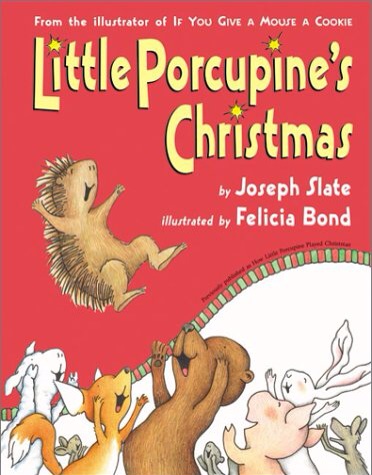
Little Porcupine’s Christmas by Joseph Slate; illustrated by Felicia Bond (Amazon.com link)

I actually just happened to see this one on display right before storytime, and fell in love with it.  Little Porcupine wants to have a part in the Baby in a Manger play, but the other animals make fun of him, calling him a “Spiky Stick Ball.” His mother comforts him, telling him he is “the light of her life,” and, although he is sad not to be in the play, he runs the lights and manages the stage.  In the middle of the play, everyone suddenly realizes they don’t have a Christmas star, and Little Porcupine saves the day.  Such a sweet story, and it was eagerly snatched up at the end.

image

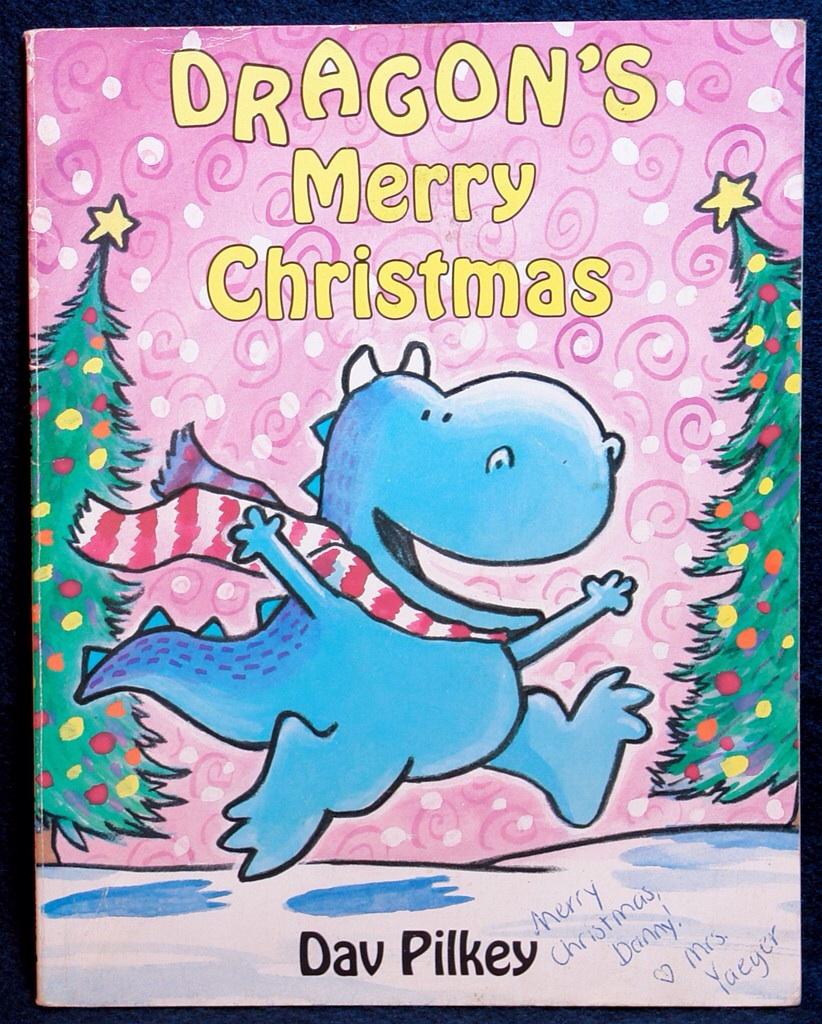
Dragon’s Merry Christmas by Dav Pilkey (Amazon.com link)

My daughter and I love all of the Dragon books.  In four short chapters, Dragon: decorates a Christmas tree (outside his house because he can’t bear to chop it done); makes and devours a candy wreath (only eating the pieces that “fall” off); loses his mittens (and his coat); and buys some Christmas presents for himself.  In the last story, he gives away all of his presents to animals who need them more, and goes to sleep thinking he hears angels singing (they are really the grateful animals singing outside his house).  Lovely collection of stories that are both funny and sweet.  One of the girls checked this one out, and every other Dragon book we had on the shelf.  Storytime win!

image

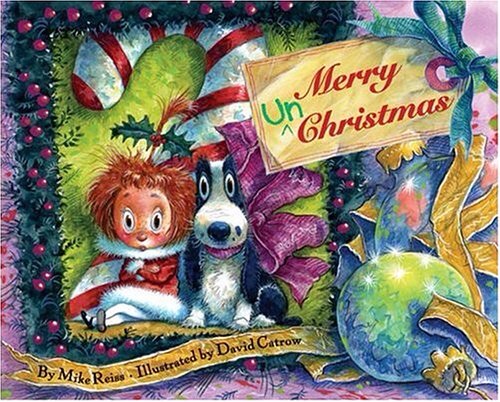
Merry Un-Christmas by Mike Reiss; illustrated by David Catrow (Amazon.com link).

For anyone who ever wished it could be Christmas every day, this book shows that you can really have too much of a good thing.  Noelle lives in Christmas City, where everyday is Christmas, except one: Un-Christmas Day.  Noelle loves Un-Christmas Day, when she doesn’t have to open any presents or eat five kinds of pie.  Best of all, she gets to go to school.  I’ve read this to several different age groups, and they all loved it, especially the second graders.

image

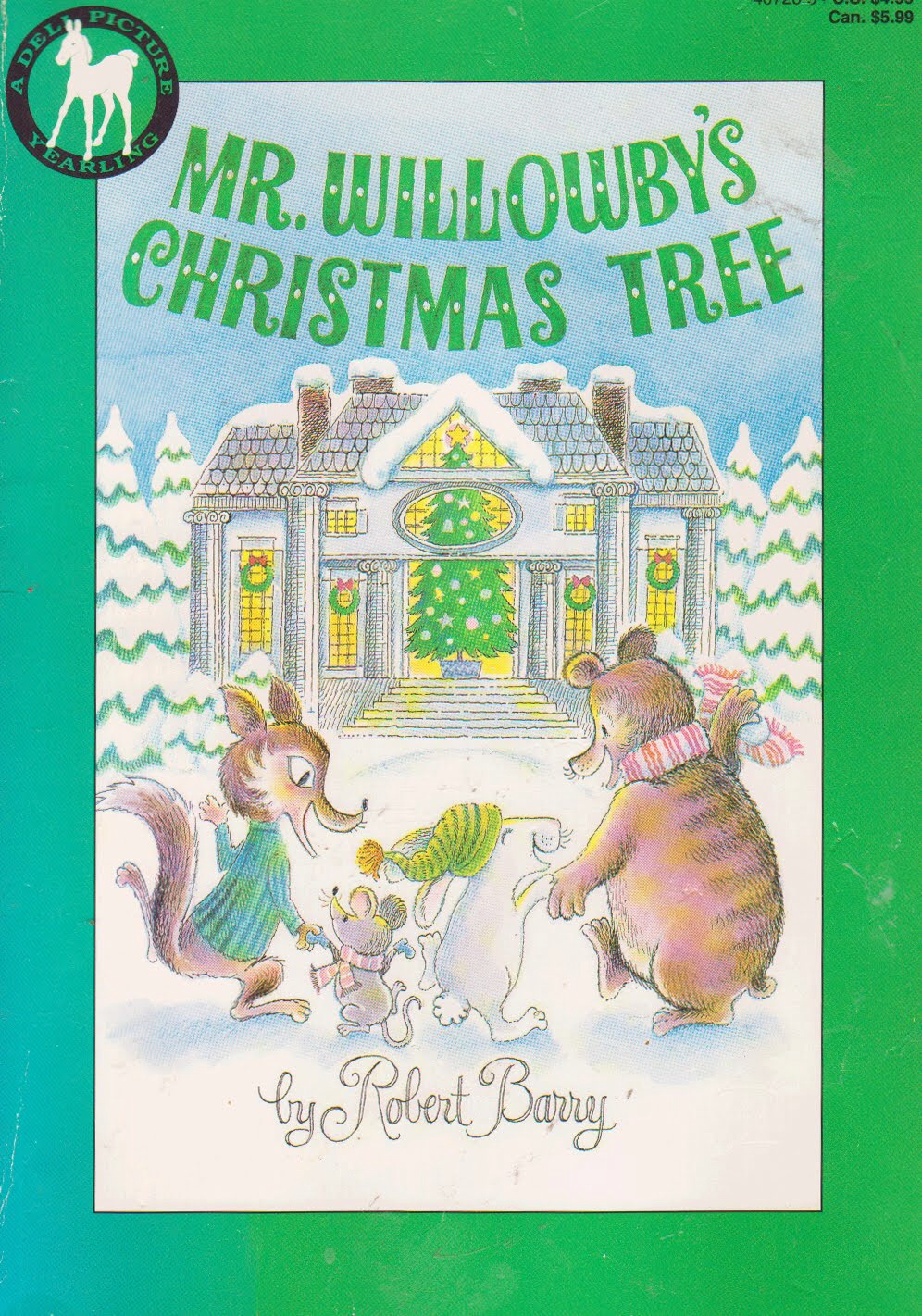
Mr. Willowby’s Christmas Tree by Robert Barry (Amazon.com link)

I learned about this one from my friend Kerri’s blog, What Is ML Reading?  Mr. Willowby has a perfect Christmas tree, except that it’s a little too tall.  His butler cuts a bit off the top and gives it to the maid, who uses it as her own Christmas tree, but it’s a bit too tall for her mantel.  So she cuts off the top…  Fun, rhyming story with a treetop that just never seems to run out.  The kids enjoyed this one too.

INSTRUMENT PLAYALONG WITH A CD: Linus and Lucy from A Charlie Brown Christmas by Vince Guaraldi (Amazon.com link).  This was so much fun!  Even my coworkers were humming the tune after story time.

CRAFT: Paper Plate Angels

Paper plate angel by Sophia

Paper plate angel by Sophia

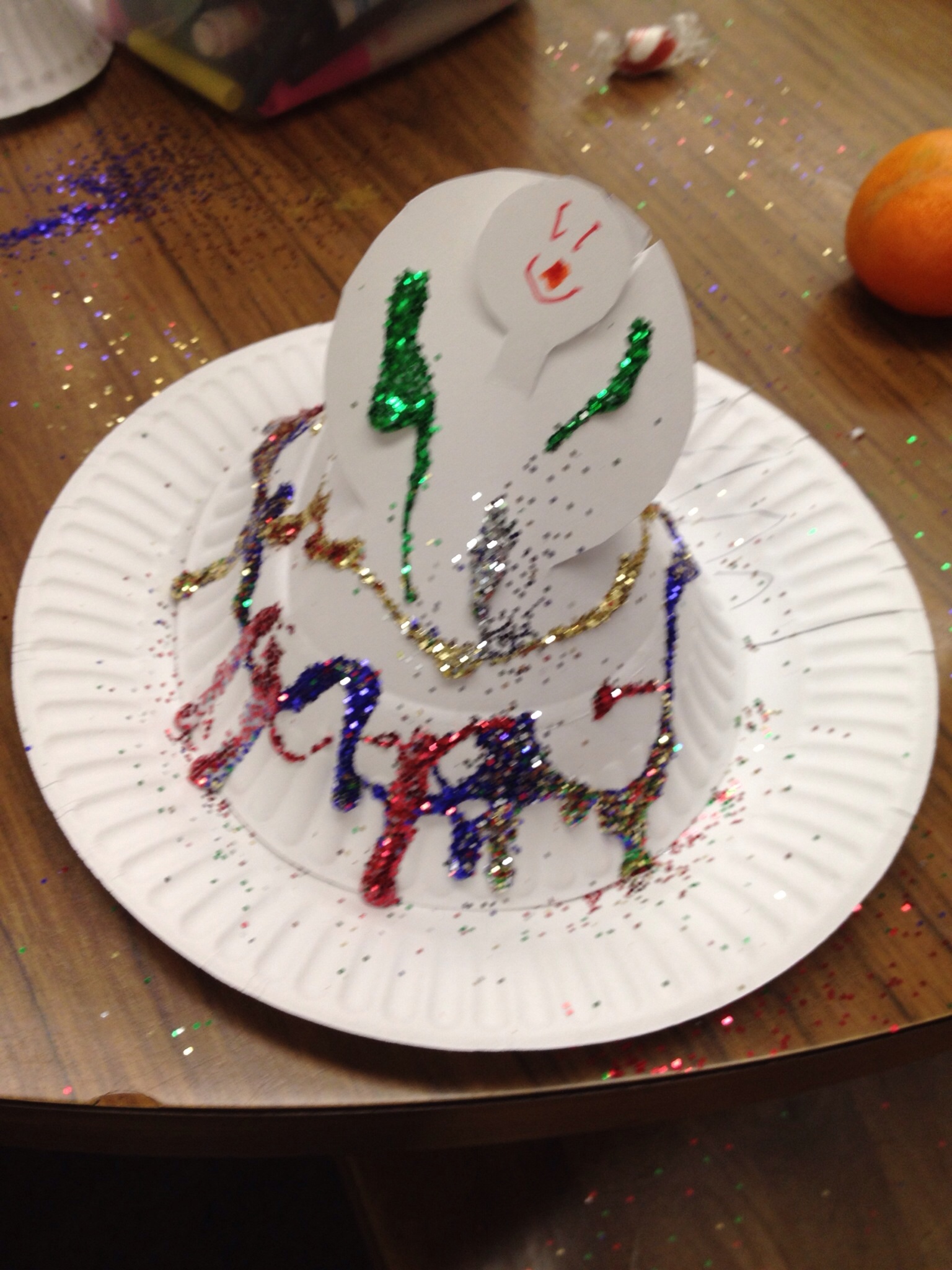
Once again, my wonderful coworker, Gail Benjamin, handed down her leftover craft supplies from a holiday program she did the previous weekend.  You can find printable instructions from Enchanted Learning.

Basically, you cut the plate along the lines, and tape or staple it together.  Then the kids draw a face, and decorate it with glitter.  (I put another paper plate underneath to catch the extra glitter). Gail says her daughter made one years ago in preschool, and they still use it to top their Christmas tree.

OTHER BOOKS:

How the Grinch Stole Christmas by Dr. Seuss (Amazon.com link)I read this to a second grade class the other day.  I was worried that they would be bored because I know they have all seen the cartoon and the movie a million times, but they were mesmerized.  It’s so much fun to read too.

Merry Christmas, Big Hungry Bear by Audrey and Don Wood (Amazon.com link)

By the creators of The Little Mouse, the Red Ripe Strawberry, and the Big Hungry Bear.  In this story, the little mouse is guarding his Christmas presents from the big hungry bear, until he learns the bear has never gotten a present.  Bravely he sets out on his sled in the snow to bring the bear a gift.  The illustrations are adorable.

What are your favorite Christmas books?

Winter Wonderland: Stories about Snow

Q-Tip snowflake by Jonas

Q-Tip snowflake by Jonas

Winter storytimes in the San Francisco Bay Area are always a bit confusing because we never get snow.  At least not here in Pacifica.  A few years ago I drove my son up to La Honda, where there was a patch of snow on the side of the road about the size of a bathmat.  I pulled over, and we had what was probably the world’s tiniest snowball fight.   So, although most of the kids here have probably seen snow somewhere, their idea of Winter is probably a lot different from the idea portrayed in most picture books.

But this week it’s actually been cold here, at least by our standards (I know, I know, it’s hard to complain about our 36 degree weather, when friends in Minnesota are saying that the temperature is going “all the way up to -1!”).   But it felt enough like Winter for me to pull out some books about the season.  Here are the ones I read:

winter

Waiting for Winter by Sebastian Meschenmoser

Funny story about a squirrel, a hedgehog, and a bear who are waiting for snow.  All they know is that snow is “white, wet, cold, and soft,” and they each set out to find something fitting that description.  Hedgehog finds a toothbrush, and imagines bunches of them falling from the sky.  Squirrel finds a tin can, and bear finds an old, smelly sock.  My daughter loved this story, and it got laughs from the little girl who was the first to show up at storytime (the other families arrived a bit late).  I was sad to discover that this book is out of print, and very expensive even to buy used on Amazon.   If you live in San Mateo County you can check it out from the Peninsula Library System by clicking on the title above.  To search for it from other libraries, try putting your zip code in this search box on WorldCat.

rabbit

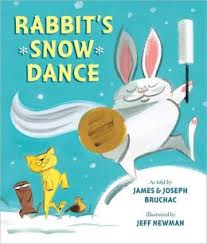
Rabbit’s Snow Dance by James and Joseph Bruchac; illustrated by Jeff Newman (Amazon.com link)

One of my favorite picture books from last year.  The story is based on a traditional Iroquois tale about a rabbit who makes it snow in the summer by singing and playing a special song on his drum.  It’s a longish story, but it works well even for preschoolers because of the repeated chant and song.  I shared this with two second grade classes last year, and was pleased to hear them marching through the halls of the school afterwards chanting, “I will make it snow.  Azikanapo!”  It would work well for themes about the seasons or Native American tribes.

Froggy-Gets-Dressed

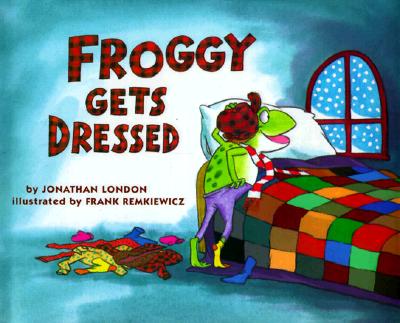
Froggy Gets Dressed by Jonathan London; illustrated by Frank Remkiewicz (Amazon.com link)

All the Froggy books follow the same basic pattern, but the kids love them.  They anticipate the repeated cry of “FROGGY!” which is great, because the word is always written in big, bold, colorful letters that you can point to (studies have shown that pointing out words on the page is important for helping kids learn to read later on).  The kids love this book in particular because Froggy forgets his pants, his shirt, and, oh yes, his underwear!  Big laughs all around.

milk and cookies

Milk and Cookies by Frank Asch (Amazon.com link)

I hadn’t originally planned to read this one, but it was in my stack, and one of the kids was drawn to the cover.   A young bear who wakes up in the middle of the night at his grandparents thinks he sees his grandfather feeding a dragon in the basement.  This leads him to a terrible nightmare, where a hungry dragon eats all the milk and cookies in the house.  Of course, when he wakes up, he learns the dragon is really his grandfather’s woodstove.    I love all of Asch’s bear stories, and the kids seemed to enjoy this one too.

mooncake

Mooncake by Frank Asch (Amazon.com link)

One day, Bear wonders what the moon tastes like, and decides to build a rocket ship to find out.  But by the time his rocket is built, it is Winter, and he falls asleep in the middle of the countdown.  Waking up in a snowy landscape, he assumes that he has landed on the moon.  There are several Bear and Little Bird books, including Happy Birthday, Moon, Moonbear’s Dream, and Bear Shadow, and I love them all, although I find it helps to make sure the kids understand the underlying principle (shadows, echoes, dreams) before I read the story.  In this case, I asked the kids if they knew what bears did in the Winter, and we talked very briefly about hibernation.   I was surprised that some of the kids remembered me reading it a long time ago, and were excited to hear it again.

SONGS: Five Little Snowmen

There are lots of different version of this song, but I learned this one years ago when I was working at a music school.  I wish I knew who wrote it.  I made a rough recording, so you can hear the tune:  

Five little snowmen standing in a row, (hold up five fingers)
Each with a hat (touch head), and a brightly colored bow (adjust imaginary bowtie).
Five little snowmen dressed up all for show.
Now they are ready,`
Where will they go?

Wait! (hold out hands in a “Stop!” motion) Till the sun shines. (hold up your arms to make a circle over your head)
Wait! Till the sun shines.
Then they will go
Down through the fields
With the melting, melting snow (“melt” all the way down to the floor, then pop up for the next four snowmen).

Mitten Song

I didn’t get to do this song, but it’s an easy one for toddlers and preschoolers.  Here’s the tune:

Thumb in the thumb’s place,
Fingers all together. (Hold up your hand with your four fingers close together and thumb extended)
This is the song
We sing in mitten weather.

INSTRUMENT PLAY ALONG WITH A CD: Frosty the Snowman (sung by Bing Crosby) from the Best of Christmas Cocktails album (Amazon.com link)

CRAFT: Q-Tip Snowflakes 

Q-Tip snowflake by Lily

Q-Tip snowflake by Lily

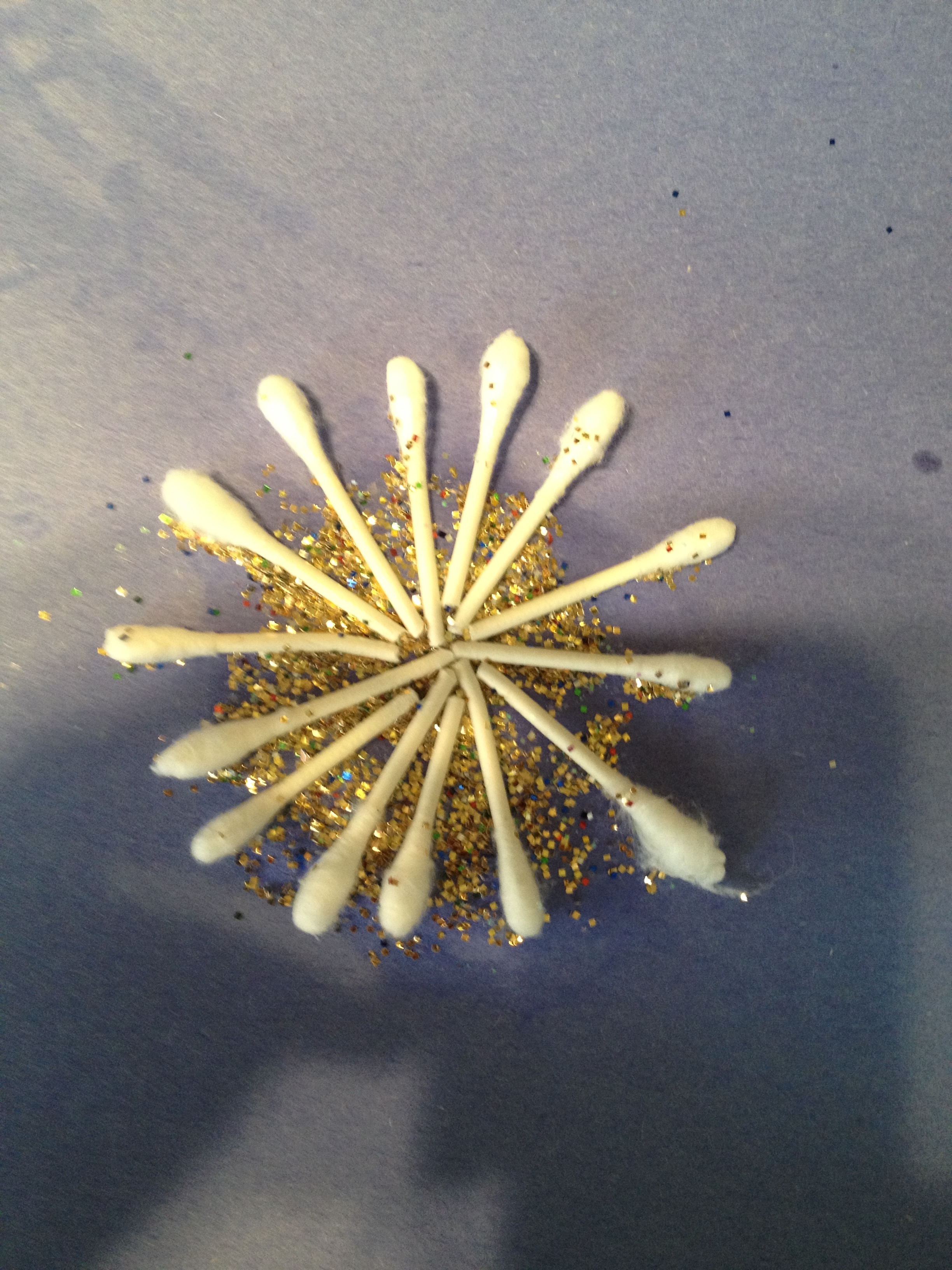
I got this idea from one of my favorite kids craft websites: Busy Bee Crafts.  I had broken up a number of Q-Tips ahead of time (I found out the hard way that if you try to cut Q-Tips with scissors, they not only hurt your hands, but also shoot across the room like little cotton-tipped missiles.  But they break very easily.  Go figure!)

The idea was for the kids to glue the Q-Tips pieces to blue construction paper in snowflake patterns, and then sprinkle them with glitter.  A funny thing about kids crafts though: they sometimes evolve into something else entirely.   During the instrument time at the end of the storytime, I had scattered paper snowflakes for the kids to pick up and take home.  Several of the kids decided to glue the paper snowflakes onto the construction paper and decorate them with glitter paper instead of making Q-Tip ones.  It’s always fun to see their creativity at work.   Every snowflake was truly unique!

Other easy Winter crafts I’ve done in the past are paper snowflakes (I prepare the folded paper ahead of time, so the kids just get to cut pieces out of it with kids’ scissors and open it up to reveal their snowflake.  Here’s a page of instructions on how to do the folds from Instructables.com).   Mittens are also easy and fun.  You have the kids put their fingers together like they would if they wearing a mitten, and trace the shape of their hands on paper to make mittens.  Then they can color and decorate them, or even cut them out and tape a piece of yarn between them.  Or, for a fun food craft, try these marshmallow snowmen.

OTHER BOOKS:

There were lots of other books I didn’t get to.  Here are just a few:

The Mitten by Jan Brett (Amazon.com link)

The classic story about a boy’s lost mitten, which ends up becoming a shelter from the snow for a bunch of different animals, including a bear!  It’s a brilliant book, because Jan Brett uses the sidebars to tell three different stories at once: the little boy hunting for his mitten; the main story of the animals crowding into the one he lost; and the new animal who will become part of the main story on the next page.  Jan Brett has a wonderful web site, full of activities to accompany each of her books.  For The Mitten, she has masks you can print out, coloring pages, and even an activity where you can glue the different animals onto the mitten (it might be fun to print this out on cardstock, and put magnetic strips on the back of each animal and stick them on a cookie sheet, then have the kids put the animals “in” the mitten.)

Here Comes Jack Frost by Kazuno Kahara (Amazon.com link)

My daughter loves this one.  It’s a fantasy story along the lines of Frosty the Snowman, about a little boy’s adventures with Jack Frost over the course of one fun winter.  Jack Frost tells the boy that he must never mention anything warm in front of him, or he will disappear.   They have a wonderful time together, until the boy finds a snowdrop flower blooming in the snow, and Jack Frost disappears, whispering, “See you next year.”  The white illustrations on blue background are stunning.

Tippy-Tippy-Tippy-Hide! by Candace Fleming; illustrated by G. Brian Karas (Amazon.com link)

In this sequel to Muncha Muncha Muncha, Mr. McGreely is determined not to share his warm house with the three little bunnies.  But the bunnies find their way inside anyway: through the mail slot, down the chimney, and even through the front door.  The kids enjoy the repeated lines, especially: “Tippy-Tippy-Hide!”  And the page where Mr. McGreely wakes up to find “bunny drops” on his pillow always get appreciative “EEWWs!”

The Snowy Day by Ezra Jack Keats (Amazon.com link)

This classic picture book and winner of the 1963 Caldecott Award is such a simple and colorful celebration of the joys of playing in snow, and coming in out of the cold.  Even thinking about it makes me nostalgic for the few snow days I had as a child in Georgia.

The Runaway Giant by Adelaide Holl; illustrated by Mamoru Funai (Amazon.com linkRecommended by Erik Moore

A squirrel, a bear, and a crow, and a rabbit are panicked by reports of a giant in the woods, but decide to team up and scare it away.  The giant turns out to be a snowman, who melts away.   I didn’t know this book, but I found it for free on Open Library, and read it to my daughter, who demanded to hear it again as soon as I finished it.  The story is very similar to A Stranger in the Woods, which features beautiful photographs of forest animals by Carl R. Sams, but I think I like the text of this older story better.

Snow by Uri Shulevitz (Amazon.com linkRecommended by Barbara Bruxvoort

When the first two snowflakes fall, no one believes anything will come of it, but a boy and his dog know that the big snow is coming.  Fun read aloud for any age that captures the hope of a snow day.


No show

What are your favorite books about winter?

We Are Family!

olivia

Paper doll by Lilyanna

Since it’s the holiday season, I decided to do a storytime about family.  It was a great, big, lively, fun bunch of kids tonight, and a wide mix of ages, so I ended up doing some of the shorter books.  Luckily, they were some of my favorites.  Here they are:

Bedtime for Mommy

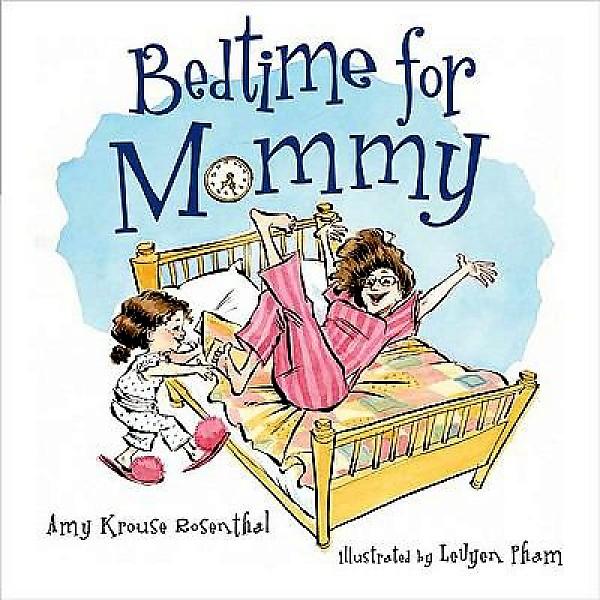
Bedtime for Mommy by Amy Krouse Rosenthal; illustrated by LeUyen Pham (Amazon.com link)

Adorable story about a little girl’s efforts to put her Mommy to bed.  Of course, Mommy asks for five more minutes…and an extra story…and a glass of water.  Both the parents and kids loved this one, and there were several kids asking to check it out at the end.  I love Amy Krouse Rosenthal.  Her book Exclamation Mark (Amazon.com link) is probably my favorite book of the year.

dog smelly

My Dog is as Smelly as Dirty Socks: and Other Funny Family Portraits by Hanoch Piven (Amazon.com link)

Perfect book for storytime or classroom themes about families.  When her teacher asks her to draw a picture of her family, a little girl complains that a picture doesn’t tell the whole story.  Her father is as playful as a spinning top, for example, and her mother is as bright as the brightest light.  So her new pictures feature her dad with a top for a nose, and her mother’s nose as a lightbulb.  This would work great for a lesson on similes, or as the lead-in to a collage project with different objects or magazine pictures.   The kids loved this book too.

pete

Pete’s a Pizza by William Steig (Amazon.com link)

Okay, I do this one a lot, because it works well for almost any age.   When Pete’s dad notices his son looking miserable, he decides to make him into a pizza.  He spreads him on the kitchen table and starts kneading the dough, and stretching it, and whirling it in the air.  Then it’s time for toppings, including tomatoes (they’re really checkers), and cheese (it’s really pieces of paper).  In a lap sit storytime for toddlers or even babies, parents can act out the kneading and stretching and tickling.  For older kids, I like to mention that William Steig wrote the book Shrek (Amazon.com link), and also that they can play this pizza game with their parents, or even with younger siblings.

kissing

No More Kissing by Emma Chichester Clark (Amazon.com link)

Another favorite for both toddlers and older kids.  Momo the monkey hates kissing, especially when people kiss him.  He tells his family he wants “No More Kissing!” but of course, it makes no difference.  Then his baby brother is born, and everybody kisses him.  When Grandma asks him to help his brother stop crying, Momo tries everything, but nothing works until he does the one thing he never thought he’d do.  Sweet, funny book about siblings, and a good one for kids with a new baby in the house.

SONGS:

Brush Your Teeth by Raffi  This is a favorite song of mine.  We all pulled out our finger toothbrushes and I asked the kids what flavor toothpaste they had.  I add in an extra verse that my son invented, “When you wake up in the morning at a quarter to six, and you feel like you’ve been beaten with sticks…”  (Which is exactly how I feel at a quarter to six, although I tend to go for coffee instead of toothpaste.)

B-I-N-G-O  I brought out my dog puppet for this one (he likes to lick the kids faces), and we barked the missing letters.

Silly Pizza Song by Rachel de Azevedo Coleman, from Signing Time volume 3 (Amazon.com link)  We did baby sign when my son was little, and the Signing Time videos were my favorite.  This is a fun song, where the kids get to suggest different toppings for their pizza.

INSTRUMENT PLAYALONG WITH A CD: Who’s That? by Laurie Berkner from her Under a Shady Tree album (Amazon.com link)

CRAFT: My Family Paper Dolls

Paper doll by Jonas (of himself)

Paper doll by Jonas (of himself)

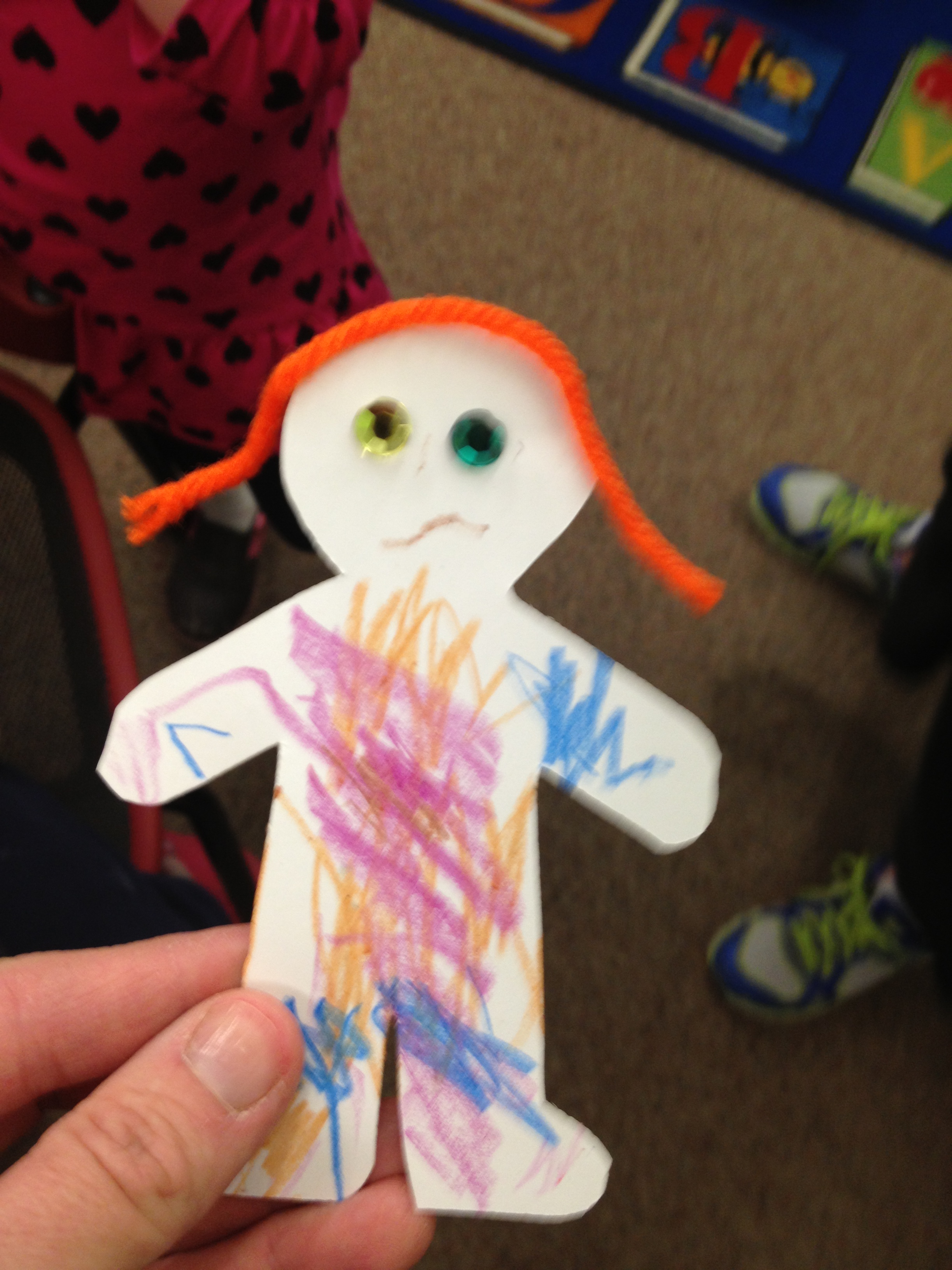
I cut out blank paper dolls from the template provided on the Family Crafts About.com page.  The kids colored the dolls with crayons and glued on different colored pieces of yarn for the hair to make them look like members of their family.  Most of them only got one doll done (a lot of them made themselves or their moms), but they were all adorable.

OTHER BOOKS ABOUT FAMILY:

There were so many books I didn’t get to read at storytime.  Here are just a few:

The Family Book by Todd Parr (Amazon.com link)

I wish I had gotten to this one at the storytime.  It’s a celebration of every kind of family, with the message that every family is unique and special in their own way.  The illustrations are colorful and fun.

The Relatives Came by Cynthia Rylant; illustrated by Stephen Gammell (Amazon.com link)

This book, with its colorful illustrations by Stephen Gammell, captures all the apprehension, chaos, and exuberance and love of a large family gathering.

Five Creatures by Emily Jenkins; illustrated by Tomek Bogacki (Amazon.com link)

A little girl who lives with her parents and two cats counts her family’s traits in a variety of ways.  There are four grownups, and one child; three with orange hair, and two with gray; three who don’t like taking baths; five who loves birds (but not in the same way); etc.  A unique counting book, and a fun way of exploring similarities and differences.

Families by Ann Morris (Amazon.com link)

Lovely book of photographs depicting all different types of families from around the world.

Everywhere Babies by Susan Meyers; illustrated by Marla Frazee (Amazon.com link)

For baby lovers everywhere.  This book shows all the day to day experiences of babies of every kind of family and race.  Adorable.

The Hello, Goodbye Window by Norman Juster; illustrated by Chris Raschka (Amazon.com link)

A little girl describes all the fun and adventures she has at her Nanny and Poppa’s house.  The story, by Phantom Tollbooth author Norman Juster, is rich with childlike details.  The colorful, abstract illustrations by Chris Raschka depict a happy, multiracial family.  A lovely celebration of grandparents.

Have any other favorite family stories?  Please share them in the comments.