I was prompted to write this post by an article shared by a friend on Facebook called 50 Books Every Parent Should Read to Their Child from flavorwire.com. The article claims that bedtime reading is a dying practice, and that a quarter of a million households in the UK don’t own a single book.
My husband and I still read at night to both of our kids, although our fourth grader sometimes prefers to read on his own if he’s in the middle of something good. It’s my favorite time of day. Between the obligatory brushing of teeth, and the inevitable cry of “I’m thirsty!” the instant the bedroom light goes out, I get to snuggle down under the covers with one of my kids, and share some old favorite from my own childhood, or something completely new.
With my son, I’ve enjoyed reliving The Little House books by Laura Ingalls Wilder, Half Magic by Edward Eager, The Lion, the Witch and the Wardrobe by C.S. Lewis, The Wonderful Wizard of Oz by L. Frank Baum, Tales of a Fourth Grade Nothing by Judy Blume, Henry and Ribsy by Beverly Cleary, My Side of the Mountain by Jean Craighead George, Bunnicula by James Howe, and so many more. My daughter still prefers picture books, like Corduroy by Don Freeman (my husband and I both have of our personal copies from childhood).
When I reposted the 50 Books article on Facebook, a number of my friends wrote about books they remembered their teachers reading aloud in school. I have vivid memories of my first grade teacher reading The Trumpet of the Swan by E.B. White, and my fourth grade teacher sharing the deliciously scary View from the Cherry Tree by Willo Davis Roberts, and the unforgettable James and the Giant Peach by Roald Dahl. In fact, those are some of my strongest and happiest memories from school. I’ve been happy to hear my son talk excitedly about the books his own teachers have read aloud: Jigsaw Jones mysteries by James Preller, The Witches by Roald Dahl, and the Hank Zipzer books by Lin Oliver and Henry Winkler (the Fonz!).
Before I had my own kids, I dutifully shared with parents at the library the recommendation that you should read with your children for at least 20 minutes a day. There were studies and statistics and a multitude of different reasons to validate the importance. In fact, this page from The Children’s Reading Foundation proclaims, “For every year you read with your child, average lifetime earnings increase by $50,000. You make a $250,000 gift to your child by reading aloud just 20 minutes a day!”
To be honest, though, I didn’t really understand exactly why reading aloud was important. I read to my son because I loved it and he loved it, and it was the one precious peaceful, happy moment of the day we could both count on. He was not some reading prodigy, consuming The Aeneid in Latin at age 3. He did well in Kindergarten, but didn’t express any particular interest in reading on his own, beyond what his teacher expected.
Then, in first grade, he fell in love with Sonic the Hedgehog comics and Garfield, and off he went. And THAT’S where all those years of reading aloud came in. You’d be surprised how difficult the vocabulary in Garfield is. Just flipping through a copy of Garfield’s 56th book (How DOES Jim Davis do it??), Caution Wide Load, there are words like disputes, attempt, translate, atomic (actually “atomic wedgie”), instincts, obsessive-compulsive, guaranteed, and lederhosen, just to name a few. Because my son had listened to so many books for those first six years, he knew those words, or most of them, and was able to decode and understand them. After that, the reading came easy. Now he reads whatever he likes, which is still a lot of Garfield, but also lengthy novels like Rick Riordan’s The Lightning Thief.
I know not every kid loves reading, even children of voracious readers who have been read to constantly, and I was ready to accept that possibility, but it is a joy to hear him laughing hysterically at the latest Wimpy Kid book, and saying, “Listen to this!”
So yes, parents and teachers, please read aloud to your kids. Read them the stories and books you love, and the ones they love. I can’t guarantee that they will turn into bookworms, but the reading will build their vocabularies and their understanding of language, as well as their understanding of stories, and people, and the world around them. But most importantly, it will build memories of cozy moments sharing wild adventures with you that they will never forget.
I did a little Facebook poll, asking my friends to tell me what books they remembered hearing read aloud when they were kids. There were lots of votes for Dr. Seuss and Bill Peet, and a wide range of other titles, both novels and picture books. Here is the list:
Note: the titles of the books link to Amazon.com. If you’d like to check your local library for any of the titles, a great resource is OCLC World Cat. Once you input your zip code, any title search you do will tell you which libraries near you own that book. My husband and I have also been reading some novels aloud as Kindle books, which have the advantage that you can read with the bedroom light off, and you don’t have to remember your place. Many library systems now provide free ebook collections for Kindle and other devices through Overdrive and similar ebook collections. I’ve also included a few links to OpenLibrary, which lets you borrow some ebooks that are out of print and hard to find.
Picture Books
The Tale of Peter Rabbit by Beatrix Potter (submitted by Laura Hoffmann). We have my husband’s childhood copy of this, and it’s been a favorite of both our kids. There’s also a really nice animated series on DVD called the The World of Peter Rabbit, voiced by popular British actors, and based on the illustrations from the books. Perfect for a rainy afternoon.
The Tale of Mrs. Tiggy-Winkle by Beatrix Potter (submitted by Ashley Carter). Ashley has fond memories of her mother reading this story, about a hedgehog who does the laundry for all the animals in the other Beatrix Potter tales. This story is also featured in The World of Peter Rabbit.
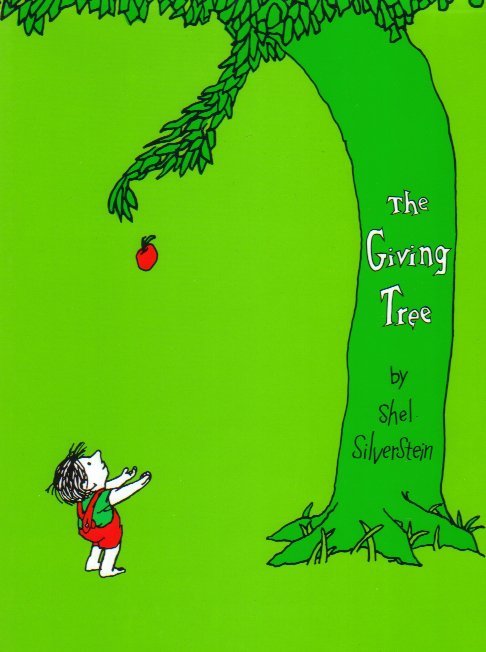
The Giving Tree by Shel Silverstein (submitted by Joshua Adler). Josh says he thinks it shaped his life, and I think it did mine as well. I remember obsessing over it as a kid. There are many different interpretations, both positive and negative, that have been put on it over the years, but I prefer to think of it as a story of unconditional love.
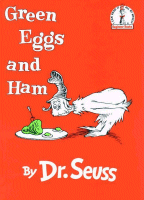
Green Eggs and Ham by Dr. Seuss. (submitted by Joshua Adler, who says he enjoys doing the voices). I’m still amazed by Dr. Seuss’ ability to create such an unforgettable story in verse using the same 50 words.
The Little House by Virginia Lee Burton (submitted by Lindsey Tear). Sweet story about a little house in the country, who becomes engulfed by the city as the year pass, but finally gets to return to her happy rural life. Winner of the 1942 Caldecott Award.
And to Think that I Saw it on Mulberry Street by Dr. Seuss (submitted by Sue Beckmeyer). Dr. Seuss’ first book for children. A little boy sees a horse pulling a wagon on Mulberry Street, and imagines all the ways he could make the story more interesting.
Cookie Monster and the Cookie Tree by David Korr, illustrated by Joseph Mathieu (submitted by Monica Bejarano). Some of the old Sesame Street books were amazingly good, and this was one of my childhood favorites. A greedy witch puts a spell on her cookie tree to keep Cookie Monster from stealing her cookies. The trouble is that the tree will only give cookies to people who share, which means the witch can’t have them either. Large colorful picture book featuring all the Sesame Street characters. This book is out of print, but available to read for free through Open Library.
The Monster at the End of this Book by Jon Stone and Michael Smolin (submitted by Jonathan Strickland). Another great Sesame Street book (a Little Golden book actually), this time featuring Grover, who begs the reader not to turn the pages. There are two great iPad apps based on this book, including Another Monster at the End of This Book, featuring Elmo and Grover.
Madeline by Ludwig Bemelmans (submitted by Neeru Penumella). I still have the copy of this book that my grandmother gave me when I was four, and I remember her reading it to me. Definitely a favorite, although as Abbey Sparrow points out, Madeline is actually kind of an entitled brat. Poor Miss Clavel.
Goodnight Moon by Margeret Wise Brown and Clement Hurd (submitted by Ellyn Moore). This was the first book I remember reading regularly to my son when he was a baby. My husband and I used to recite it to him line by line in the car when he was fussy. My daughter still loves looking for that tricky mouse on every page. Definitely a classic.
Fox in Socks by Dr. Seuss (submitted by Abbey Sparrow). Oh, so tricky to read aloud. This book is full of impossible tongue twisters that get harder on every page, and of course, kids love hearing you mess them up. (Although he insisted on reading them himself instead of listening to them, Abbey also remembers enjoying the art in Cloudy with a Chance of Meatballs by Judi and Ron Barrett, and the Little Monster books by Mercer Mayer).
Clifford the Big Red Dog by Norman Bridwell (submitted by Kim Day). Who doesn’t want a giant red dog they can ride on? I read this at a Preschool Storytime a few weeks ago, and the kids were as excited about it as I was as a kid.
The Paper Bag Princess by Robert Munsch (submitted by Peter Selkin, who says it is a current favorite of his daughter). Great twist on traditional fairy tales. In this story, the Princess saves the day and the Prince, as Pete says, is a bum.
The Wump World by Bill Peet (submitted by Neeru Penumella). The poor peaceful grass-eating Wumps are happy until they are invaded by the Pollutians from planet Pollutus. Timeless environmental story. Bill Peet was also mentioned as a favorite author by Kim Day and Sue Beckmeyer.
Flutterby by Stephen Cosgrove and Robin James (submitted by Noelle D’Amato). One of the Serendipity books, with their adorable big-eyed animal characters, this one’s about a baby pegasus trying to find out who she is. This book is out of print, but available to borrow for free on Open Library.
Beginning Reader/Early Chapter Books
Morris the Moose by B. Wiseman (submitted by Tina Williams). These books about a mixed-up moose are hilarious and so much fun to read aloud.
Frog and Toad by Arnold Lobel (submitted by Laura Hoffmann). Classic, both as early readers and read-alouds for younger kids. Frog and Toad are the children’s book version of The Odd Couple.
Amelia Bedelia by Peggy Parish (submitted by Ashley Carter). These books about a maid who takes everything literally are just as funny and popular today as they were when I was a kid.
Chapter Books
Pippi Longstocking by Astrid Lindgren (submitted by Maria Kurland). Oh, how I longed to be Pippi Longstocking, with her superhuman strength and her collection of gold coins. Fantastic, whimsical adventure stories, especially for girls.
Karlsson on the Roof by Astrid Lindgren (submitted by Maria Kurland). I have not read this book, but it looks hilarious, about a little man with a propeller on his back, who lives on the roof of a little boy’s house.
The Wonderful Adventures of Nils by Selma Lagerlof (submitted by Maria Kurland). Another one I’m not familiar with, but it has phenomenal reviews on Amazon, where it is described as “one of Sweden’s best-loved books.” It’s also available for free on Kindle.
Winnie the Pooh by A. A. Milne (submitted by Maria Kurland). I picked up an audio version of these several years ago, read by British actor Jim Broadbent, and the whole family loved them. I loved the stories as a kid, but I don’t think I realized back then the subtlety and humor of Milne’s writing. They are truly hilarious.
The Adventures of Tom Sawyer by Mark Twain (submitted by Maria Kurland). My husband is currently reading this with our son. It’s longer than I remember, with a lot more adventures, but it’s amazing how timeless and funny the story is. Maria also recommended The Adventures of Huckleberry Finn by Mark Twain, which of course has a heavier storyline because of its treatment of slavery, but is definitely an essential classic of American literature.
The Jungle Book by Rudyard Kipling (submitted by Maria Kurland). Kipling’s writing is so much fun to read aloud. The Elephant’s Child and Rikki Tikki Tavi were two of my favorite stories to hear as a child. The Jungle Book is full of the same rich, rhythmic language and wonderful detail, and is very different from the Disney movie.
Bambi: A Life in the Woods by Felix Salten (submitted by Maria Kurland). There are lots of abridgments and picture book versions of this book, and it’s hard to find the original novel, except as an ebook. It’s a beautiful novel full of rich descriptions of the realities of life in the forest.
Mary Poppins (Amazon.com link) by P.L. Travers (submitted by Maria Kurland and Lynn Williamson). I wish someone had read this one aloud to me, but I do have a very clear memory of hiding behind our living room sofa so I could read it in peace. The book describes a lot more adventures than the Disney movie, which I also love.
Paulus and the Acornmen by Jean Dulieu (submitted by Abbey Sparrow). I’m not familiar with this book, but Abbey remembers his whole family fighting over it when he was a kid. Unfortunately, it’s out of print and hard to find now, but the copies that are out there sell for $250+, so it must be good! According to WorldCat, there are 28 copies left in US libraries, so you may be able to get it through Interlibrary Loan.
A Wrinkle in Time by Madeline L’Engle (submitted by Abbey Sparrow). Another strong childhood memory is hearing my third grade teacher read this aloud to the class. It was so mesmerizing, with the mysterious Mrs. Who, Mrs. Which, and Mrs. Whatzit, the whole idea of the tesseract, and the terrifying IT. I agreed to let my husband read this one to our son, on the condition that I got to read him the sequel A Wind in the Door, a book I found truly mind-blowing as a child.
The Wind in the Willows by Kenneth Grahame (submitted by Abbey Sparrow). What is it about animal stories that make them so timeless? Classic, funny stories about Rat, Mole, Toad, and Badger that Kenneth Grahame used to tell to his own son, Alistair.
Brighty of the Grand Canyon by Marguerite Henry and Wesley Dennis (submitted by Teri Tosspon). Teri remembers her teacher reading this aloud to the class. Based on an actual burro who used to carry visitors down into the Grand Canyon, this is a great animal adventure story. It would the perfect book to read before visiting the Grand Canyon. Marguerite Henry also wrote Misty of Chincoteague and King of the Wind, two of my other favorite books from childhood.
Johnny Tremain by Esther Forbes (submitted by Teri Tosspon). Another one Teri remembers her teacher reading. Newbery Award winning historical fiction novel about a boy living in Boston just before the American Revolution. I’m embarrassed to admit I haven’t read it yet, but I think it will be one of the next books I read with my son.
Alexander and the Magic Mouse by Philippe Fix and Martha Sanders (submitted by Anne McArthur). I’m not familiar with this book, about an old lady and the animals she lived with, but Anne says she read it until it was literally falling to pieces. It has rave reviews on Amazon as well. Unfortunately, it’s out of print, but you can borrow it for free through Open Library.
The Hobbit by J.R.R. Tolkein (submitted by Jonathan Strickland). Hobbits, dwarves, a magic ring, a scary dragon. What more could you ask for from an adventure story. My husband got to read this one to our son, so I call dibs on reading it to our daughter when she’s older.
Hamlet by William Shakespeare (submitted by Jonathan Strickland, who requested that his Dad read it immediately after The Hobbit). Funny that I never thought of reading Shakespeare at bedtime, but he is, after all, the master storyteller, and it would be great fun to try to read all the parts.
Lad, a Dog by Albert Payson Terhune (submitted by Lynn Williamson). Lynn remembers looking forward to her teacher reading a chapter of this every day. It’s a dramatic series of stories about a collie named Lad. I had a picture book version of the stories “Lost” and “A Miracle or Two” as a child, and I used to read them over and over.
Lassie Come-Home by Eric Knight (submitted by Jerry Williamson). Jerry remembers his teacher reading this book aloud. Nothing tugs at the heartstrings like dog stories, but at least this one has a happy ending. The inspiration for the TV show and a wonderful movie adaptation starring Elizabeth Taylor, this book tells the story of a boy’s beloved collie, who has to be sold when the family falls on hard times. You can figure out the rest from the title, but it’s quite an adventure.
Noddy books by Enid Blyton (submitted by Neeru Penumella). I didn’t have access to Enid Blyton growing up, but she seems to have had a tremendous influence on a lot of my friends from overseas. The Noddy books are about a wooden boy and his adventures in Toyland. There have been several stage productions and a TV series based on them in the UK. Unfortunately the books are out of print in the US, but you can borrow several of them for free through Open Library.
Asterix and Obelix books by Rene Goscinny and Albert Uberzo. (submitted by Neeru Penumella). I didn’t grow up with these either, but they have been popular in every library where I’ve worked. A series of graphic novels about a village of Gauls in 50 BC, whose residents have managed to fight off the Roman invaders by drinking a magic potion that gives them superhuman strength. The books are full of word play, and a number of my friends credit them for teaching them about the history of the Roman Empire.
My Father’s Dragon by Ruth Stiles Gannett; illustrated by Ruth Chrismas Gannett (submitted by Thomas Moore). Whimsical adventure story about a boy who sets out for Wild Island in order to rescue a baby dragon who has been enslaved by the animals there. The short chapters, and black-and-white illustrations on almost every page make it a good introductory chapter book for younger kids.
Ida Early Comes Over the Hill by Robert Burch (submitted by Kerri Meeks Hall). Kerri remembers her fifth grade teacher reading this to the class, and also reading it herself when she was student teaching. Although I haven’t read this one, I remember reading Burch’s Queenie Peavy over and over when I was a kid. This book is about a family of four kids in Depression Era rural Georgia, whose lives are changed when a tall, ugly woman with a wonderful sense of humor comes to help them out. Kerri says her own copy is now held together with a rubber band, and she is looking forward to reading it to her daughter when she is bit older.
Stories
The Monkey’s Paw by W.W. Jacobs (submitted by Tina Williams). Tina says Ms. Delman was her favorite teacher, because she read great books. The Monkey’s Paw is a fantastically creepy classic about the dangers of getting what you wish for. I read it in my ninth grade English (thank you, Ms. Pogue!) and it was definitely unforgettable. The story is available for free as a Kindle book. (As an aside, Tina remembers her teacher reading a book about a kid who travels through time by way of a spinning thing on his hat. She would love to find out the title. Anyone?)
Animal stories by Ernest Thompson Seton and Gerald Durrell (submitted by Maria Kurland). I’m not familiar with Ernest Thompson Seton, who was one of the founders of the Boy Scouts and also sported a fabulous mustache, but his collection of stories about wild animals gets wonderful reviews and is available for free as a Kindle book. I do know Gerald Durrell, and remember laughing hysterically as a child over Menagerie Manor, about his adventures running a private zoo on the Isle of Jersey.
Mai Kulkarni remembers hearing her dad tell stories from the Ramayana. Neeru Penumella remembers hearing them from her grandmother, who also shared stories from the Mahabarata, and brought Amar Chitra Katha comics.
A hearty thank you to everyone who sent me their favorite read-alouds. Please send me the titles of other books you remember, and I’ll be happy to add them to my list. The books we share with kids have their own immortality. Let’s keep them alive!