By the Book: A Storytime About Interactive Picture Books

Early Literacy Tip: Engage children in the books you read together by inviting them to mimic sounds and actions from the story, and asking them questions about the pictures and what they think will happen next. Interactive picture books are a fun and easy way to get kids involved in the story.

Interactive picture books (the kind that asks the reader to do different actions) are so much fun to share at storytime. They are also a great way to model the kinds of interactions that caregivers can use to encourage kids to engage with the books they read aloud. For this week’s storytimes, I decided to feature several of these types of books, and briefly explain to caregivers that they provide an easy way to give kids a way to participate in the books they read together, even before they learn how to read for themselves.

Here’s what we did:

Books:

Is Everyone Ready for Fun? by Jan Thomas

Jan Thomas is one of my favorite storytime authors. In this one, a trio of enthusiastic cows announce that it’s time to bounce on Chicken’s sofa. When Chicken tells them there will be no bouncing on his sofa, the cows dance, wiggle, and eventually nap on the sofa instead. The kids enjoyed doing the actions along with the cows. This is a great book for restless toddlers.

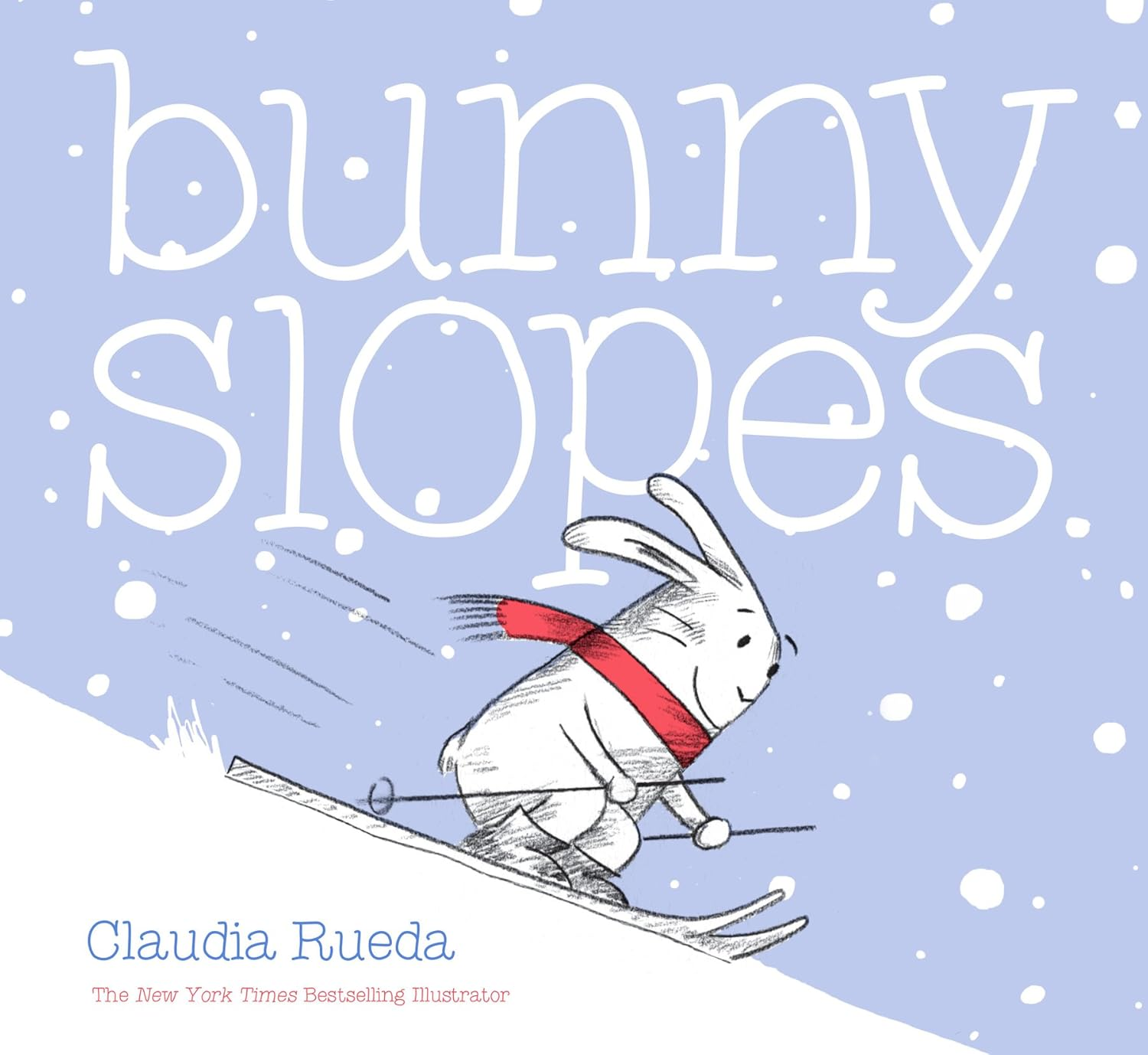
Bunny Slopes by Claudia Rueda

One of a series of Bunny Interactive books, this one asks the reader to help Bunny go skiing by shaking the book (or your arms) to make it snow, tilting the book (or your body) to make a ski slope, and more. The kids enjoyed following the bunny’s instructions.

Don’t Wake the Dragon by Bianca Schulze; illustrated by Samara Hardy

This was my first time reading this book, but it worked really well. A naughty dragon is finally asleep, and the narrator asks you to help keep her that way by saying “Shhh!” three times, rocking the book (or your body), and quieting a noisy group of knights by participating in their birthday party celebration until you can finally get their attention. The illustrations are bright and eye-catching, and the kids really seemed to enjoy all of the actions.

Count the Monkeys by Mac Barnett; illustrated by Kevin Cornell

I read this one for Family Storytime. It’s time to count the monkeys! There’s just one problem: a bunch of other animals (and people) keep showing up and scaring the monkeys away. You can help by giving high fives to the lumberjacks, moving your hand in a Z to confuse the crocodiles, saying thank you to the beekeepers, and more. This book got lots of laughs from both kids and grownups.

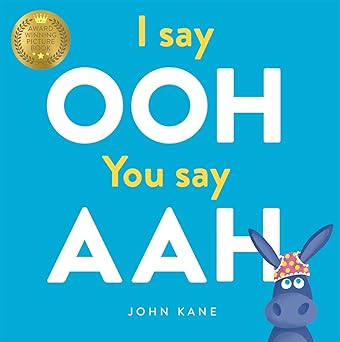
I Say Ooh, You Say Aah! by John Kane

I didn’t actually end up reading this at storytime, because it seemed a bit too complicated for the toddlers and preschoolers to follow. But I read it to a group of Kindergartners and T/K (Transitional Kindergartners), and they loved it so much, I ended up reading it twice (they even begged me to read it a third time!). The book asks the reader to follow a series of silly instructions: say “Aah” when the narrator says, “Ooh;” say “Underpants” when you see a picture of an ant; pat your head when you see the color red, etc. It then introduces a donkey named, “Ooh” with an ant on his nose, and things get very silly.

Songs:

We Bounce and We Bounce and We Stop

We sang this to go with the book Is Everyone Ready for Fun? This is one of my all-time favorite storytime songs, because it’s so versatile. It works for almost any age (as a lapsit song for babies, and an action song for toddlers on up). You can add in age-appropriate actions like clapping, jumping, spinning, etc., and ask the kids for suggestions. You can sing it fast or slow, or add in long pauses to make them wait for the action (“We…bounce and we bounce and we stop!”). Or repeat the third line to keep them guessing when the “stop” will come. It’s always a hit!

[C] We bounce and we bounce and we stop!
[C] We bounce and we bounce and we stop!
[C] We bounce and we bounce and we bounce and we bounce,
[C] And we bounce and [G7] we bounce and we [C} stop!

The Sleepy Bunny Song

We sang this after reading Bunny Slopes. This is another long-time favorite, which I learned from a daycare provider. The kids LOVE pretending to sleep on the floor, and then jumping up at the end.

For Outdoor Musical Storytime, we sang it twice, doing the actions with our bodies. Then I brought out the big parachute and put cotton balls on top to look like little bunnies. The kids loved watching them fly in the air.

See the little bunnies sleeping
‘Till it’s nearly noon.
Come, let us wake them with a merry tune?
They’re so still.
Are they ill?
NO! Wake up little bunnies!
Hop little bunnies, hop, hop, hop!
Hop little bunnies, hop and stop!

Monkey See and Monkey Do

I wish I could remember who taught me this song, because it’s one I’ve used for my whole career. It’s another really versatile song with a catchy tune, and you can ask the kids to suggest other actions for the monkey to do.

When you clap, clap, clap your hands,
The monkey clap, clap, claps his hands,
Monkey see, and monkey do,
The monkey does the same as you!

Repeat with other motions: when you jump up and down; make a funny face; turn yourself around; and sit back on the ground.

Down By the Bay

We sang this as our instrument play-along at the end. Each time we sang it through, I asked the kids to suggest different things that the mother might ask. Some kids were familiar with the original song, and suggested, “Did you ever see a llama wearing pajamas?” but another kid suggested, “Did you ever see a whale wearing pajamas?” which everyone thought was really funny.

[C] Down by the bay, where the watermelons [G7] grow,
Back to my home, I dare not [C] go,
For if I [F] do, my mother will [C] say,
“Did you ever see a whale with a polka dot tail
[G7] Down by the [C] bay?”

Stay & Play: Marble Painting

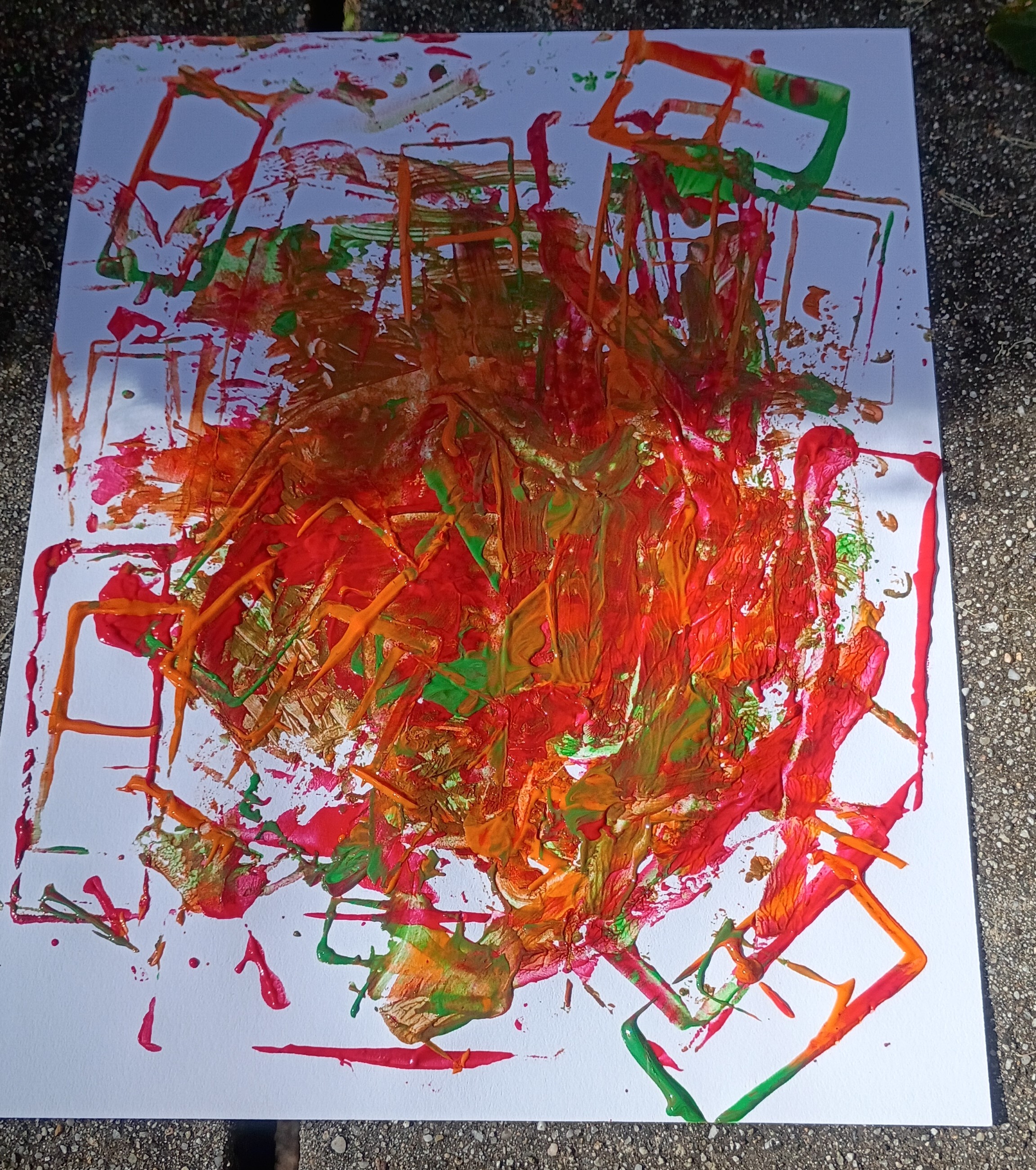
This was really messy, and had nothing to do with the theme, but I had been wanting to try this process art activity ever since one of my coworkers found a big box of marbles in our craft closet. Before storytime, I traced the bottom of a pie tin onto white paper, and cut out a circle for each child.

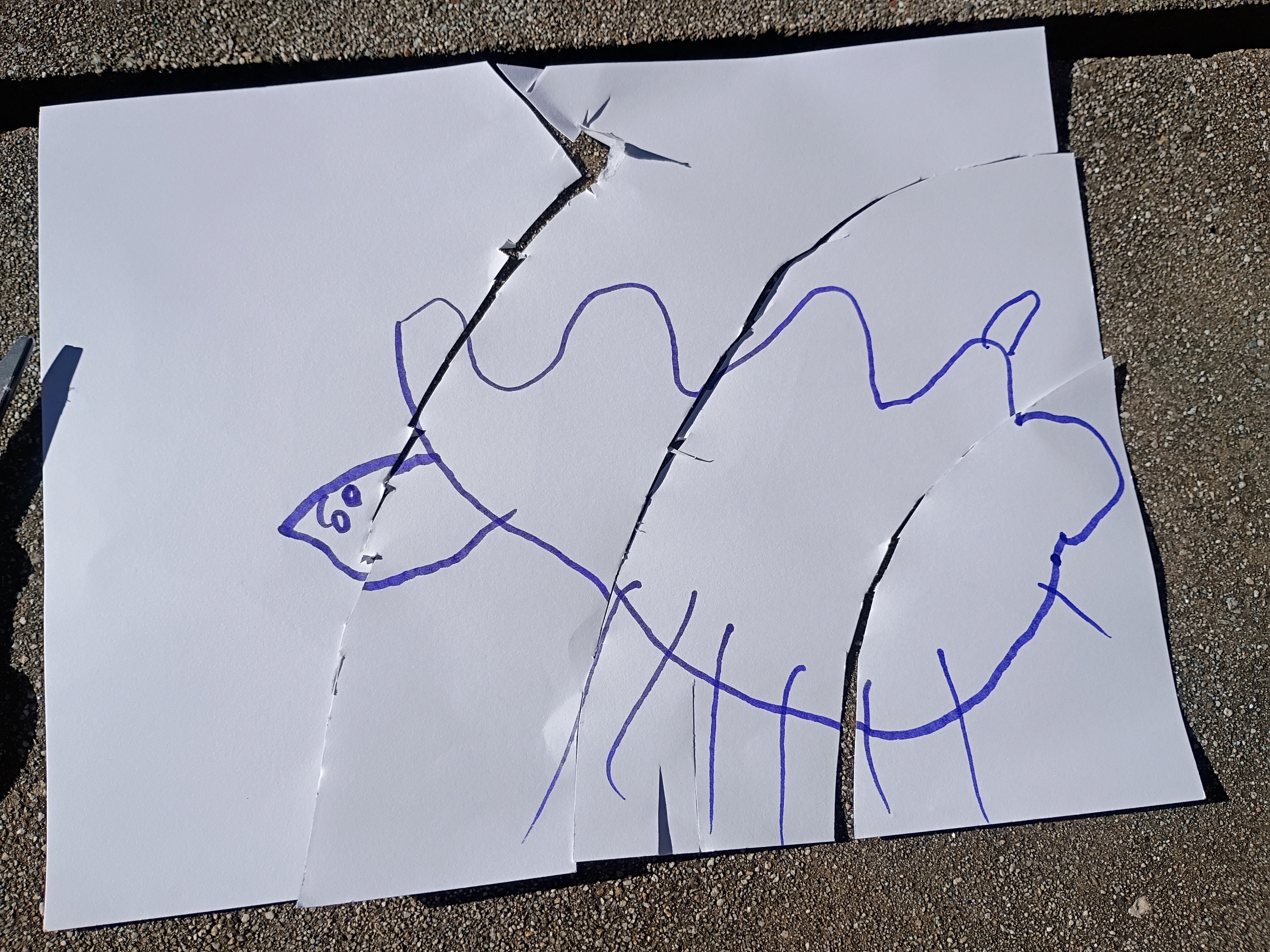
For the Stay & Play, I gave each child a pie tin with a paper circle inside, and put a few dollops of different colors of tempera paint on the paper. I let them choose a marble (or two or three), and then they tilted the pie tin back and forth to roll the marble through the paint. One little girl discovered that she could make a more understated painting by taking the paint-covered marble from her first attempt, and rolling it across another white paper. You can see both paintings in the photo above.

Do you have any favorite interactive picture books? Please share them in the comments below.
Rhyme Time: A Storytime About Rhyming

Early Literacy Tip: Pointing out rhyming words and playing rhyming games with kids is a great way to develop their phonemic awareness (their understanding of the different sounds that make up words), which will make it easier for them to learn to read in elementary school.

I’ve been continuing my series of storytimes based on early literacy tips, which has been helping me get more comfortable sharing early literacy strategies with caregivers. It’s also been a fun challenge to select picture books that support each strategy.

This week, we focused on the idea of rhyming words. I started out by talking about rhymes, and asking the kids to think of words that rhymed with “cat.” They suggested “hat” and “bat.” I then explained that playing with rhymes is a great way to practice the skills that will help them become strong readers later on.

Books:

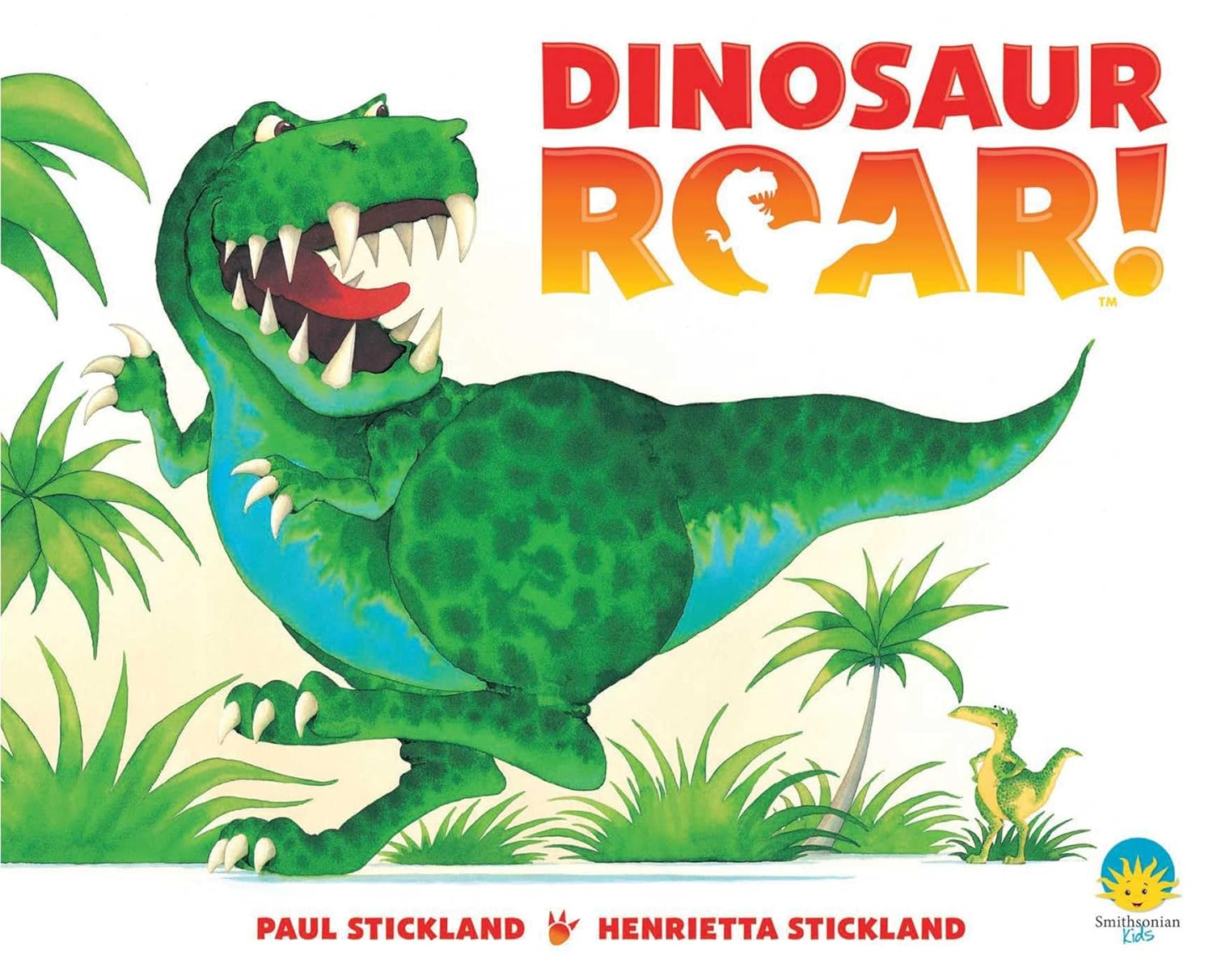
Dinosaur Roar by Paul Stickland & Henrietta Stickland

This was a favorite of my own kids, and several of the storytime families were excited to see it. It’s basically a rhyming book of opposites, featuring large, colorful dinosaurs, and it’s great for having the kids try to guess the rhyming word at the end of each couplet.

Rhyming Dust Bunnies by Jan Thomas

Jan Thomas is one of my favorite storytime authors, and I have especially enjoyed sharing this book, which fit the theme perfectly. I had to explain what dust bunnies were, since most of the kids didn’t know (I explained that in real life, they are not as cute or colorful as the ones in the book). In this story, four dust bunnies play a game to come up with rhyming words, but the blue one (named Bob) keeps saying things that don’t rhyme, like “Look out!” The rest of the dust bunnies soon discover that Bob is trying to warn them about a monster with a broom. The kids love the last page, when the dust bunnies end up inside a vacuum cleaner. This is a fun book to read aloud, especially if you like doing different voices.

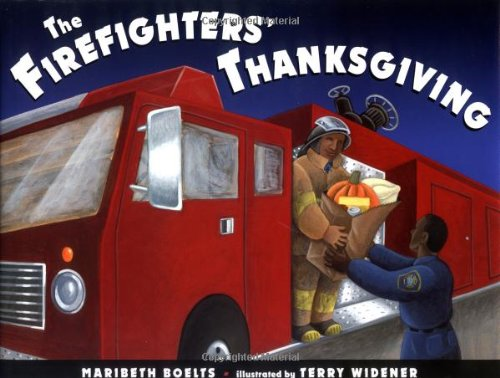
The Firefighter’s Thanksgiving by Maribeth Boelts; illustrated by Terry Widener

I chose this book more because it’s close to Thanksgiving, although it is also a rhyming book. It’s one of the few Thanksgiving books that I actually like, about a group of firefighters who are too busy putting out fires to cook and eat their Thanksgiving dinner. In the end, people in the community bring them a Thanksgiving feast, which they share with an injured firefighter who had to go to the hospital. Often when I read this book, the kids get into a discussion about different ways a firefighter might get hurt on the job: climbing through broken glass, breathing in smoke, getting hit by something falling. I’ve been really impressed by how they think through the different things a firefighter might have to do, and the risks they would entail.

See You Later, Alligator by Sally Hopgood; illustrated by Emma Levey

This is a cute book about a tortoise who is leaving the zoo, but wants to say goodbye to all of his animal friends first, each time using a rhyme like “Toodaloo, Kangaroo.” The kids enjoyed calling out the names of each animal.

Songs:

We Are the Dinosaurs

We sang this to go along with Dinosaur, Roar. Always a hit!

[Dm] We are the [C] dinosaurs marching, marching.
[Dm] We are the dinosaurs. [A] Whaddaya think of that?
[Dm] We are the dinosaurs [C] marching, marching.
[Dm] We are the [A] dinosaurs. [Dm] We make the [C] earth [Dm] flat.
We make the [C] earth [Dm] flat.

[F] We stop and eat our [C] food, [F] when we’re in the [C] mood.
[F] Stop and eat our [C] food on the [Dm] ground.
[F] We stop and eat our [C] food, [F] when we’re in the [C] mood.
[F] Stop and eat our [C] food, and [Dm] then we march [A] around.

[Dm] We are the [C] dinosaurs marching, marching.
[Dm] We are the dinosaurs. [A] Whaddaya think of that?
[Dm] We are the dinosaurs [C] marching, marching.
[Dm] We are the [A] dinosaurs. [Dm] We make the [C] earth [Dm] flat.
We make the [C] earth [Dm] flat.

[F] We stop and take a [C] rest, [F] over in our [C] nest.
[F] Stop and take a [C] rest at the end of the [Dm] day.
[F] We stop and take a [C] rest, [F] over in our [C] nest.
[F] Stop and take a [C] rest, and [Dm] then you’ll hear us [A] say…

[Dm] We are the [C] dinosaurs marching, marching.
[Dm] We are the dinosaurs. [A] Whaddaya think of that?
[Dm] We are the dinosaurs [C] marching, marching.
[Dm] We are the [A] dinosaurs. [Dm] We make the [C] earth [Dm] flat.
We make the [C] earth [Dm] flat.

[A] And then we RO-AR-OAR!
[A] Because [Dm] we [C] are the [Dm]dino-[D]saurs!

A Hunting We Will Go

We sang this with the parachute at Outdoor Musical Storytime. I brought some small stuffed animals (a pig, a dog, and a mouse) and each time we sang it, I asked the kids to suggest rhymes for each one. Then I threw it on the parachute, and we sang the song, shaking the parachute to the beat. We had “we’ll catch a pig and give it a twig,” “we’ll catch a dog and let him meet a hog,” and “we’ll catch a mouse and put it in a house.”

Oh, [C] a-hunting we will go!
A-[F]hunting we will go!
We’ll [G7] catch a fox and put it in a box,
And then we’ll let it [C] go!

Hurry, Hurry, Drive The Firetruck

We sang this to go along with The Firefighter’s Thanksgiving for Family Storytime. We sang the whole thing three times. I always put out puppets for the kids to sit with, so when we got to the “Hurry, Hurry, Save the kitty cat” line, I substituted one of the puppets (a porcupine, a unicorn, etc.) for the cat.

Hurry, Hurry, Drive the fire truck!
Ding, Ding, Ding, Ding, Ding!

Hurry, Hurry, Spray the water…

Hurry, Hurry, Climb the ladder…

Hurry, Hurry, Save the kitty cat…

Slowly, Slowly, Back to the station…

I’ll See You Later, Alligator

We sang this song for our instrument play-along at the end, after reading See You Later, Alligator. It’s one I wrote a few years ago, after a storytime discussion about the differences between crocodiles and alligators.

[C] If you see something in the water
With [F] scales and lots of teeth,
[G7] Looking like a floating log
With [C] four legs underneath.
[C] You can tell that it must be a type
Of [F] dangerous reptile.
But is it an alli[C]-gator
Or a [G7] hungry croco[C]-dile?

I’ll see you [F] later, Alligator, (wave)
With your [G7] mouth shaped like a [C] U, (make a u-shape with your hands)
But [F] Crocodile, with the V-shaped [G7] smile, (make a v-shape with your hands)
It’ll be a while
‘Till I see [C] you. (point)

[C] Alligators like to live in swamps,
While [F] crocs prefer a river.
No [G7] matter where you find them,
They’re sure to make you [C] shiver.
On crocs you see their bottom teeth,
On [F] gators just the top.
If you’re able to see [C] either,
You’re [G7] way too close, so [C] STOP!

I’ll see you [F] later, Alligator,
With your [G7] mouth shaped like a [C] U,
But [F] Crocodile, with the V-shaped [G7] smile,
It’ll be a while
‘Till I see [C] you.

[C] crocodile has lighter skin,
While [F] gator’s skin is dark,
To [G7] help them hide out in the mud
Waiting to [C] catch their mark.
Learning of their differences
Can [F] be a lot of fun,
But one thing they have in [C] common,
If you [G7] see one you should [C] run!

I’ll see you [F] later, Alligator,
With your [G7] mouth shaped like a [C] U,
But [F] Crocodile, with the V-shaped [G7] smile,
It’ll be a while
‘Till I see [C] you.

Stay & Play: Coffee Filter Dust Bunnies

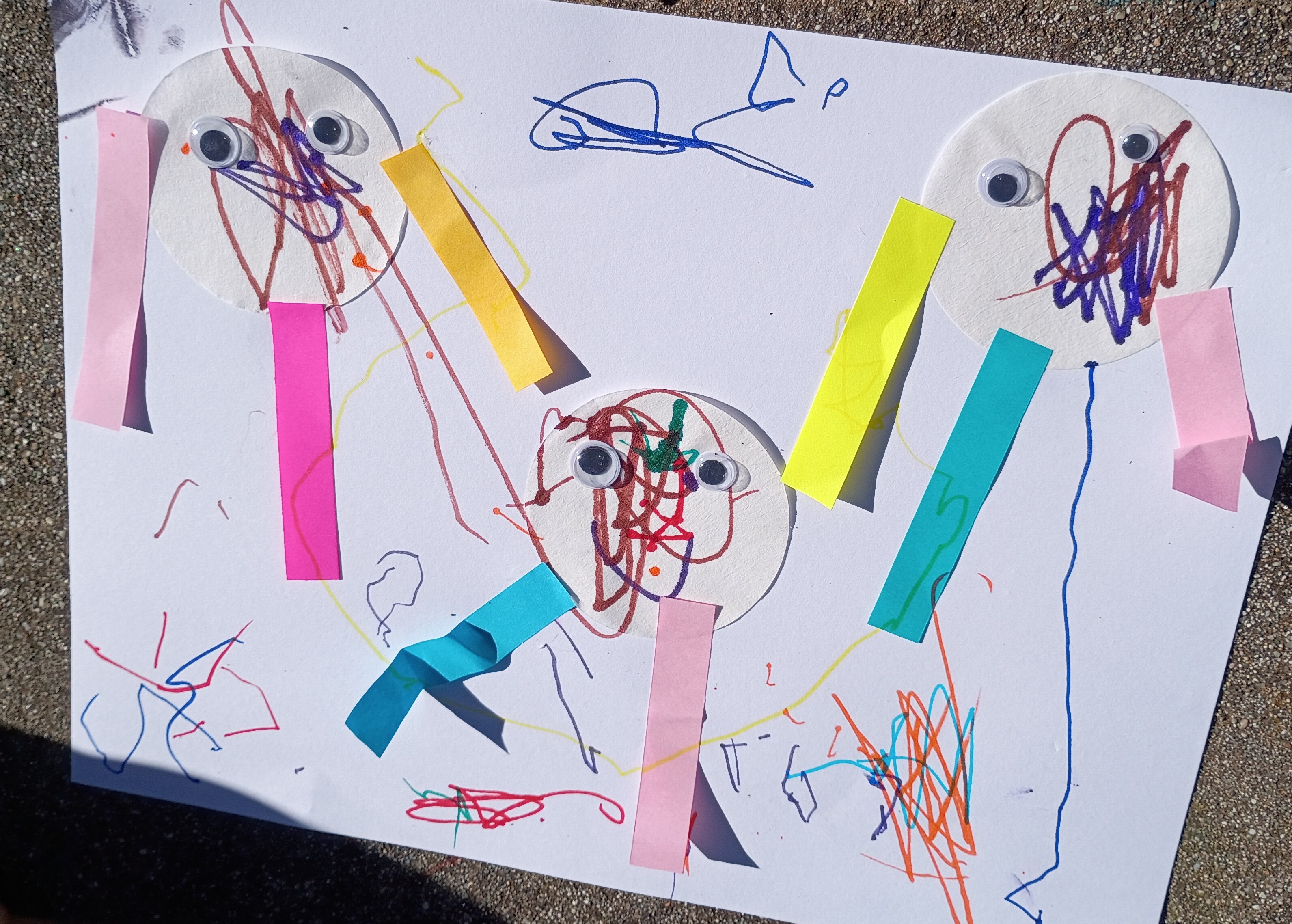
This Stay & Play was based on Rhyming Dust Bunnies. Before the storytime, I cut out small strips of colored paper for the arms and legs. For the Stay & Play, I put out glue sticks, markers, the colored paper strips, googly eyes, and small coffee filters (the kind you use for an Aeropress, although you could also use regular sized ones). The kids really enjoyed assembling and decorating their dust bunnies.

Do you have favorite rhyming books? Please share them in the comments below.
The Big Picture: A Storytime About the Word “Big”

Early Literacy Tip: Point out common words in books to help young kids build their sight word vocabulary and print awareness.

I’ve been continuing my new approach of building my storytimes around an early literacy tip. This past week, I focused on the word “BIG,” which appears in a lot of picture books.

I started by explaining that a great way to help children become strong readers later on is to point out common words in books. This not only helps build their sight word vocabulary (the words that they can read automatically, without having to sound them out), but can also become a kind of game to make them excited to start paying attention to the words on the pages of books. For each of the books I shared in the storytime, I pointed out the word “BIG.”

Books:

Clifford, the Big Red Dog by Norman Bridwell

I chose this book, not only because it is a classic, but because we have rented a Clifford, the Big Red Dog costume for our upcoming Noon Year’s Eve program, and I wanted to let the families know that they would have a chance to meet Clifford in December. This was also one of my favorite childhood books, and it was fun to see the humor in the illustrations still holds up for kids today: Clifford taking a bath in the swimming pool, catching a car, or trying unsuccessfully to play hide and seek.

Bulldozer’s Big Day by Candace Fleming & Eric Rohmann

Cute story about a Bulldozer who is disappointed that none of his construction vehicle friends seem to care that it’s his birthday, until they surprise him with a giant cake. It was funny to see some of my most distractible toddlers latch on to the pictures of big machines. One boy came right up to me to point to and “talk” about the bulldozer.

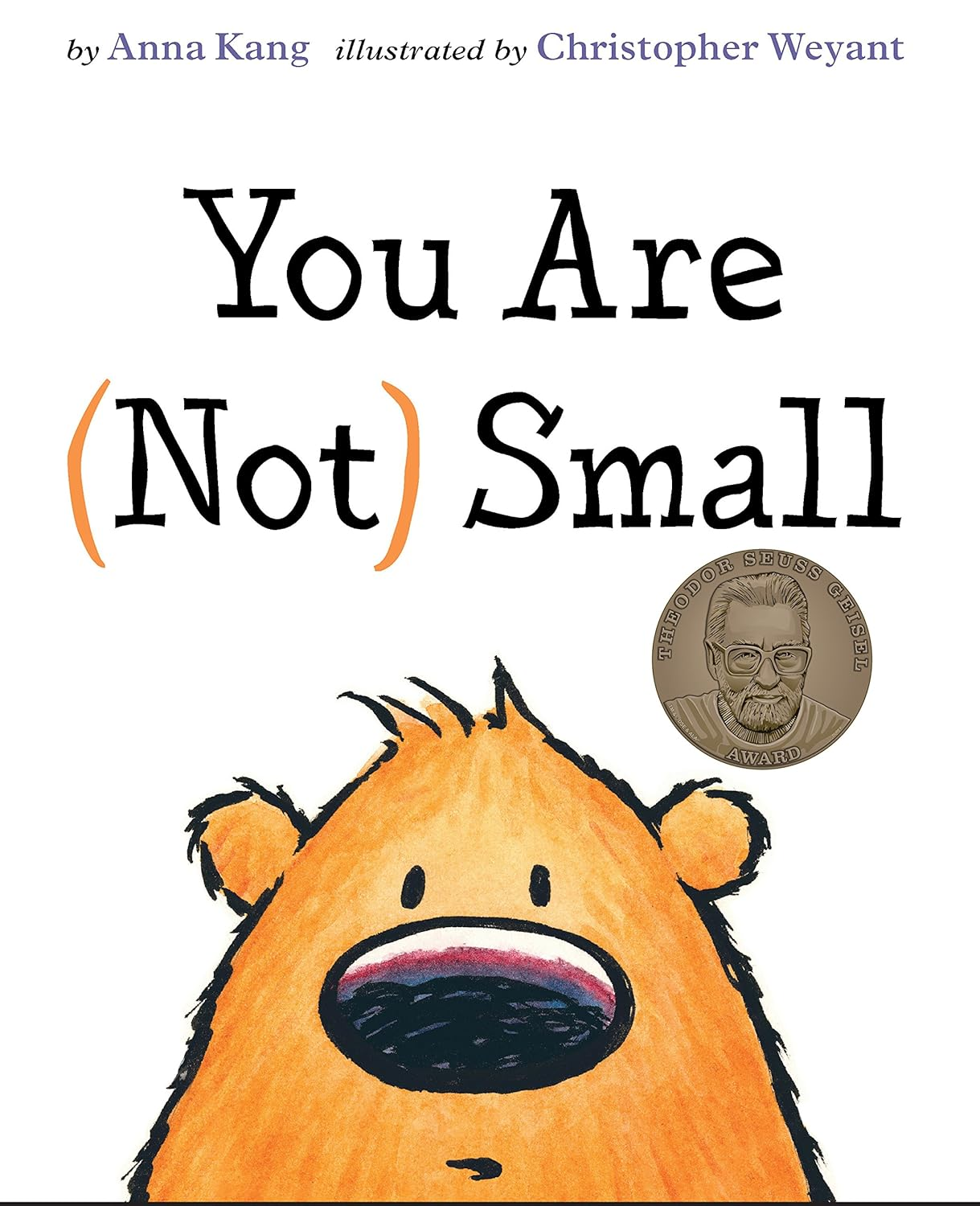
You Are (Not) Small by Anna Kang; illustrated by Christopher Weyant

This one doesn’t have the word BIG in the title, but it shows up several times in the text. Two bears argue over whether they are each “big” or “small,” until the arrival of much bigger and smaller bears make it clear that size is relative. The kids really enjoyed the illustrations.

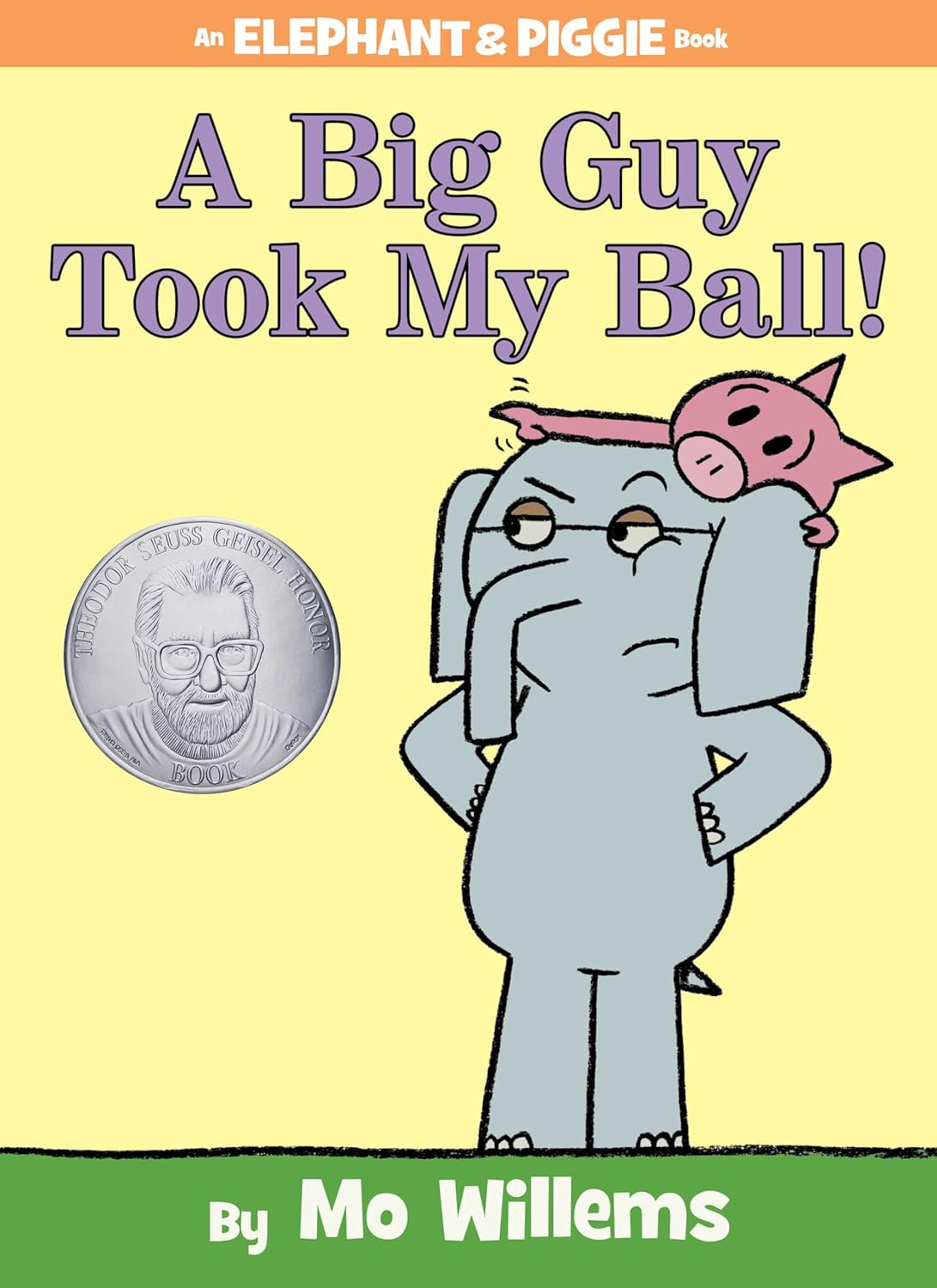
A Big Guy Took My Ball by Mo Willems

One of my favorite Elephant and Piggie books! Just before I read this one for Family Storytime, our town mayor happened by. She’s a school librarian and we used to do storytime together, so I asked her to read this one with me (she read Gerald’s parts and I read Piggie’s). The kids were surprised to find themselves being read to by the mayor, and it made me think that I should bring in more guest readers. Anyway, in the book, Piggie complains to Gerald that a “big guy” has taken the big ball that she found. When Gerald promises to get the ball back, he finds that the big guy is a whale, who is grateful that they found his “little ball.” The part where Gerald talks about how big the “big guy” always gets a laugh.

Songs:

B-I-N-G-O

I sang this to go along with Clifford, the Big Red Dog. This is an old standby, but here’s a video from Super Simple Songs, just in case you’re not familiar with it. Traditionally, you leave out a letter each time you sing it, and clap instead. To go along with our theme, I had the kids bark the missing letters instead, and alternated between barking like a big dog, and barking like a small one.

[C] There was a farmer [F] had a [C] dog,
And Bingo [G] was his [C] name-o.
[C] B-I- [F] N-G-O
[G] B-I- [C] N-G-O
[Am] B-I- [F] N-G-O
And [G] Bingo was his [C] name-o.

There was a farmer had a dog,
And Bingo was his name-o.
(Clap!)-I-N-G-O!… etc.

Elephants Have Wrinkles

We sang this one at Family Storytime to go with the book A Big Guy Took My Ball. I asked the kids to suggest new places where elephants have wrinkles (on their foreheads, on their neck, etc.) for each verse, and we sang it a little faster each time.

Elephants have (pat legs on each syllable)
Wrinkles, Wrinkles, Wrinkles (clap hands on each syllable)
Elephants have (pat legs on each syllable)
Wrinkles (clap hands on each syllable)
Everywhere! (stomp feet on each syllable)
On their nose! Oh-oh! (touch your nose, and mime a trunk)

Repeat

Elephants have wrinkles…

On their legs! On their nose! Oh-oh!

The Itsy Bitsy Spider

We sang this with the parachute for Outdoor Musical Storytime. The first time through, I put a tiny plastic spider on the parachute and we bounced it up and down, which the kids found quite exciting. The second time through, I put a large plastic spider on the parachute and we sang, “The great big hairy spider” instead.

The itsy bitsy spider went up the water spout.
Down came the rain and washed the spider out!
Out came the sun and dried up all the rain,
And the itsy bitsy spider went up the spout again.

The great big hairy spider went up the water spout…

Baby Shark

We ended with the Pink Fong version of Baby Shark (which features different sizes of shark) as our instrument play-along.

[C] Baby shark, doo doo doo doo doo doo
[F] Baby shark, doo doo doo doo doo doo
[Am] Baby shark, doo doo doo doo doo doo
[G] Baby shark!

Mommy shark, doo doo doo doo doo doo…

Daddy shark…

Grandma shark…

Grandpa shark…

Let’s go hunt…

Run away!…

That’s the end…

Stay & Play: Pom-Pom Painting

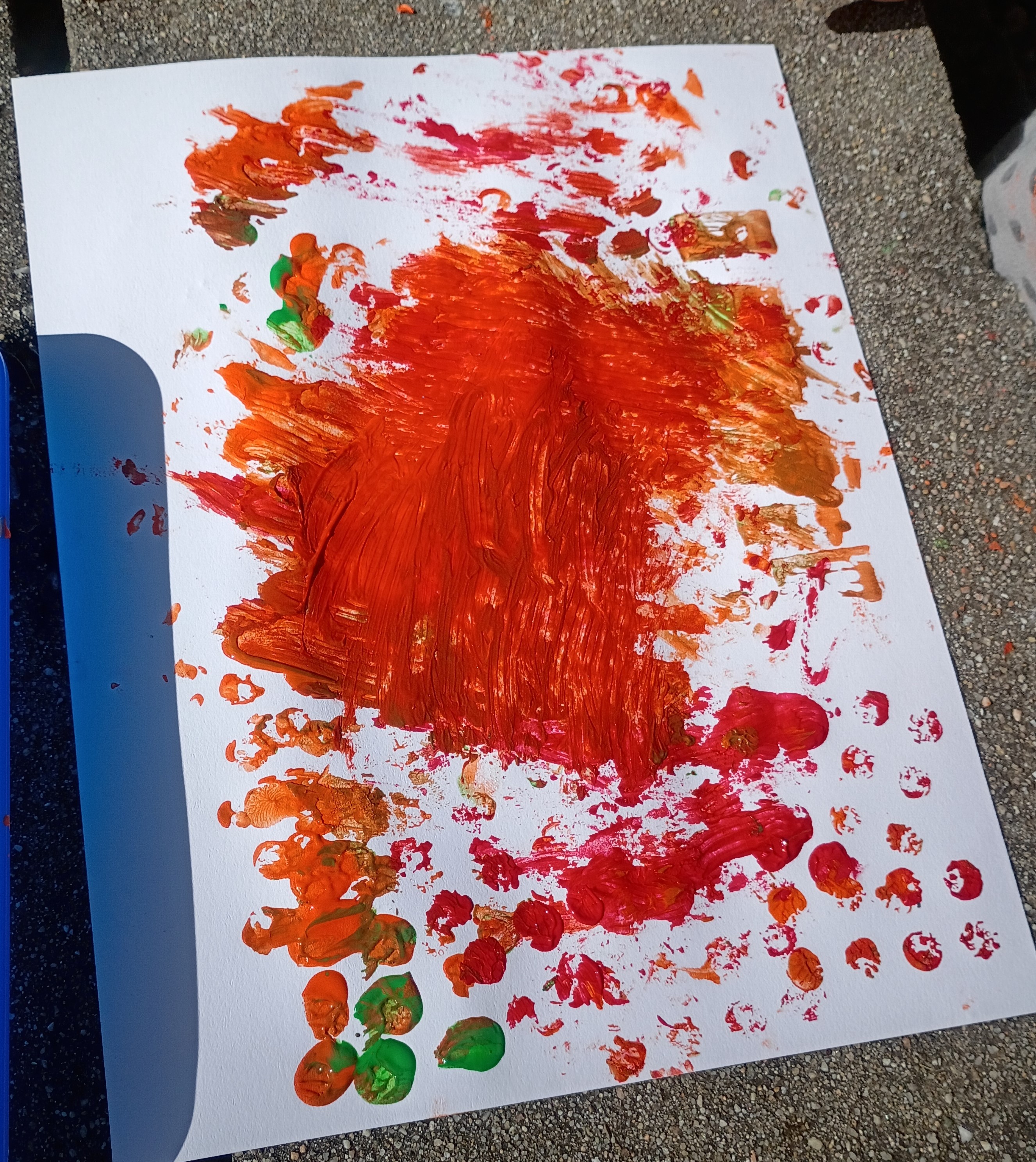
This was a really simple, if messy Stay & Play craft. I just put out white paper, pom-poms of various sizes, and pie tins with different colors of tempera paint. The kids had a great time exploring the colors and imprints of the different pom-poms, and the way they blended together on the page.

Do you have any favorite books or songs featuring the word “Big,” or any favorite literacy tips you like to share? Please let me know in the comments.

Music to My Ears: A Storytime About Songs

I’ve been trying to incorporate more early literacy tips into my storytimes lately, so I thought I would try to actually build each of my storytimes around a literacy tip. Last week, I focused on the idea of pointing out common sight words that kids are likely to see out in the world, by doing a storytime around the word “STOP!” This week, I decided to talk about the importance of using songs and rhymes to build pre-reading skills.

I started by talking about how sharing songs and rhymes with young children is one of the easiest ways to help them become strong readers later on. And a fun way to incorporate music into daily life is to make up your own versions of popular songs. To demonstrate this idea, I shared books that were all based on traditional rhymes and children’s songs.

Here’s what we did for Outdoor Musical Storytime (I’m also including a book we read in Family Storytime that fit the theme):

Books:

Hush, Little Trucker by Kim Norman; illustrated by Toshiki Nakamura

I love this picture book because it combines a traditional lullaby with construction vehicles. Based on the song Hush, Little Baby, this book features a mother describing how she will search for her son’s lost toy truck using a wide variety of other machines. The kids enjoyed calling out the names of the different vehicles.

I Ain’t Gonna Paint No More by Karen Beaumont; illustrated by David Catrow

This is one of my all-time favorite storytime books: a parody of It Ain’t Gonna’ Rain No More about a little boy who defies his mother by painting different parts of his body. I gave out the play scarves before we read it, and I had the kids pretend they were paintbrushes. They loved trying to guess which body part we were painting next, based on the rhyme.

Pop! Goes the Nursery Rhyme by Betsy Bird; illustrated by Andrea Tsurumi

I actually did this book last week for Family Storytime, and I enjoyed it so much that I used it for Outdoor Musical Storytime this week (I also read it to two T/K classes, who both kept singing “Pop, Goes to Weasel” long after I stopped reading). It features several famous nursery rhymes (Jack and Jill, Pat-a-Cake, Twinkle, Twinkle) that all get interrupted by a weasel popping out to sing, “Pop! Goes the Weasel.” The kids still had the play scarves from the previous book, so I had them throw their scarves in the air every time we got to the word, “Pop!”

Here We Go Digging for Dinosaur Bones by Susan Lendroth; illustrated Bob Kolar

Cute, informative picture book based on the song Here We Go Round the Mulberry Bush, all about excavating dinosaur bones. I had the kids act out the motions: digging the bones, brushing them off, wrapping them up, and assembling them. Each page has additional facts about paleontology.

Songs:

We Are Scary Ghosts

I was originally going to do The Wheels on the Bus to go with the book Hush, Little Trucker (I love to have the kids suggest animals, Pokemon, or superheroes to go on the bus, like “The Pikachu on the bus goes, “Pika! Pika!”). But since we had the play scarves, and it was close to Halloween, I decided to do one of my favorite Halloween storytime songs instead. I had the kids put the scarves on their heads, and pull them off on the “BOO!”

We are scary ghosts floating down the street,
Walking down the street,
Walking down the street.
We are scary ghosts walking down the street,
We’ll scare you…BOO!

Pop, Goes the Weasel

We did this song with the parachute. I put a few small stuffed animals on the parachute so we could make them pop up in the air (I just wish I had a toy weasel!) Here’s a Rock N Learn video with the tune, in case you aren’t familiar with it.

All around the cobbler’s bench,
The monkey chased the weasel.
The monkey thought ’twas all in fun,
“Pop!” Goes the weasel!

Down by the Bay

We did this as our instrument play-along at the end. I had the kids suggest ideas for what the mother says in each verse. We had “Did you ever see bananas wearing pajamas?” and “Did you ever see a cat wearing a hat?”

[C] Down by the bay, where the watermelons [G7] grow,
Back to my home, I dare not [C] go,
For if I [F] do, my mother will [C] say,
“Did you ever see a whale with a polka dot tail
[G7] Down by the [C] bay?”

Stay & Play: Paper Plate Maracas

For the Stay & Play, I put out paper plates, markers, & washi tape. Each of the kids decorated the bottoms of two plates. My coworker and I helped them put a small amount of rice on top of one of their plates, then we put the other plate on top and stapled them both together (we did all the stapling). I also showed them how to put washi tape around the outside of the plates to cover any gaps. NOTE: I know using food items as a craft supply can be problematic, but we had an old, open bag of rice in the supply closet, so I made an exception this time. You can also use beads or other small objects.

What are your favorite early literacy tips, or your favorite picture books based on songs? Please share them in the comments below.
Stop and Go: A Storytime

In our library system, we’ve recently been discussing making more of an effort to incorporate literacy tips for caregivers into our storytimes. I’ll admit that I often struggle to find a natural way to include them. So, this week I decided to build my storytime around a common sight word (“Stop”) and encourage families to look for it together out in the world.

I began by holding up a paper stop sign, and talking about how a great way to prepare for learning to read is to look for words that you encounter a lot in your daily life. I then asked the kids what the sign said. A number of the older ones recognized it as a stop sign.

Here’s what I did for the rest of the storytime (a combination of the books I used for both Outdoor Musical Storytime and Family Storytime). For Family Storytime, I also included the words “Go” and “Pop” (see below).

Books:

Go! Go! Go! Stop! by Charise Mericle Harper

This is a great book for modeling pointing out prominent words in a picture book, and getting the kids to call them out. The story is about Little Green, who can only say the word “Go!” At first the construction vehicles find him very helpful, but things quickly become too chaotic. Luckily, Little Red rolls into town and says the word, “Stop!” and the two learn to work together to help the vehicles finish building the bridge. One of the toddlers in my Family Storytime kept pointing to the different construction vehicles on each page and expounding at length on each one. I had no idea what he was trying to say, but he was VERY excited!

Go Away, Big Green Monster! by Ed Emberley

I had to include this one for Family Storytime, both because of the word “Go” and because it’s close to Halloween. I love how kids of all ages are mesmerized by the way the parts of the monster’s face disappear on each page. I usually have them make a “whoosh” noise and waive their hands after each “Go Away” page. I once saw a children’s performer use this book to teach the words for the parts of the face in Mandarin, which I thought was clever, although it was funny that the main Mandarin phrase the kids came away with was “Go away!”

Stop That Mop! by Jonathan Fenske

This rhyming easy reader feels like a Dr. Seuss version of The Gingerbread Man. A mop gets tired of mopping up a pig’s glop and slop, so he runs away. He is chased by a bunny, a horse, and is finally confronted by a Stop sign, who tries to save him from falling off of cliff (luckily he lands on top of a bird). A cute, simple story with fun illustrations.

Stop Snoring, Bernard! by Zachariah Ohora

Simple story about an otter who can’t find a place to sleep where his snoring won’t bother any of the other animals. But eventually his otter friends and families tell him that they miss him. Lots of fun opportunities for the kids to snore and yell, “Stop snoring, Bernard!”

Pop! Goes the Nursery Rhyme by Betsy Bird; illustrated by Andrea Tsurumi

I read this at Family Storytime, even though it doesn’t include the word “Stop” at all. But it did provide an opportunity to talk about rhyming words. This is a really fun book featuring a series of popular nursery rhymes that all get interrupted by a weasel yelling, “Pop! Goes the Weasel.” I gave out the play scarves before we read it, and had the kids throw their scarves in the air each time we yelled “Pop!” I also read this at a preschool the next day, and one boy begged me to read it again.

Songs & Activities

Stop & Go

For this activity, I held up a paper Stop Sign and a paper Go sign. We all did different actions together (clapping, stomping, running in place, etc.) while I was holding up the Go sign, and then stopped when I held up the Stop sign.

Head and Shoulders, Knees & Toes

We sang this after reading Go Away, Big Green Monster in Family Storytime. I always start by having the kids point to the different body parts before we sing (I always say, “Did you bring your head today?”). But midway through this process, one little girl shouted, “Elbow!” So, the second time we sang it, I sang “elbow” instead of “nose.” They thought it was hilarious! I used this trick again yesterday at a couple of preschools, and threw in “eyebrow” instead of “nose” the third time we sang it. It’s so much fun to catch kids by surprise.

Head and shoulders, knees and toes, knees and toes.
And eyes and ears, and mouth and nose.
Head and shoulders, knees and toes, knees and toes.

We Bounce and We Bounce and We Stop

This is similar to the Stop & Go activity above, but in song form. It’s one of my all-time favorite storytime songs, because it’s so versatile. For Outdoor Musical Storytime, we sang it with the parachute as “We shake and we shake and we stop!”

[C] We bounce and we bounce and we stop!
[C] We bounce and we bounce and we stop!
[C] We bounce and we bounce and we bounce and we bounce,
[C] And we bounce and [G7] we bounce and we [C} stop!

Dance Like You’ve Got Ants in Your Pants by Eric Herman

We did this as our instrument play-along at the end. It’s such a fun song. Each time we spray our imaginary spray, I usually say, “And the ants (bees, bears) say, ‘Ewww! Ewww! Ewww!” and run away!

[C] Dance like you’ve got [G7] ants in your pants.
[F] Dance like you’ve got [G7] ants in your pants.
[C] Dance like you’ve got [G7] ants in your pants,
Now [F] STOP! And spray some ant spray!

[C] Dance like you’ve got [G7] bees on your knees.
[F] Dance like you’ve got [G7] bees on your knees.
[C] Dance like you’ve got [G7] bees on your knees,
Now [F] STOP! And spray some bee spray!

[C] Dance like you’ve got a [G7] bear in your hair.
[F] Dance like you’ve got a [G7] bear in your hair.
[C] Dance like you’ve got a [G7] bear in your hair,
Now [F] STOP! And spray some bear spray!

[G7] Bop! Bop! Bop! [F] Until you [C] drop!
[G7] Hula, Hula, Hula! [F] Until you [C] drool-a!
[C] Jump like you got [G7] bumped on your rump.
[F] Jump like you got [G7] bumped on your rump.

[C] Jump like you got [G7] bumped on your rump,
Now [F] STOP!
[G7] Dance anyway, [F] Dance any [C] how,
[G7] Dance any night and day.

[F] Keep on dancing [C] now.
[G7] Dance any way you want to.
[F] Dance any way you [C] can.
[G7] Dance like you got ants [F] in your pants a- [C] gain!

[C] Dance like you’ve got [G7] ants in your pants.
[F] Dance like you’ve got [G7] ants in your pants.
[C] Dance like you’ve got [G7] bees on your knees.
[F] Dance like you’ve got [G7] bees on your knees.

[C] Dance like you’ve got a [G7] bear in your hair.
[F] Dance like you’ve got a [G7] bear in your hair.
[C] Jump like you got [G7] bumped on your rump.
[F] Jump like you got [G7] bumped on your rump.

[G7] Bop! Bop! Bop! [F] Until you [C]drop!
[G7] Dance, Dance, Dance, [F] don’t ever [C] STOP!

Stay & Play: Stop Sign Collages

Before storytime, I printed and cut out paper stop sign templates. I also cut red tissue paper and origami paper into small pieces. For the Stay & Play, I gave the kids the template, along with glue sticks, red washi tape with different patterns, a variety of colored sequins, the paper pieces, popsicle sticks and tape. Some of them got really into decorating their stop signs, and they all loved being able to hold them up and yell, “Stop!” when they were done.

What are your favorite literacy tips to share with families and caregivers, and how do you incorporate them into your programs? Please share in the comments below.

Get Your Ducks in a Row: A Storytime About Ducks (And Chickens!)

I haven’t had as much time to write up my storytimes lately, but this was one I had fun with recently. I used the theme for both Outdoor Musical Storytime and Family Storytime, so here’s a combined list of the books and songs that I did.

Books:

Guji Guji by Chih-Yuen Chen

This is an older title, and a bit too long for my Outdoor Musical Crowd, but my Family Storytime kids were mesmerized. When a strange egg rolls into a duck’s nest, it hatches into a crocodile named Guji Guji, who grows up believing he is just like the other ducks. When a trio of crocodiles tells him the truth, Guji Guji has to decide whether to join them or save his adoptive family.

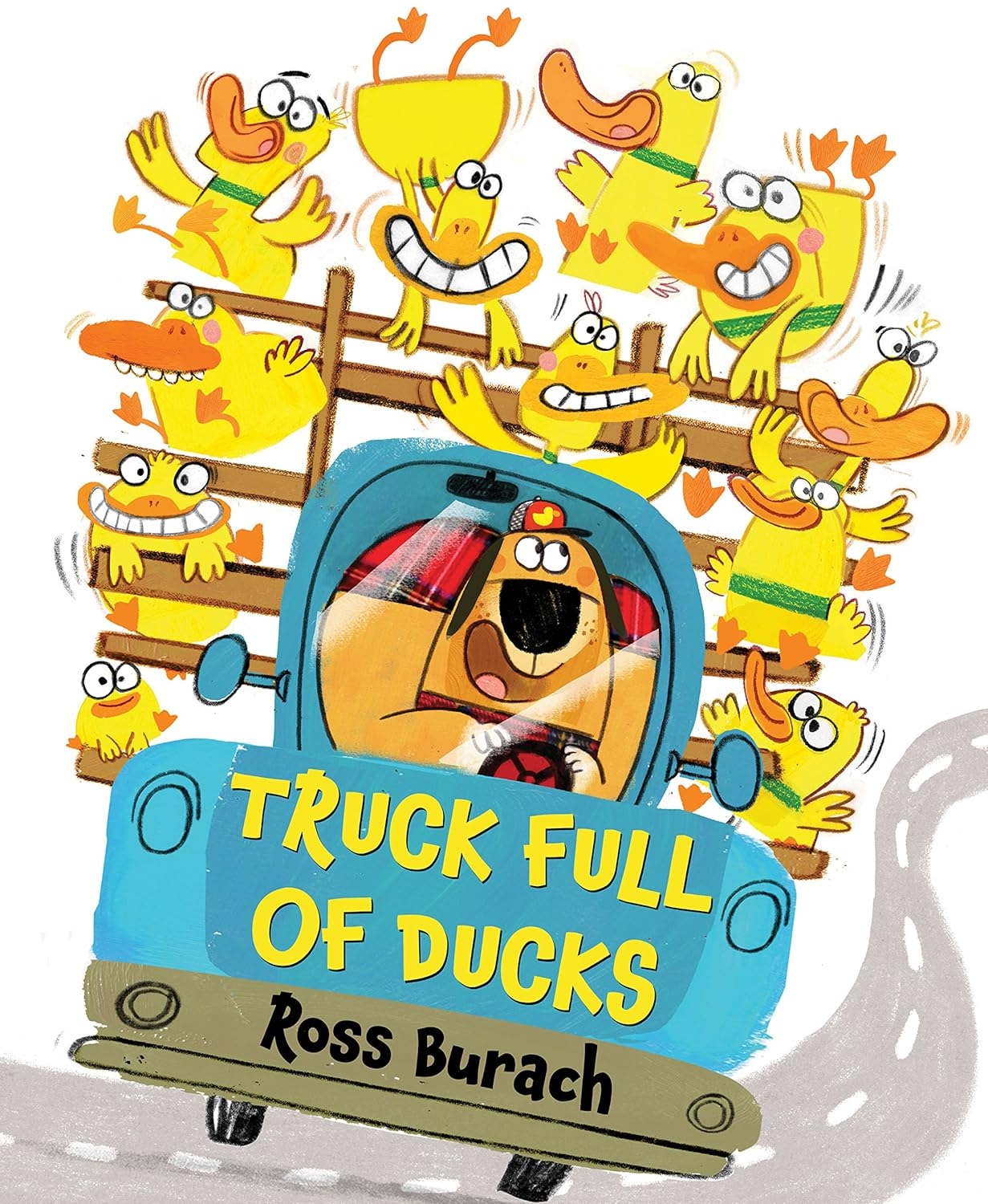
Truck Full of Ducks by Ross Burach

Hilarious story about a company called Truck Full of Ducks, who sets out one day in search of a customer whose address was accidentally eaten by the ducks. Along the way, they meet a number of other odd truck-based businesses: a tow truck towing a flying saucer, a duck removal service, and a mail truck requested by a girl who wants to ship her brother far away. They finally find their customer deep in the forest: a fox who wants a few ducks for his evening bath. The book got laughs from both kids and grown-ups, especially the page showing a row of bathroom stalls, with a set of duck feet showing under each door.

Ducks Away! by Mem Fox, illustrated by Judy Horacek

Cute, simple story about a mother duck who is dismayed when each of her five babies slip off of a bridge into the water below. For Outdoor Musical Storytime, I used the ducks from the Monkee Mitt and tossed a duck into the crowd each time a duck in the story fell off of the bridge. For Family Storytime, I read this book after our play scarf songs, and had the kids toss their scarf in the air each time a duck fell.

The Pigeon Finds a Hotdog by Mo Willems

My coworker and I read this book together at Outdoor Musical Storytime. The first Mo Willems book featuring The Duckling, this story involves the Pigeon preparing to enjoy a hot dog he just found, but being repeatedly interrupted by the Duckling’s questions.

Chicken Butt! by Erica S. Perl; illustrated by Henry Cole

I couldn’t resist including this book for Family Storytime, even though it’s about chickens rather than ducks. I’ve been having a great time reading it at my preschool and Transitional Kindergarten outreach classes. It’s basically an extension of the old “Guess What?” “Chicken Butt!” joke, in the context of a young boy joking with his father. The line “Guess where?” “Chicken underwear!” got an even bigger laugh than “Chicken butt!”

Songs

Five Little Ducks

We sang this song with the five little duck set and the Monkee Mitt. Although the song always seems sad to me (at least until the last verse), the kids seem to enjoy singing the “Quack Quack Quack Quacks.”

Five little ducks went out one day,
Over the hills and far away.
Mother Duck cried, “Quack, Quack, Quack, Quack!”
But only four little ducks came back.

Four little ducks went out one day…

Three little ducks went out one day…

Two little ducks went out one day…

One little duck went out one day…

Sad Mother Duck went out one day,
Over the hills and far away.
Mother Duck cried, “Quack, Quack, Quack, Quack!”
And all of the five little ducks came back!

Six Little Ducks

We actually have two different Monkee Mitt sets for the Five Little Ducks, so for Outdoor Musical Storytime, I put six of the ducks on the parachute and we waved the chute up and down in time to the song.

[C] Six little ducks that I once [G7] knew,
Fat ones, skinny ones, [C] fair ones too.But the one little duck with the [G7] feather on his back.
He led the others with his [C] “Quack! Quack! Quack!”

Chorus:
[G7] “Quack! Quack! Quack! [C] Quack! Quack! Quack!”
[G7] He led the others with his [C] “Quack! Quack! Quack!”

[C] Down to the river they would [G7] go,
Wibble-wobble, wibble-wobble, [C] to and fro.
But the one little duck with the [G7] feather on his back.
He led the others with his [C] “Quack! Quack! Quack!”

Chorus

[C] Home from the river they would [G7] come,
[C] Wibble-wobble, wibble-wobble, ho hum hum.
But the one little duck with the [G7] feather on his back.
He led the others with his [C] “Quack! Quack! Quack!”

Chorus

Two Little Duckies

We sang this with the play scarves at Family Storytime. I gave each child two scarves, so they could hold one in each hand to be the two duckies. Adapted from the traditional Two Little Blackbirds fingerplay.

Two little duckies sitting on a hill, (Hold up both thumbs)
One named Jack, and the other named Jill.
Fly away, Jack! (Put one thumb behind your back)
Fly away, Jill! (Put the other thumb behind your back)
Come back, Jack! (Bring the first thumb out in front).
Come back, Jill! (Bring the second thumb out in the front).

Two little duckies sitting on a cloud,
One was quiet, and the other was loud (I make my voice as loud and obnoxious as possible each time I sing the word “Loud!”)
Fly away, Quiet!
Fly away, Loud!
Come back, Quiet!
Come back, Loud!

Two little duckies sitting in the snow.
One flew fast!
And the other flew slow!…

Two little duckies sitting on a gate.
One was early, and the other was…late!…

Rubber Ducky by Jeff Moss

I couldn’t resist ending with Rubber Ducky as our instrument play-along song at the end. The song uses some less-known chords, so rather than including the lyrics and chords here, I’m just attaching the link to ukulele-tabs.com, which helpfully provides the chord charts: https://www.ukulele-tabs.com/uke-songs/sesame-street/rubber-ducky-uke-tab-67701.html

Stay & Play: Duck Collage

For the Stay & Play, I put out some paper duck templates (that I had pre-cut before storytime (I used this one from SimpleMomProject.com), along with glue sticks, dot markers, eye stickers and googly eyes, and craft feathers. The kids had a great time decorating their ducks.

What are your favorite books or songs about ducks? Please tell me in the comments below.

Library Programs for Homeschoolers

Homeschoolers playing with the Super Space and
getting help on the computer at the Homeschooling
Open House.

We recently hosted a couple of programs at our library to connect with local homeschooling families and people who were considering homeschooling as an option. It’s been a fun and educational process for me, and I’ve learned that there are far more homeschooling families in our area than I thought.

Here are the two programs that we offered:

Homeschooling 101: A Virtual Presentation

One of the first in-person programs that we had to cancel back in the early days of the pandemic was a presentation by Jamie Heston, a local homeschooling consultant. At the time, she asked if it would be possible to offer the program online via Zoom instead, but we hadn’t really offered programs that way (other than a couple of author talks). Now, however, it seemed like a great way to connect to families who were considering homeschooling, but wanted to learn more.

Jamie often offers free presentations on behalf of the Homeschool Association of California. This was the same hour-long presentation, which covered the basics of how to register as a homeschooler, what the different options are, what documentation is required, how to transition back into traditional school if necessary, and a wide variety of recommended resources. I was surprised to learn how easy it is to register as a homeschool, and that families can start at any point, even in the middle of the school year. As a parent, I have been incredibly grateful for our local public schools, and the wonderful teachers my kids have had along the way, but it was still reassuring to know that it would be relatively easy to switch to homeschooling (at least from a legal perspective) if the school environment was not working well for some reason. Jamie also recommended this list of books about “unschooling” from Amber Dos Santos’ blog.

Homeschooling Open House

In order to convey that our libraries are interested in working with local homeschooling families, I advertised a Homeschooling Open House. A few months ago, I posted on a couple of Facebook groups for local families asking homeschooling parents to message me if they would be interested in being added to a mailing list specifically for homeschooling events. Once I had that mailing list, I sent them this simple survey, which asked them which days and times would work best. Based on the results of that, I ended up scheduling the Open House on a Monday afternoon from 1pm to 2:30pm.

My goals for the open house were pretty simple. I wanted to provide a space for the families to connect, to share information about library resources that might interest them, and to solicit feedback about what services and resources they would find most helpful. I prepared some handouts about our online databases and tips on using our library catalog, along with a basic library scavenger hunt (see below). I also created a more detailed printed survey, based on one that Kitty Murphy from the Medina County District Library in Ohio had shared with me when I asked for ideas from the Programming Librarian Interest Group on Facebook. And I set aside a table for a Curriculum Exchange, and advertised on the flier that participants were welcome to bring any materials they would like to share.

I really had no idea what to expect in terms of attendance. I thought we’d maybe get three or four families, so when people started pouring in, I was shocked! Within the first half hour, there were almost sixty people, with clusters of kids and parents all over the library. One of our interns helped the kids make pin-back buttons, and we put our two SuperSpace sets (giant Magna-Tiles) out in the children’s area. Several of the older kids clustered around a boy playing a video game on the computer (in retrospect, I should have set-up one of our Nintendo Switch games on the projector). A couple brought in boxes and boxes of materials for the Curriculum Exchange, although some of it was wildly outdated (including a book about Christopher Columbus from 1967). Other people brought in more current materials to share, and many of the parents hovered around that table the whole time. I did end up with a lot of leftover curriculum, which I offered to hold on to for a homeschooling meet-up that a local parent has just started.

In the end, I didn’t really get much of an opportunity to present our library resources, because people kept arriving at different times. They did take my handouts though, and if they had specific questions about our databases, I gave them a personal demonstration on a laptop I had set up on the table with the handouts and surveys. I did get a number of responses to the survey. From those, I learned that most of the parents were primarily interested in opportunities for their kids to interact with other homeschoolers, and rather than with students from traditional schools. There was a great deal of interest in STEM programs, and access to scientific equipment, like microscopes, so I have been talking to some of my coworkers about offering some science programs specifically for that community. A lot of them were also interested in Homeschool Graduate Panels (a chance to learn from the experiences of recent homeschooling graduates), which is something I haven’t explored yet.

Here are a few take-aways I took from these two homeschooling-focused events:

  • The homeschooling community is much larger and more networked than I thought, and families are also willing to travel long distances. Most of the families at the open house belong to the same two local homeschooling networks, and many of them live in San Francisco, or down the coast towards Half Moon Bay. I am excited to have the ability to connect with so many new families through these networks, and to promote our programs and services to them.
  • The homeschooling parents seemed genuinely happy to see the library reaching out. In the end, the Homeschooling Open House was more about providing an opportunity for families to connect with each other, which is a really easy thing to offer. One of the parents has just reserved our community room to schedule a regular meet-up for homeschooling families, something that requires no effort from us at all, other than providing access to the space.

Have you offered any programs for homeschoolers or about homeschooling? Please share your experiences in the comments below.

Disability Pride Month: A Storytime

I’m finally catching up on posting some of the storytimes I did over the summer. July is Disability Pride Month, so a few weeks ago I did a Family Storytime featuring a variety of disabilities. I opened by talking very briefly about how everyone has different abilities, and things that they find easier or harder than others, and how some people rely on different types of tools to help them.

For this post, I’m experimenting with writing out everything we did in order, instead of breaking it up into books, songs, and Stay & Play activity. Please let me know if you prefer this format.

OPENING SONG: The Wheels on the Bus

For Family Storytime (which is on Wednesday nights, and tends to get a smaller crowd) I always put out a variety of animal puppets around the storytime area. When we sing the wheels on the bus, the kids hold up different animals they would like us to sing about: The cat on the bus goes “Meow, Meow, Meow!” etc. We always end by singing “The wheels on the bus go round and round” as fast as we can.

[C] The wheels on the bus go round and round.
[G7] Round and round, [C] Round and round.
The wheels on the bus go round and round,
[G7] All over [C] town.

OPENING BOOK: Best Day Ever by Marilyn Singer; illustrated by Leah Nixon

A dog describes the “best day ever,” which is spent with a little boy who happens to be in a wheelchair. This is an adorable, simple story that captures the way everyday moments can change your view of how good or bad the day is, especially for an energetic dog who sometimes gets into trouble. The wheelchair is never mentioned in the text, and the illustrations clearly demonstrate that kids who use wheelchairs can do most of the same day-to-day things as kids who don’t. A great example of a book that shows different life experiences without presenting them as a “problem.”

SONG: B-I-N-G-O

This is an old standby, but here’s a video from Super Simple Songs, just in case you’re not familiar with it. Traditionally, you leave out a letter each time you sing it, and clap instead. Sometimes, I have the kids bark instead of clapping. I also like to use the American Sign Language signs when I explain which letters we will be leaving out, for example, “This time we’re going to clap instead of singing the letters B and I.”

[C] There was a farmer [F] had a [C] dog,
And Bingo [G] was his [C] name-o.
[C] B-I- [F] N-G-O
[G] B-I- [C] N-G-O
[Am] B-I- [F] N-G-O
And [G] Bingo was his [C] name-o.

There was a farmer had a dog,
And Bingo was his name-o.
(Clap)-I-N-G-O!… etc.

My City Speaks by Darren Lebeuf & Ashley Barron

A visually impaired girl describes how she experiences a day in the city, including the sounds, smells, tastes, and feel of the world around her. The kids enjoyed pointing out details in the illustrations.

DEMO BOOK: DK Braille Books: On the Move by DK Publishing

I didn’t actually read this one, but I passed it around so the kids could touch the Braille letters, and explained that it was written in a special language that you read with your fingertips instead of your eyes. The kids were fascinated!

ACTIVITY: CAN YOU GUESS THE ANIMAL?

To go along with the idea of using senses other than sight, I put plastic animals in individual paper bags. The kids took turns reaching into the bag and trying to guess which animal it was, just based on their sense of touch. They got all of them wrong, except for the sheep, which has a distinctive knobbly coat.

THIRD BOOK: Can Bears Ski? by Raymond Antrobus & Polly Dunbar

A bear is confused when people keep asking him “Can bears ski?” and also when he doesn’t understand jokes that his friends are laughing at. But then one day, he is fitted with hearing aids, and discovers people have really been asking, “Can you hear me?”

SCARF PLAY: Snowball Fight

I usually do another song with the play scarves before we sing Popcorn Kernels (which we do every week), but this week, we had a pretend snowball fight with the scarves instead, bundling them up into balls and throwing them at each other. Always a hit!

SCARF SONG: Popcorn Kernels
To the Tune of Frere Jacques (Are You Sleeping?)

Popcorn Kernels, (hold scarf bunched up in one hand)
Popcorn Kernels,
In the Pot,
In the Pot.
Shake ’em, shake ’em, shake ’em, (shake hand)
Shake ’em, shake ’em, shake ’em.
Till they POP! (throw scarf in the air)
Till they POP!

FINAL BOOK: Oona and the Shark by Kelly DiPucchio; illustrated by Raissa Figueroa

I was planning to end with this book, and talk briefly about how some people have a hard time with loud sounds (we have a bin of headphones for kids with sound sensitivity). Unfortunately, we ran out of time before we got to it. It’s a cute story though, where Oona, the Mermaid, tries to befriend a shark, but discovers that her loud activities and the party she throws are scaring him away, and comes up with new activities instead.

INSTRUMENT PLAY: Baby Shark

Even though I didn’t get to read my final book, we still had time to hand out the egg shakers and sing Baby Shark.

[C] Baby shark, doo doo doo doo doo doo
[F] Baby shark, doo doo doo doo doo doo
[Am] Baby shark, doo doo doo doo doo doo
[G] Baby shark!

Mommy shark…

Daddy shark…

Grandma Shark…

Grandpa Shark…

Let’s go hunt!…

Run away!…

CLOSING SONG: The More We Get Together

I always end Family Storytime with The More We Get Together, which we do with the ASL signs. Here’s a Miss Rachel video to demonstrate:

The more we get together,
Together, together,
The more we get together,
The happier we’ll be.
‘Cause your friends are my friends,
And my friends are your friends.
The more we get together,
The happier we’ll be.

Stay & Play: Watercolor Painting

I just realized I didn’t get any photos of the watercolor painting, but the kids really enjoyed it. It always takes the little ones a few minutes to get the hang of dipping the brush in water before dipping it into the paint, but once they do, they don’t want to stop. It didn’t exactly tie-in to the theme, but it’s such a peaceful, sensory-filled experience, and everyone loves it.

RELATED BOOKS:

I did a similar theme at my Outdoor Musical Storytime this past week, and we asked a local agency called AbilityPath to table. AbilityPath is a nonprofit that provides free services to people who are neurodiverse or have developmental disabilities.

For this storytime, I focused more on books about neurodiversity, and how to respect other people’s individual differences and sensitivities. Here are the books I read:

Autism: Through the Eyes of a Child: Brayden’s Story by Jennifer Zuniga & Pia Reyes

I have a regular volunteer (a college student) who accompanies me on guitar for Outdoor Musical Storytime. She is on the autism spectrum, and had asked me if she could read this book aloud at storytime. Unfortunately, she able to read that day due to illness, but I’m hoping she will be able to share it this week, as part of our Friendship Week theme. The book is told from the point of view of a child who has just learned about autism, and is reminded of a classmate named Brayden, who would probably love to make friends.

This Beach is Loud by Samantha Cotterill (Part of the Little Senses series)

A boy who is excited to go to the beach with his Dad discovers that it is much too loud and crowded. His Dad helps him cope with the sensory overload by telling him to count to three and tap his fingers. The kids loved his monologue on the drive to and from the beach, which ends with “I have to pee!” both times. I like that this book, and the others in the series, provide real life scenarios for families with children with sensory processing disorders or similar conditions, but keep the stories general enough to apply to any child. I wanted to give a shoutout to the Storytime Solidarity group on Facebook, where I got this recommendation (from Sheri Shumaker), along with other great book suggestions from other members.

Don’t Hug Doug (He Doesn’t Like It) by Carrie Finison; illustrated by Daniel Wiseman

This book isn’t specifically about disabilities, but since many kids with sensory processing disorder or autism may be upset by unsolicited hugs, it seemed like a good one to include. It’s also just a great, funny, rhyming story for everyone about the importance of consent. I also read it at a lot of my preschool outreach sites, where it’s always a hit. The kids love giving Doug a high five on the last page.

Do you have any favorite books or songs about disabilities or neurodiversity? Please share them in the comments below.
Let’s Pretend: A Storytime About Imaginative Play

I’ve gotten behind on my blog posts this summer, and we’ve also had a number of performers in place of storytime, but this was a fun theme I did a few weeks ago about pretending and imaginative play.

Books:

I’m a Frog by Mo Willems

In this Elephant and Piggie book, Gerald is shocked when Piggie announces that she is a frog. At first, he worries that he might turn into a frog too, until Piggie explains that she is just pretending.

Alphabreaths Too by Christopher Willard & Daniel Rechtschaffen

I used this book more as an activity between books than a read-aloud. It’s a collection of mindful breathing exercises that are fun to do together. I did the first three at storytime: the Astronaut breath, the Bunny breath, and the Chocolate breath. The kids especially loved the Chocolate breath, where you pretend to breathe in the smell of hot chocolate and then breathe out like you are blowing on it to cool it down. I’ve been sharing this book at my preschool outreach storytimes too.

Pete’s a Pizza by William Steig

This is an old favorite of mine, about a father who decides to cheer up his son Pete by imagining he is a pizza: putting him on the kitchen table, kneading the dough, whirling and twirling it in the air, and adding toppings. Always a hit! The dedication at the end suggests that this is a game William Steig used to play with his own daughter.

Not a Box by Antoinette Portis

Adorable, simple picture book featuring a conversation between a rabbit and an invisible narrator, who keeps asking what he is doing with a cardboard box. The rabbit insists that it’s not a box, while the illustrations show what the box is in his imagination: a rocket ship, a mountain, a burning building. The kids enjoyed guessing what the rabbit was imagining the box to be each time.

Not a Stick by Antoinette Portis

After I read, Not a Box, the kids were eager to hear this companion book, which features a pig pretending to do a variety of activities with a stick.

Songs:

The Silly Pizza Song

This song by Rachel de Azevedo Coleman from her Signing Time series is one of my absolute favorites. See the YouTube video below for the tune and the signs. I usually just teach the kids the sign for pizza and the sign for cheese, and we do those signs together each time we sing those words. I ask the kids for topping ideas, and we add a new topping each time we sing it. It’s fun to choose silly toppings, like cookies or ice cream.

I like pepperoni on my pizza.
I like pepperoni pizza, please.
Put the pepperoni on my pizza,
Don’t forget the extra cheese!

I like apples on my pizza,
I like apple pizza, please.
Put the apples on the pepperoni,
Put the pepperoni on my pizza.
Don’t forget the extra cheese!

Down By the Banks of the Hanky Panky

This is a lapsit rhyme I used to use for baby storytime, where you bounce the baby from knee to knee. For Outdoor Musical Storytime, I put some frog stuffed animals on the parachute, and we lifted the parachute up and down in time with the rhyme to make them “jump” around.

Down by the banks of the hanky panky,
Where the bullfrogs jump from bank to banky,
With a hip, a hop,
A hippity-hop,
Jump off the lilypad and kerplop!

Wishy Washy Washer Woman

We did this song with play scarves for Family Storytime. I use the version in this video from Imagine More Story Adventures:

Way down in the valley where nobody goes,
There’s a wishy washy washer woman washing her clothes.
She goes “Oooh! Ahhh! Oooh! Ahhh! Oooh! Ahhh!”
And that’s the way she washes her clothes.

Repeat with drying her clothes (we blow on the scarves), folding her clothes, and wearing her clothes.

Abracadabra

This was one of the first songs that I ever wrote. Click on the triangle for the tune.

One day [C] I found a magic wand (C G)
Out floating in a stream. (F C)
I waved it at my dinner plate, (C G)
And my beets became ice cream! (F G C)

I said, “Abracadabra! (C G)
Alakazaam! (F G)
Abracadabra!” (C G)
And my peas turned into jam. (F G C)

So then I took my magic wand
To school with me one day.
When Teacher said, “It’s time to work.”
I said, “I’d rather play.”

I said, “Abracadabra!
Hocus pocus!” too.
“Abracadabra!”
And my class was at the zoo!
Being taught by a kangaroo.

So if you find a magic wand
Out floating in a stream.
I hope that it will bring to you
Whatever you may dream.

You’ll say, “Abracadabra!
Presto chango!” too.
“Abracadabra!”
Many things will come to you.
Like a treehouse with a view,
And a unicorn or two,
And a chocolate mansion too.
May your every dream come true.

Stay & Play: Magic Wands

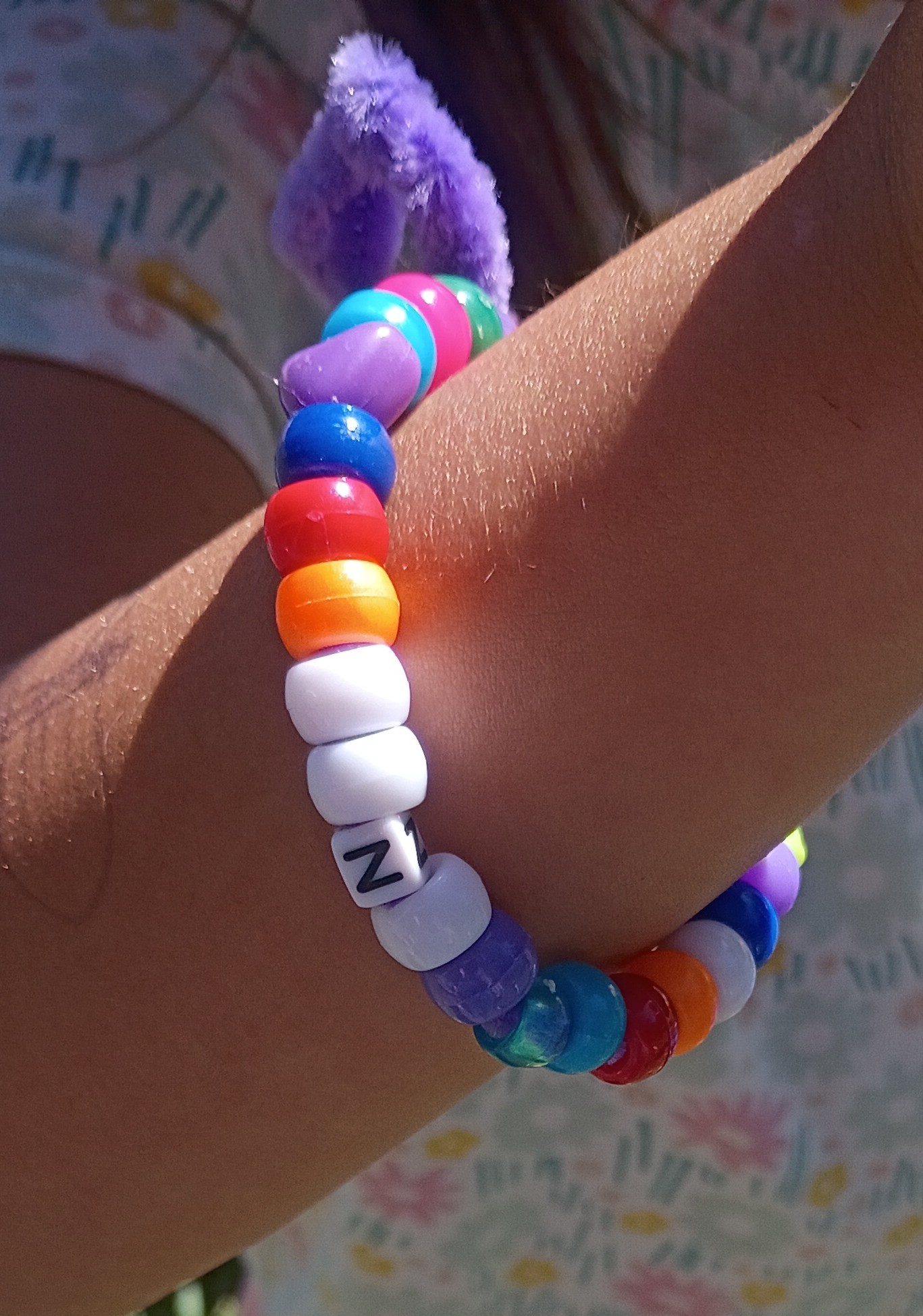
For the Stay & Play, I gave the kids two different options for making magic wands: adding pony beads to a pipe cleaner, or decorating a stick with a piece of star wire garland. Some kids combined the two, wrapping their beaded pipe cleaners around a stick, or attacking the wire garland to the pipe cleaners. It was fun to see them waving their wands around at the end.

Do you have favorite books or songs about pretending? Please share them in the comments below.
Satellite Libraries: Books Beyond the Branch

This year, our library staff has been expanding our outreach efforts to reach people in our communities who may not be able to come to the library. One of the approaches we have been trying is to create Satellite Libraries in different locations, including local preschools, special needs classrooms for teens, senior centers, rehab facilities, food banks, and school aftercare sites.

For each location, we create a separate library account, and provide a plastic bin (we’re currently using heavy duty plastic transit bins that were retired when our system switched to a different type). We stock the bins with 30 to 40 books that we swap out once a month or so.

The books we supply are often duplicate copies, or low-circing items that might otherwise have been weeded. It’s been a great way to circulate some of our world language books to communities who will get the most use from them: for example, we bring picture books in Tagalog in Spanish to one of the local preschools where a number of the children come from families where those languages are spoken at home. We will also take requests for particular types of books if possible.

We make it clear to the staff at each location that they do not need to keep track of the books in the bin. People are welcome to bring the books home, and we are not overly concerned if they don’t get returned. In my experience though, most of the books have come back.

The kids at the school aftercare sites are always especially excited whenever we bring new books for the bin. They immediately start pulling books from the bin, which is always fun to see.

If you have any questions, or if you’ve tried a similar program you would like to share, please let me know in the comments.