Uke Can Play! Beginning Ukulele for Librarians, Teachers, Parents, and Kids

photo (59)

There’s a reason I call myself The Loudest Librarian.  My storytimes tend to be a little loud.  One patron even took the time to fill out a comment card complaining, “that librarian’s storytimes could be heard in San Francisco!”  (San Francisco is only about 8 miles away, so that’s not as bad as it sounds).

It’s not so much the reading part that’s loud, although I do encourage the kids to participate as much as I can by having them make animal sounds or chime in on repeated words or phrases in the story.   It’s more that I do a lot of songs.  Often I open the storytime with Raffi’s Shake My Sillies Out, and when we get to the verse, “I’ve got to yawn my sleepies out,” I pretend to fall asleep, the kids yell, “Wake up!” and then I open my eyes in surprise and yell back.  Yes, that’s loud, but it never seems to get old.  For the kids anyway.   I can’t speak for the parents, or that lady at the computer on the other side of the library.

At the end of the storytime, before the craft, I always pull out a box of shakers, drums, and other instruments and we all play along with a song on the CD player.  It’s the kids’ favorite part, and I often get asked, “Is it instrument time yet?”

You might wonder what music and instruments have to do with storytime.  Admittedly, a big justification for me is that the songs sometimes help younger kids, especially toddlers who may have gone off exploring during the book, a chance to refocus and come back in to the group.  If it’s a song or rhyme with motions, like “No More Monkeys Jumping on the Bed,” it gives them a chance to move around.   It also gives them a chance to participate, rather than just being passive listeners.

Beyond those pragmatic reasons though, there’s a great deal of research that suggests that music improves reading skills.  Specifically, it helps children recognize and remember words and the sounds that words are made of (phonemes).  This literature review by Jonathan Boldoc from the University of Ottawa cites numerous studies demonstrating that children who participated in a music class where they learned songs and/or played instruments did significantly better on tests of pre-reading skills than children who did not receive the music instruction.  (There have been countless other studies on music education, citing benefits that include stronger language development, higher IQ, better spatial skills, and higher test scores.  Music instruction may even make kids nicer, more helpful, and better at solving problems.  All of which makes you wonder why music is often one of the first subjects to be cut from schools.)

If one of the primary goals of a library storytime is to help kids grow up to be better readers, it makes sense to include songs and rhymes.  Nursery rhymes are especially important.  In fact, Mem Fox, in her book, Reading Magic, states, “Experts in literacy and child development have discovered that if children know eight nursery rhymes by heart by the time they’re four years old, they’re usually among the best readers by the time they’re eight.”  So even if you’re not comfortable singing, you can still have a tremendous impact by getting kids to clap along to Pat-a-Cake, Pat-a-Cake or Little Miss Muffet.

For years, I did all of the songs in my storytimes without an accompanying instrument.  I had taken guitar lessons years ago, but I never felt confident about my playing skills, and the guitar itself seemed too big and awkward to manage with all the books and puppets I was bringing to storytime (that said, my boss, Thom Ball, does a fantastic job performing storytimes with his guitar, so I know it can be done).

Then I discovered the ukulele.  The ukulele is small and light, and only has four strings.  The strings are nylon, so they don’t bite into your fingers like the steel strings on an acoustic guitar.  And it’s so easy to learn!  At least for playing simple children’s songs.  Most of the standards like The Wheels on the Bus, and The Itsy Bitsy Spider only require two or three chords.  You can even get by with one chord for Row, Row, Row Your Boat and Frere Jacques.  Ukuleles are also fairly inexpensive.  I got my first one for around $50 at a local music shop. (You don’t want to go too cheap though, or you’ll end up with one that constantly goes out of tune).

Admittedly, it took me a while to work up the nerve to bring my ukulele to storytime.  I was still struggling with chord changes, and I wasn’t sure how it would go over.  But, oh, it was worth it to see the kids’ faces when I brought it out.   They were so excited!   I let them take turns giving it a practice strum, and they were mesmerized.

I don’t even remember what song I played that first time, although it must have been one of the three chord songs, maybe The Alphabet Song or Twinkle Twinkle or Baa, Baa, Black Sheep (it’s embarrassing how many years it took me to realize those all have the same tune).  And yes, I made mistakes, but another nice thing about the ukulele is that it’s a fairly quiet instrument, and mistakes tend to be covered up by your voice, especially if the kids are singing too.

Plus the saving grace about playing for children is that they LOVE mistakes!   You can usually tell a new children’s performer (especially a magician), from one whose had a few years on the library and birthday party circuit.  The new magician may perform a fantastic show that moves seamlessly from one amazing trick to another.  The adults are astounded.  The kids are mildly intrigued.  An experienced children’s performer will spend ten minutes trying to blow up a balloon: stretching it and snapping himself on the hand, dropping it on the floor, letting it go before the end is tied up.  And the kids are howling with laughter.  Mistakes are their own magic. But I’m not even sure my mistakes were noticed.  Several parents came up afterwards to ask me how long I had been playing.  I was embarrassed.  “I only know three chords,” I said.  But it’s so rare for people to see a live music performance of any kind nowadays.  A little goes a long way.

Even today, with a few more chords under my belt, I don’t play my ukulele for every song, or even every storytime.  A lot of songs, like The Itsy Bitsy Spider, have motions that require me to have my hands free.  But I have a small repertoire of favorites I like to play: Old MacDonald, Twinkle Twinkle, When Ducks Get Up in the Morning, No More Monkeys Jumping on the Bed (Asheba’s version) and my favorite, Elizabeth Mitchell’s version of Freight Train. Ever since I started playing at storytime, a number of parents and caregivers have told that they’ve gotten their own ukuleles, either for themselves or their kids.  So, even though I know I will never be Jake Shimabukaro or IZ, maybe one of my storytime kids will be.  But in the meantime, I’m having fun.

GETTING STARTED: YOUR FIRST SONG

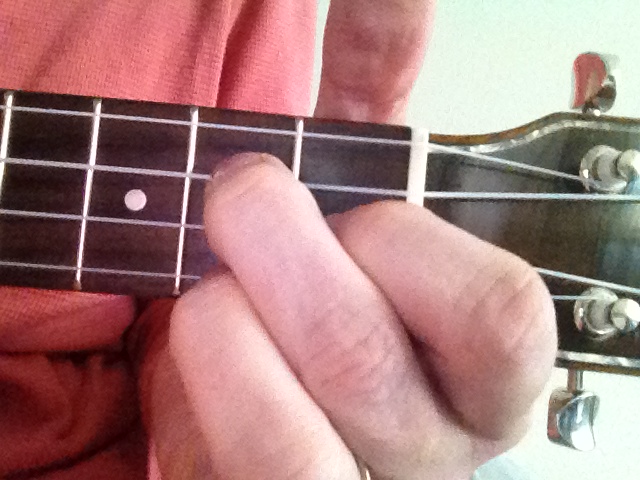
There are so many videos and resources online that can teach you everything you need to know, step by step, much more clearly than I can.  For example, here’s a very basic video on how to tune your ukulele. The most important thing to learn is how to read chord charts, which are easily found online.  Here’s one from a website called Ukalady.com.   If you have an iPhone, there’s a great app called Guitar Toolkit, which has all the ukulele chords, and also includes a digital tuner and a metronome. Here’s a C chord on a chord chart, and here’s how it looks on the ukulele:
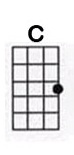
photo (54)                                                                   photo (55)

Imagine that the top of the chart (where the C is) is the end of the fret board, where the tuning pegs are.  The four vertical lines represent the four strings.  The horizontal lines represent the frets, which separate the different notes on each string.  It’s a little confusing, because you have to mentally rotate the chord chart, and imagine it overlaid on the ukulele, with the right side of the chart representing the bottom string.

For the C chord, you’re going to put your finger on the bottom string at the third fret (luckily the third fret has a convenient white dot in the middle, which makes it easy to find).  In order to make chord changes easier, it’s better to use your ring or middle finger, which is going to feel strange at first, but you get used to it.  Then you use your right hand to strum all four strings just over the sound hole. There are lots of ways to strum.  You can curl your fingers loosely, and strum with the nail side of your index, middle, ring and pinkie fingers all together (keeping your hand loose).  Or you can strum with the nail side of your index finger only.  Or you can strum with the fleshy side of your thumb.  Find something that feels natural, and just practice strumming down across the strings, keeping an even rhythm.  

Once you get the hang of this, you are ready to play Row, Row, Row Your Boat.  Here’s what it sounds like:

There you go.  Just one chord.  And it’s a great song for almost any age group.  For babies, you can have them on their parent’s lap, with their parents moving their arms like oars.  For toddlers and older kids, I like to add these two verses: Rock, rock, rock your boat Gently to the shore. And if you see a lion, Don’t forget to roar! (ROAR!!!) Row, row, row your boat Gently down the stream, And if you see an alligator, Don’t forget to scream! (AAAAAAHHHHHH!!) If you want a real challenge for older kids, you can try teaching them how to sing it as a round.

So there you go.  Your first song, which is fun and easy, versatile, and yes, loud! Another one chord song is Are You Sleeping? or Frere Jacques.  For this one, I added an up-strum, by moving my fingers up the bottom strings briefly in between downstrokes.  Here’s what it sounds like:

If you add in one more chord, a G7, you can play The Wheels on the Bus.  Here’s the chord on the chord chart, and what it looks like on the ukulele:

    photo (56)                                                              photo (52)

It’s a little tricky at first to fit all your fingers on the fretboard, and even trickier to switch back and forth between the C and the G7.  It’s good to just practice alternating chords evenly (C   C   G7   G7  C   C  G7  G7) until you get the hang of it.  Then you’re ready for The Wheels on the Bus.  It goes like this:

C                       C                 C                C

The wheels on the bus go round and round

G7                    G7         C                     C

Round and round, round and round.

C                        C            C                    C

The wheels on the bus go round and round

G7             C

All over town.

And here’s what it sounds like:

The Wheels on the Bus is also a fun, versatile song.  You can make the wheels go really fast, or very s-l-o-w, or backwards.  You can have the kids suggest crazy things that might be on the bus: cats, ducks, cell phones, peacocks (but not elephants.  I’m no good at elephant noises).  My favorite is to sing, “The parents on the bus cry, ‘Waah!  Waah!  Waah!” then wait a few seconds for the kids to catch on.

Another two chord song I like with C and G7 is When Ducks Get Up in the Morning.  Here’s how it goes:

C                C                 C       C

When ducks get up in the morning

G7        G7                   C 

They always say, “Good day!”

C               C                C       C

When ducks get up in the morning

G7         G7                  C

They always say, “Good day!”

C            C            C            C

They say, “Quack! Quack! Quack! Quack!”

G7          G7                 C

That is what they say.

C             C               C           C

They say, “Quack! Quack! Quack! Quack!”

G7          G7               C

That is what they say.

You can have the kids suggest other animals.  One of my coworkers begins her toddler time with this song, at a library where there are lots of stuffed toys.  The kids are usually holding different animals, and those become the animals for the song.  She always ends with “When kids get up in the morning,” and asks the kids what they say.  (It’s usually, “I’m hungry!”)

Once you learn the basics of chord charts, you can play just about anything.  My favorite ukulele book is The Daily Ukulele: 365 Songs for Better Livin’ by Jim Beloff.  It’s a wonderful collection of songs, including a section of kids songs (Rainbow Connection!), but also songs by the Beatles, Irving Berlin, Hank Williams, Bob Dylan, as well as lots of folk music and holiday classics.  The best part is that there’s a chord chart for every song, right at the top of the page.  I love to flip through and play a song at random, and I’ve learned a lot of chords that way.  There’s even a Leap Year edition, with 366 more songs, which is also great.

You can also find an impressive collection of songs with ukulele chord charts for free at DoctorUke.com. Another book I’m enjoying right now is Ukulele Exercises for Dummies.  The text assumes a fair amount of comfort with reading music, although there are audio files provided online to help you understand the exercises.  But it covers a wide range of ukulele skills like different types of strumming patterns, fingerpicking, playing percussively, finger rolls, slides, bends.   It’s fun to just go through a couple of exercises a day.

I hope this is helpful.  If you have any questions, please write them in the comments, and I’ll try my best to find an answer.  If you are a uke player and have suggestions or corrections, please write those in the comments too.  I can use all the help I can get! Happy playing!

Read to Me: The Read-Alouds You Will Never Forget

GreeneggThe-Hobbit-flat-coverwrinkle-in-time-3GivingTree

I was prompted to write this post by an article shared by a friend on Facebook called 50 Books Every Parent Should Read to Their Child from flavorwire.com.  The article claims that bedtime reading is a dying practice, and that a quarter of a million households in the UK don’t own a single book.

My husband and I still read at night to both of our kids, although our fourth grader sometimes prefers to read on his own if he’s in the middle of something good.  It’s my favorite time of day.  Between the obligatory brushing of teeth, and the inevitable cry of “I’m thirsty!” the instant the bedroom light goes out, I get to snuggle down under the covers with one of my kids, and share some old favorite from my own childhood, or something completely new.

With my son, I’ve enjoyed reliving The Little House books by Laura Ingalls Wilder, Half Magic by Edward Eager, The Lion, the Witch and the Wardrobe by C.S. Lewis, The Wonderful Wizard of Oz by L. Frank Baum, Tales of a Fourth Grade Nothing by Judy Blume, Henry and Ribsy by Beverly Cleary, My Side of the Mountain by Jean Craighead George, Bunnicula by James Howe, and so many more.  My daughter still prefers picture books, like Corduroy by Don Freeman (my husband and I both have of our personal copies from childhood).

When I reposted the 50 Books article on Facebook, a number of my friends wrote about books they remembered their teachers reading aloud in school.  I have vivid memories of my first grade teacher reading The Trumpet of the Swan by E.B. White, and my fourth grade teacher sharing the deliciously scary View from the Cherry Tree by Willo Davis Roberts, and the unforgettable James and the Giant Peach by Roald Dahl.  In fact, those are some of my strongest and happiest memories from school.  I’ve been happy to hear my son talk excitedly about the books his own teachers have read aloud: Jigsaw Jones mysteries by James Preller, The Witches by Roald Dahl, and the Hank Zipzer books by Lin Oliver and Henry Winkler (the Fonz!).

Before I had my own kids, I dutifully shared with parents at the library the recommendation that you should read with your children for at least 20 minutes a day.   There were studies and statistics and a multitude of different reasons to validate the importance.  In fact, this page from The Children’s Reading Foundation proclaims, “For every year you read with your child, average lifetime earnings increase by $50,000. You make a $250,000 gift to your child by reading aloud just 20 minutes a day!”

To be honest, though, I didn’t really understand exactly why reading aloud was important.  I read to my son because I loved it and he loved it, and it was the one precious peaceful, happy moment of the day we could both count on.  He was not some reading prodigy, consuming The Aeneid in Latin at age 3.  He did well in Kindergarten, but didn’t express any particular interest in reading on his own, beyond what his teacher expected.

Then, in first grade, he fell in love with Sonic the Hedgehog comics and Garfield, and off he went.  And THAT’S where all those years of reading aloud came in.  You’d be surprised how difficult the vocabulary in Garfield is.   Just flipping through a copy of Garfield’s 56th book (How DOES Jim Davis do it??), Caution Wide Load, there are words like disputes, attempt, translate, atomic (actually “atomic wedgie”), instincts, obsessive-compulsive, guaranteed, and lederhosen, just to name a few.   Because my son had listened to so many books for those first six years, he knew those words, or most of them, and was able to decode and understand them.  After that, the reading came easy. Now he reads whatever he likes, which is still a lot of Garfield, but also lengthy novels like Rick Riordan’s The Lightning Thief.

I know not every kid loves reading, even children of voracious readers who have been read to constantly, and I was ready to accept that possibility, but it is a joy to hear him laughing hysterically at the latest Wimpy Kid book, and saying, “Listen to this!”

So yes, parents and teachers, please read aloud to your kids.  Read them the stories and books you love, and the ones they love.  I can’t guarantee that they will turn into bookworms, but the reading will build their vocabularies and their understanding of language, as well as their understanding of stories, and people, and the world around them.  But most importantly, it will build memories of cozy moments sharing wild adventures with you that they will never forget.

I did a little Facebook poll, asking my friends to tell me what books they remembered hearing read aloud when they were kids.  There were lots of votes for Dr. Seuss and Bill Peet, and a wide range of other titles, both novels and picture books.  Here is the list:

Note: the titles of the books link to Amazon.com.  If you’d like to check your local library for any of the titles, a great resource is OCLC World Cat.  Once you input your zip code, any title search you do will tell you which libraries near you own that book.  My husband and I have also been reading some novels aloud as Kindle books, which have the advantage that you can read with the bedroom light off, and you don’t have to remember your place.  Many library systems now provide free ebook collections for Kindle and other devices through Overdrive and similar ebook collections.   I’ve also included a few links to OpenLibrary, which lets you borrow some ebooks that are out of print and hard to find.  

Picture Books

The Tale of Peter Rabbit by Beatrix Potter (submitted by Laura Hoffmann).  We have my husband’s childhood copy of this, and it’s been a favorite of both our kids.  There’s also a really nice animated series on DVD called the The World of Peter Rabbit, voiced by popular British actors, and based on the illustrations from the books.  Perfect for a rainy afternoon.

The Tale of Mrs. Tiggy-Winkle by Beatrix Potter (submitted by Ashley Carter).  Ashley has fond memories of her mother reading this story, about a hedgehog who does the laundry for all the animals in the other Beatrix Potter tales.  This story is also featured in The World of Peter Rabbit.

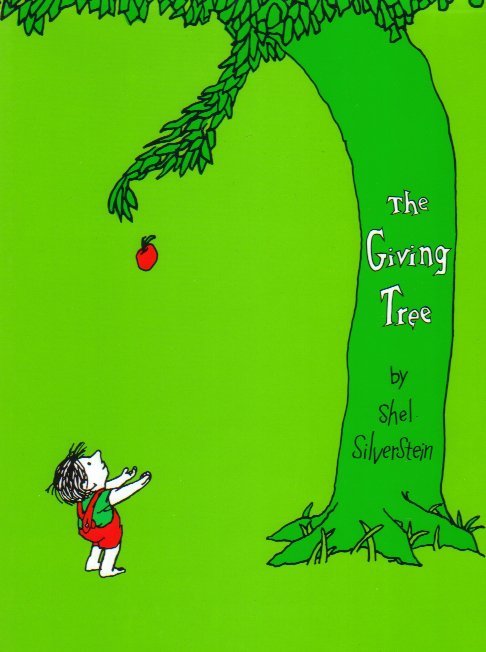
The Giving Tree by Shel Silverstein (submitted by Joshua Adler).  Josh says he thinks it shaped his life, and I think it did mine as well.  I remember obsessing over it as a kid.   There are many different interpretations, both positive and negative, that have been put on it over the years, but I prefer to think of it as a story of unconditional love.

Green Eggs and Ham by Dr. Seuss.  (submitted by Joshua Adler, who says he enjoys doing the voices).  I’m still amazed by Dr. Seuss’ ability to create such an unforgettable story in verse using the same 50 words.

The Little House by Virginia Lee Burton (submitted by Lindsey Tear).  Sweet story about a little house in the country, who becomes engulfed by the city as the year pass, but finally gets to return to her happy rural life.  Winner of the 1942 Caldecott Award.

And to Think that I Saw it on Mulberry Street by Dr. Seuss (submitted by Sue Beckmeyer).  Dr. Seuss’ first book for children.  A little boy sees a horse pulling a wagon on Mulberry Street, and imagines all the ways he could make the story more interesting.

Cookie Monster and the Cookie Tree by David Korr, illustrated by Joseph Mathieu (submitted by Monica Bejarano).  Some of the old Sesame Street books were amazingly good, and this was one of my childhood favorites.  A greedy witch puts a spell on her cookie tree to keep Cookie Monster from stealing her cookies.  The trouble is that the tree will only give cookies to people who share, which means the witch can’t have them either.  Large colorful picture book featuring all the Sesame Street characters.  This book is out of print, but available to read for free through Open Library.

The Monster at the End of this Book by Jon Stone and Michael Smolin (submitted by Jonathan Strickland).  Another great Sesame Street book (a Little Golden book actually), this time featuring Grover, who begs the reader not to turn the pages.  There are two great iPad apps based on this book, including Another Monster at the End of This Book, featuring Elmo and Grover.

Madeline by Ludwig Bemelmans (submitted by Neeru Penumella).   I still have the copy of this book that my grandmother gave me when I was four, and I remember her reading it to me.  Definitely a favorite, although as Abbey Sparrow points out, Madeline is actually kind of an entitled brat.  Poor Miss Clavel.

Goodnight Moon by Margeret Wise Brown and Clement Hurd (submitted by Ellyn Moore).  This was the first book I remember reading regularly to my son when he was a baby.  My husband and I used to recite it to him line by line in the car when he was fussy.  My daughter still loves looking for that tricky mouse on every page.  Definitely a classic.

Fox in Socks by Dr. Seuss (submitted by Abbey Sparrow).   Oh, so tricky to read aloud.  This book is full of impossible tongue twisters that get harder on every page, and of course, kids love hearing you mess them up.  (Although he insisted on reading them himself instead of listening to them, Abbey also remembers enjoying the art in Cloudy with a Chance of Meatballs by Judi and Ron Barrett, and the Little Monster books by Mercer Mayer).

Clifford the Big Red Dog by Norman Bridwell (submitted by Kim Day).  Who doesn’t want a giant red dog they can ride on?   I read this at a Preschool Storytime a few weeks ago, and the kids were as excited about it as I was as a kid.

The Paper Bag Princess by Robert Munsch (submitted by Peter Selkin, who says it is a current favorite of his daughter).  Great twist on traditional fairy tales.  In this story, the Princess saves the day and the Prince, as Pete says, is a bum.

The Wump World by Bill Peet (submitted by Neeru Penumella).  The poor peaceful grass-eating Wumps are happy until they are invaded by the Pollutians from planet Pollutus.  Timeless environmental story.  Bill Peet was also mentioned as a favorite author by Kim Day and Sue Beckmeyer.

Flutterby by Stephen Cosgrove and Robin James (submitted by Noelle D’Amato).  One of the Serendipity books, with their adorable big-eyed animal characters, this one’s about a baby pegasus trying to find out who she is.  This book is out of print, but available to borrow for free on Open Library.

Beginning Reader/Early Chapter Books

Morris the Moose by B. Wiseman (submitted by Tina Williams).  These books about a mixed-up moose are hilarious and so much fun to read aloud.

Frog and Toad  by Arnold Lobel (submitted by Laura Hoffmann).  Classic, both as early readers and read-alouds for younger kids.  Frog and Toad are the children’s book version of The Odd Couple.

Amelia Bedelia by Peggy Parish (submitted by Ashley Carter).  These books about a maid who takes everything literally are just as funny and popular today as they were when I was a kid.

Chapter Books

Pippi Longstocking by Astrid Lindgren (submitted by Maria Kurland).  Oh, how I longed to be Pippi Longstocking, with her superhuman strength and her collection of gold coins.  Fantastic, whimsical adventure stories, especially for girls.

Karlsson on the Roof by Astrid Lindgren (submitted by Maria Kurland).  I have not read this book, but it looks hilarious, about a little man with a propeller on his back, who lives on the roof of a little boy’s house.

The Wonderful Adventures of Nils by Selma Lagerlof (submitted by Maria Kurland).  Another one I’m not familiar with, but it has phenomenal reviews on Amazon, where it is described as “one of Sweden’s best-loved books.”  It’s also available for free on Kindle.

Winnie the Pooh by A. A. Milne (submitted by Maria Kurland).  I picked up an audio version of these several years ago, read by British actor Jim Broadbent, and the whole family loved them.  I loved the stories as a kid, but I don’t think I realized back then the subtlety and humor of Milne’s writing.  They are truly hilarious.

The Adventures of Tom Sawyer by Mark Twain (submitted by Maria Kurland).  My husband is currently reading this with our son.  It’s longer than I remember, with a lot more adventures,  but it’s amazing how timeless and funny the story is.  Maria also recommended  The Adventures of Huckleberry Finn by Mark Twain, which of course has a heavier storyline because of its treatment of slavery, but is definitely an essential classic of American literature.

The Jungle Book by Rudyard Kipling (submitted by Maria Kurland).   Kipling’s writing is so much fun to read aloud.  The Elephant’s Child and Rikki Tikki Tavi were two of my favorite stories to hear as a child.  The Jungle Book is full of the same rich, rhythmic language and wonderful detail, and is very different from the Disney movie.

Bambi: A Life in the Woods by Felix Salten (submitted by Maria Kurland).  There are lots of abridgments and picture book versions of this book, and it’s hard to find the original novel, except as an ebook.   It’s a beautiful novel full of rich descriptions of the realities of life in the forest.

Mary Poppins  (Amazon.com link) by P.L. Travers (submitted by Maria Kurland and Lynn Williamson).  I wish someone had read this one aloud to me, but I do have a very clear memory of hiding behind our living room sofa so I could read it in peace.   The book describes a lot more adventures than the Disney movie, which I also love.

Paulus and the Acornmen by Jean Dulieu (submitted by Abbey Sparrow).  I’m not familiar with this book, but Abbey remembers his whole family fighting over it when he was a kid.  Unfortunately, it’s out of print and hard to find now, but the copies that are out there sell for $250+, so it must be good!  According to WorldCat, there are 28 copies left in US libraries, so you may be able to get it through Interlibrary Loan.

A Wrinkle in Time by Madeline L’Engle (submitted by Abbey Sparrow).  Another strong childhood memory is hearing my third grade teacher read this aloud to the class.  It was so mesmerizing, with the mysterious Mrs. Who, Mrs. Which, and Mrs. Whatzit, the whole idea of the tesseract, and the terrifying IT.   I agreed to let my husband read this one to our son, on the condition that I got to read him the sequel A Wind in the Door, a book I found truly mind-blowing as a child.

The Wind in the Willows by Kenneth Grahame (submitted by Abbey Sparrow).  What is it about animal stories that make them so timeless?  Classic, funny stories about Rat, Mole, Toad, and Badger that Kenneth Grahame used to tell to his own son, Alistair.

Brighty of the Grand Canyon by Marguerite Henry and Wesley Dennis (submitted by Teri Tosspon).  Teri remembers her teacher reading this aloud to the class.  Based on an actual burro who used to carry visitors down into the Grand Canyon, this is a great animal adventure story.  It would the perfect book to read before visiting the Grand Canyon.  Marguerite Henry also wrote Misty of Chincoteague and King of the Wind, two of my other favorite books from childhood.

Johnny Tremain by Esther Forbes (submitted by Teri Tosspon).  Another one Teri remembers her teacher reading.  Newbery Award winning historical fiction novel about a boy living in Boston just before the American Revolution.  I’m embarrassed to admit I haven’t read it yet, but I think it will be one of the next books I read with my son.

Alexander and the Magic Mouse by Philippe Fix and Martha Sanders (submitted by Anne McArthur).  I’m not familiar with this book, about an old lady and the animals she lived with, but Anne says she read it until it was literally falling to pieces.   It has rave reviews on Amazon as well.  Unfortunately, it’s out of print, but you can borrow it for free through Open Library.

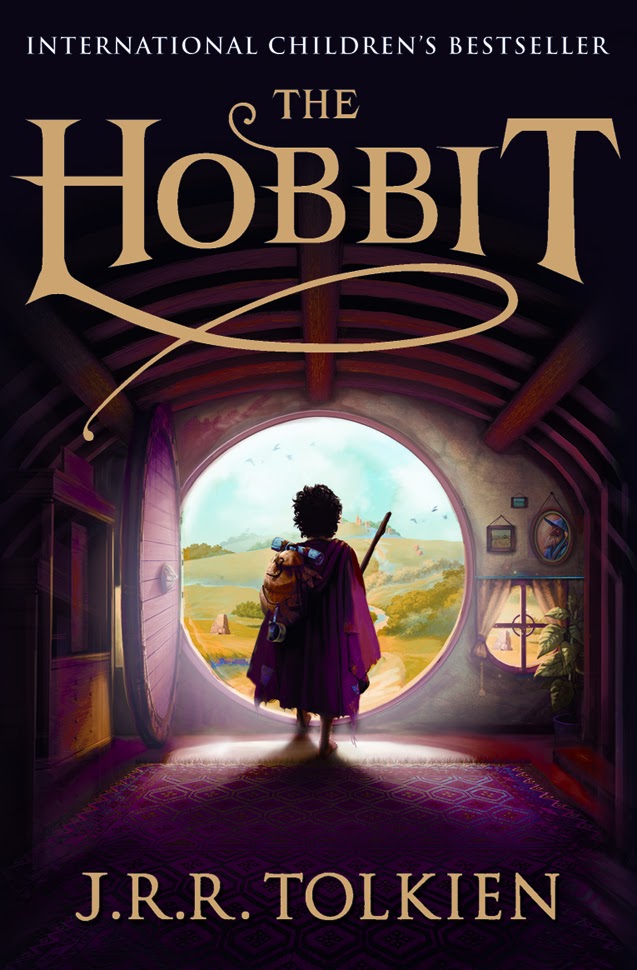
The Hobbit by J.R.R. Tolkein (submitted by Jonathan Strickland).  Hobbits, dwarves, a magic ring, a scary dragon.  What more could you ask for from an adventure story.  My husband got to read this one to our son, so I call dibs on reading it to our daughter when she’s older.

Hamlet by William Shakespeare (submitted by Jonathan Strickland, who requested that his Dad read it immediately after The Hobbit).  Funny that I never thought of reading Shakespeare at bedtime, but he is, after all, the master storyteller, and it would be great fun to try to read all the parts.

Lad, a Dog by Albert Payson Terhune (submitted by Lynn Williamson).  Lynn remembers looking forward to her teacher reading a chapter of this every day.  It’s a dramatic series of stories about a collie named Lad.  I had a picture book version of the stories “Lost” and “A Miracle or Two” as a child, and I used to read them over and over.

Lassie Come-Home by Eric Knight (submitted by Jerry Williamson).  Jerry remembers his teacher reading this book aloud.   Nothing tugs at the heartstrings like dog stories, but at least this one has a happy ending.  The inspiration for the TV show and a wonderful movie adaptation starring Elizabeth Taylor, this book tells the story of a boy’s beloved collie, who has to be sold when the family falls on hard times.  You can figure out the rest from the title, but it’s quite an adventure.

Noddy books by Enid Blyton (submitted by Neeru Penumella).  I didn’t have access to Enid Blyton growing up, but she seems to have had a tremendous influence on a lot of my friends from overseas.   The Noddy books are about a wooden boy and his adventures in Toyland.  There have been several stage productions and a TV series based on them in the UK.   Unfortunately the books are out of print in the US, but you can borrow several of them for free through Open Library.

Asterix and Obelix books by Rene Goscinny and Albert Uberzo. (submitted by Neeru Penumella).  I didn’t grow up with these either, but they have been popular in every library where I’ve worked.   A series of graphic novels about a village of Gauls in 50 BC, whose residents have managed to fight off the Roman invaders by drinking a magic potion that gives them superhuman strength.  The books are full of word play, and a number of my friends credit them for teaching them about the history of the Roman Empire.

My Father’s Dragon by Ruth Stiles Gannett; illustrated by Ruth Chrismas Gannett (submitted by Thomas Moore).  Whimsical adventure story about a boy who sets out for Wild Island in order to rescue a baby dragon who has been enslaved by the animals there.  The short chapters, and black-and-white illustrations on almost every page make it a good introductory chapter book for younger kids.

Ida Early Comes Over the Hill by Robert Burch (submitted by Kerri Meeks Hall).  Kerri remembers her fifth grade teacher reading this to the class, and also reading it herself when she was student teaching.   Although I haven’t read this one, I remember reading Burch’s Queenie Peavy over and over when I was a kid.  This book is about a family of four kids in Depression Era rural Georgia, whose lives are changed when a tall, ugly woman with a wonderful sense of humor comes to help them out.  Kerri says her own copy is now held together with a rubber band, and she is looking forward to reading it to her daughter when she is bit older.

Stories

The Monkey’s Paw  by W.W. Jacobs (submitted by Tina Williams).  Tina says Ms. Delman was her favorite teacher, because she read great books.  The Monkey’s Paw is a fantastically creepy classic about the dangers of getting what you wish for.  I read it in my ninth grade English (thank you, Ms. Pogue!) and it was definitely unforgettable.  The story is available for free as a Kindle book.   (As an aside, Tina remembers her teacher reading a book about a kid who travels through time by way of a spinning thing on his hat.  She would love to find out the title.  Anyone?)

Animal stories by Ernest Thompson Seton and Gerald Durrell (submitted by Maria Kurland).  I’m not familiar with Ernest Thompson Seton, who was one of the founders of the Boy Scouts and also sported a fabulous mustache, but his collection of stories about wild animals gets wonderful reviews and is available for free as a Kindle book.   I do know Gerald Durrell, and remember laughing hysterically as a child over Menagerie Manor, about his adventures running a private zoo on the Isle of Jersey.

Mai Kulkarni remembers hearing her dad tell stories from the Ramayana.  Neeru Penumella remembers hearing them from her grandmother, who also shared stories from the Mahabarata, and brought Amar Chitra Katha comics.

A hearty thank you to everyone who sent me their favorite read-alouds.  Please send me the titles of other books you remember, and I’ll be happy to add them to my list.   The books we share with kids have their own immortality.  Let’s keep them alive!

Hanukkah, Oh Hanukkah! (Or Chanukah)

This week we had a special guest for storytime: Esther Goldman from Chabad, a Jewish outreach organization in Daly City.  She brought some of her favorite books to share for Chanukah, and we alternated reading them.

In the past, most of the Hanukkah books we had at the library seemed to be either too long, or too dry to hold the interest of the kids at my storytimes.  Happily now there are a lot of fun stories for different age groups, but I was still really grateful to have Esther’s recommendations. These were the ones she chose to share:

chanuka

A Chanukah Story for Night Number Three by Dina Rosenfeld; illustrated by Vitaliy Romanenko (Amazon link)

A little boy whose birthday falls on the third night of Chanukah hopes to celebrate by making the biggest latke ever.  Funny, rhyming story that the kids enjoyed.  Esther brought her own copy of this book, which had a slightly different title, so there may be alternative versions.

dreidel

I Have a Little Dreidel by Maxie Baum; illustrated by Julie Paschkis (Amazon link)

An extended version of the traditional song describing a family Hanukkah celebration, with nice, large illustrations.  I had the kids join in on the chorus, and I heard them singing it after the storytime too.  Esther kindly brought little plastic dreidels to hand out to each child at the end.

borrowed

The Borrowed Hanukkah Latkes by Linda Glaser; illustrated by Nancy Cote (Amazon link)

A little girl hopes to persuade her neighbor, Mrs. Greenberg, to join them for a Hanukkah dinner by borrowing different things to make latkes.  Sweet, happy story that made everyone hungry for latkes.

hanukkah

Hanukkah, Oh Hanukkah! by Olga and Aleksey Ivanov (Amazon link)

Lovely, illustrated version of the traditional song.  Several kids wanted to check this one out.  Perfect for any age group.

INSTRUMENT PLAY WITH A CD: Su-sufganiya by Yaffa Yarkoni from The Feast of Chanukah album (Amazon link)

This is a great CD with music in English and Hebrew.   One of the moms said it was the best one she had found.

CRAFT: Craft Stick Menorah

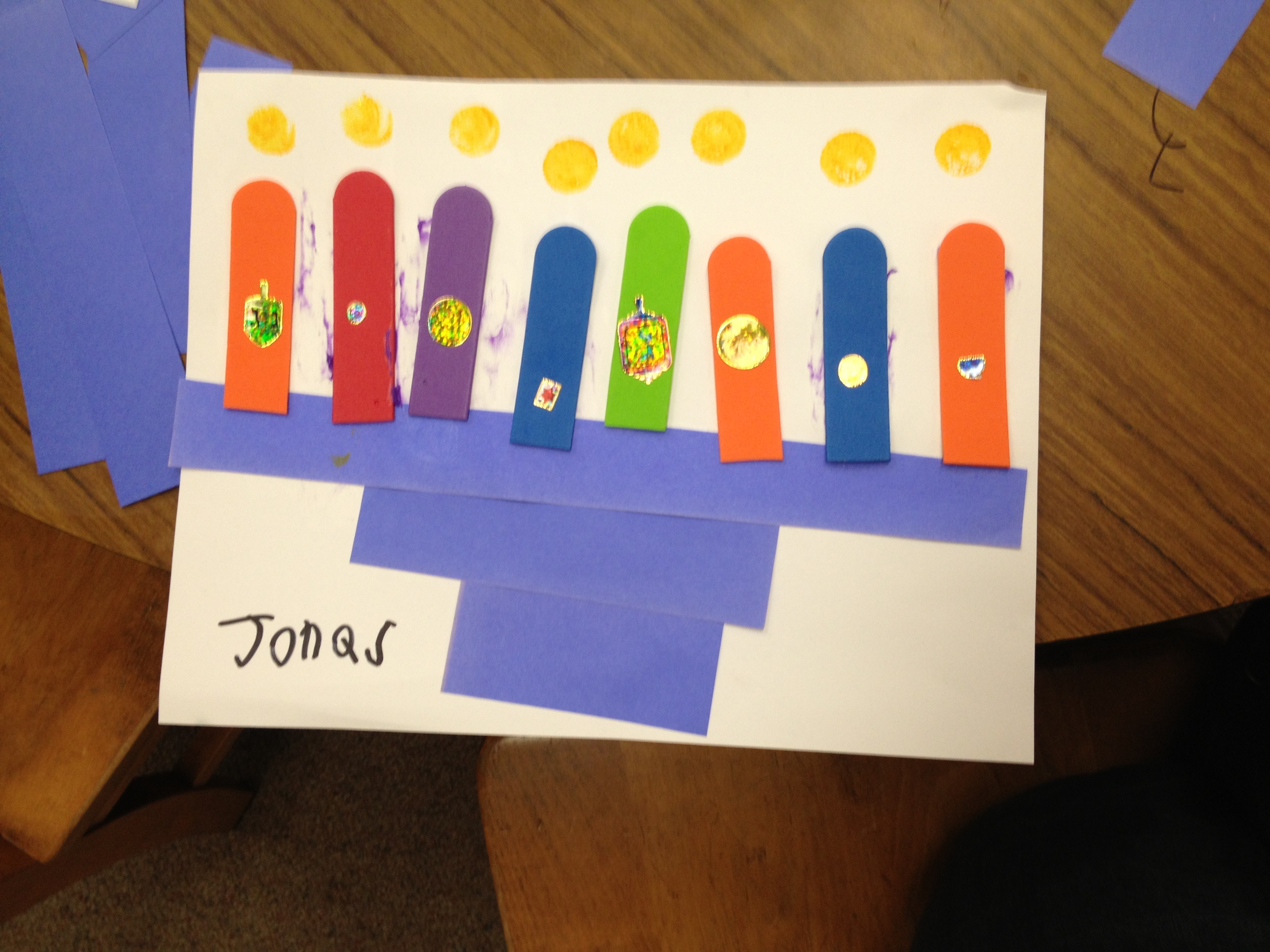
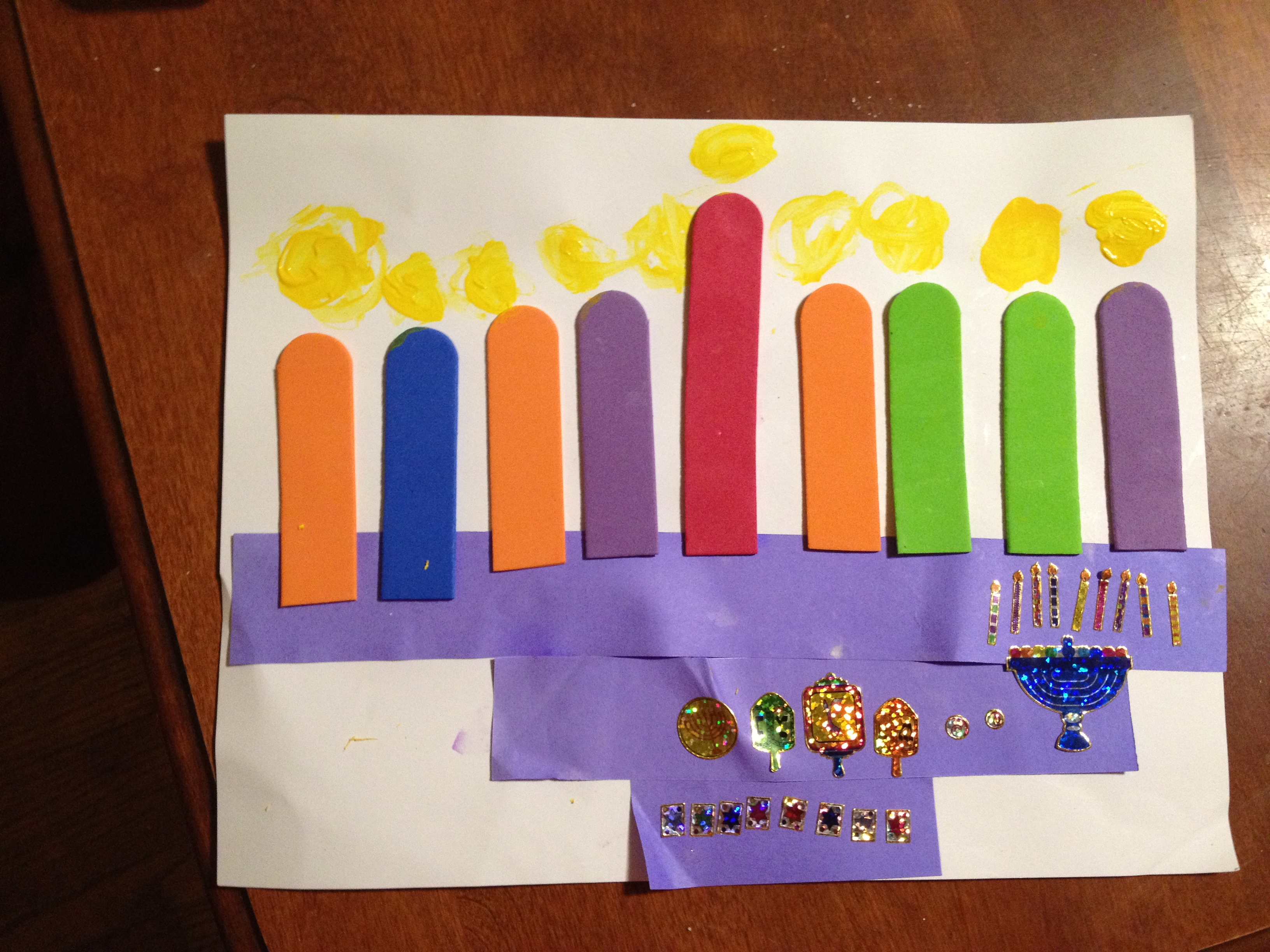
Paper and Foam Craft Stick Menorah from Jonas

Paper and Foam Craft Stick Menorah from Jonas

Initially Esther had wanted to make flame hats, which would have been fun, but we didn’t end up having enough time to coordinate, so I threw this craft together.  I had picked up some colored craft sticks from Michaels, assuming they were the usual wooden ones.  To my surprise, they were actually foam.  They were super stinky when I first opened them, but they worked out great for the candles on the menorah because I could cut them in half.

For the base of the menorah, I just cut out strips of blue paper in three different sizes.  The kids glued them onto white card stock with glue sticks, then glued on the craft stick candles.  They made the flames with yellow dot paint, then decorated with stickers.

But OOPS!  I just realized I never accounted for the Shamash candle in my craft, which was a huge oversight!!  Wow!  I apologize for that.  I should have had a longer foam stick for each child.  Here’s my daughter’s menorah with the Shamash candle in the middle.

photo (60)

There are some other really nice menorah crafts online.  If I had more time, I would have loved to have done this handprint menorah from All Kids Network.

OTHER BOOKS:

The Latke Who Couldn’t Stop Screaming: A Christmas Story by Lemony Snicket (Amazon link)

This is still my personal favorite Hanukkah book.  Lemony Snicket (aka Daniel Handler) does a brilliant job of incorporating the history of Hanukkah into the story of a disgruntled latke who is sick of Christmas decorations who assume he’s part of their holiday.  Plus the kids get to scream on every other page.  There’s a funny twist at the end, and, unlike all the turkey stories we read last week, the protagonist of this book does get eaten.  I’m looking forward to reading this to some second grade classes after Thanksgiving.

The Chanukkah Guest by Eric Kimmel; illustrated by Giora Carmi (Recommended by Sapphira Edgarde) Amazon link

Bubba Brayna is an old woman whose hearing and eyesight are failing, but she still makes the best latkes.  When a hairy visitor shows up at her door, she assumes it’s the rabbi.  Bubba Brayna entertains him, feeds him, and sends him on his way with a new red scarf, never realizing that her guest is actually an enormous hungry bear.  This is a funny story that I plan to share with the second graders too.  Thanks to Sapphira for the recommendations and for pointing out that the book has recently been republished with new illustrations by Mike Wohnoutka under the title, The Hanukkah Bear (Amazon link).

Sammy Spider’s First Hanukkah by Sylvia A Rouss; illustrated by Katherine Janus Kahn (Amazon link)

This is part of a series of books where Sammy Spider learns about different Jewish holidays.  In this one, Sammy envies Josh Shapiro, a little boy whose family gives him a different colored dreidel for every night of Hanukkah.  He longs for a dreidel of his own, but his mom tells him spiders spin webs not dreidels.  This is one of the shorter Hanukkah stories, and it also doubles as a book about colors and numbers.  San Mateo County Library patrons can read and listen to an animated ebook version of Sammy Spider’s First Shabbat on  Tumblebooks through the library web site (you have to search for the title.  There’s a wonderful assortment of books there, including many by Robert Munsch, who does his own narration).

What Do You See? on Hanukkah by Bracha Goetz

Esther had brought this one for babies and toddlers, but didn’t end up reading it.  It’s a board book with colorful photographs to introduce very young children to the holiday.  Unfortunately we don’t have a copy in our library system, so the link above goes to the Amazon page.

I’d love to get more recommendations.  Please send me your favorite Hanukkah book titles and I’ll add them to my list.

Wattle We Read Next? A Thanksgiving Storytime

Thanksgiving is a frustrating holiday for picture books.   Sure, there are some entertaining books, but 90% of them seem to be about a turkey trying to escape being eaten.  I don’t mind reading one or two of these, but too many gets a bit old.  Also, I can’t help but wonder if it’s just going to make kids feel bad about their Thanksgiving Dinner, aka The One That Didn’t Get Away. That being said, I did read a couple of Turkey Escape books for this week’s Family Storytime (I did the Thanksgiving theme a week early because Chabad, a local Jewish outreach organization is coming to next week’s storytime to present a Chanukah theme).   Here was my Thanksgiving line-up:

a-plump-and-perky-turkey

A Plump and Perky Turkey by Teresa Bateman; illustrated by Jeff Shelly

Every year, just before Thanksgiving, all the turkeys of Squawk Valley seem to vanish (actually they climb into hot air balloons and fly away to a tropical island).  But this year the town has a plan: they will post fliers asking for a turkey to model for a turkey-themed Arts and Crafts Fair, and trick a bird into becoming their dinner.  But of course, the turkey ends up being smarter than they thought.  This is a longish rhyming story, but the kids loved the illustrations of all the turkey crafts: turkeys made of potatoes, and oatmeal, and even soap.  There was a lot of clamoring to check this one out at the end.

Image

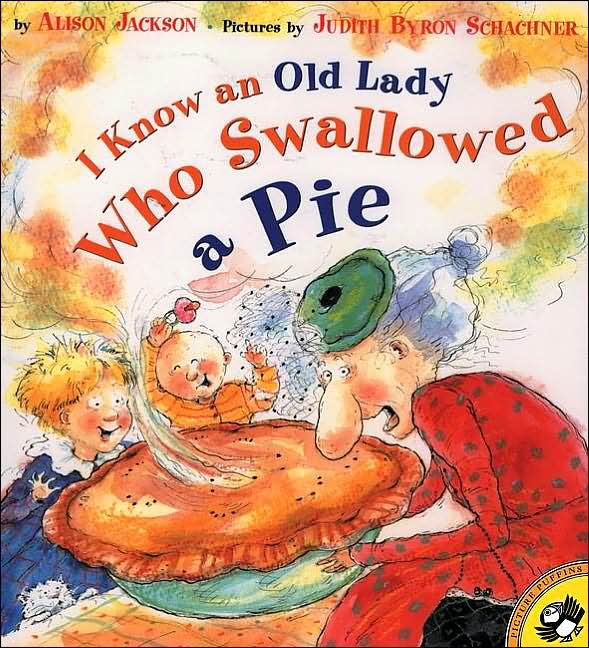
I Know an Old Lady Who Swallowed a Pie by Allison Jackson; illustrated by Judy Byron Schachner One of my Thanksgiving standards.  A clever parody of The Old Lady Who Swallowed a Fly, about a woman who eats WAY too much: a turkey, a pot!, a ten-layer cake.  The kids liked the twist at the end, when she becomes a big balloon float for the Thanksgiving parade.  Great read-aloud for any age group.

Image

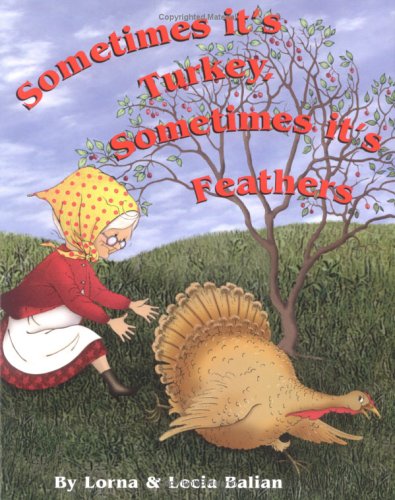
Sometimes It’s Turkey, Sometimes It’s Feathers by Lorna and Lecia Balian

My daughter loves this book.  Old Mrs. Gumm is excited to find a freckled egg hidden in some leaves.  She takes it home, and sure enough, it hatches into a baby turkey, who eats and eats and eats.  My daughter especially loves the lists of what the turkey eats: caterpillars, inchworms, pea gravel, and cat food, among other things.  In November, Mrs. Gumm is ready with her hatchet, but by then the turkey has become a good friend who ends up joining her for Thanksgiving dinner.   Yes, this is another book vilifying the turkey dinner, but the writing is full of warmth and wonder, especially when the egg hatches, and the illustrations are sweet.  The kids all seemed to enjoy it too, since several of them asked to check it out.

Image

The Dumb Bunnies’ Easter by Sue Denim; illustrated by Dav Pilkey I am currently living with Dumb Bunnies.  We own the first book, and have the other three checked out, and my daughter insists on hearing at least one of them every day.  And yes, they are dumb.  But funny.   This book is a crazy mishmash of almost every holiday, which is kind of the way I feel this time of year.   The bunnies chop down an Easter tree, hang up Valentines, and carve a turkey like a jack-o-lantern.  I wasn’t originally planning to read this one, but I had to bring my daughter with me to storytime last night, and she saw it in my pile.  I was happy I did though, because the book is shelved in the Easter section, even though it covers several holidays, and we happened to have 6 copies for the kids to check out.  It felt like Christmas when I handed them out at the end.

SONGS: The Turkey Jerky (To the Tune of the Hokey Pokey)

You put your left drumstick in (left leg)
You put your left drumstick out
You put your left drumstick in
And you shake it all about.
You do the Turkey Jerky and you turn yourself around
That’s what it’s all about!

Repeat with right drumstick, left wing, right wing, waddle (chin), and tail feathers.

I Know an Old Woman Who Swallowed a Fly (with puppet)

We sing the song with the old lady puppet, and the kids take turns feeding her different animals.  I have a big spider puppet I pull out for repeated line “It wiggled and jiggled and tickled inside her,” and I tickle the kids with it (usually they make a big game out of backing up out of reach, and saying, “It didn’t get me!”)  At the end, our old lady dies, but we take her to the hospital and resuscitate her.  Clearly, she needs counseling.

INSTRUMENT PLAYALONG WITH A CD: Rhubarb Pie by Laurie Berkner from her Under a Shady Tree Album

CRAFT: Paper Bag Turkey

Paper Bag Turkey by Ramona

Paper Bag Turkey by Ramona

I owe this craft to my coworker Gail Benjamin, who did it for a pajama story time at our other branch a few weeks ago.  She had several turkey “kits” left, all ready to go (gotta love leftovers!), with instruction sheets and all the turkey parts in paper bags.  Gail had pre-glued the googly eyes to the plastic spoons for the heads, and also glued the wattle to the bottom of each beak (these were made out of construction paper).

I handed out sheets of newspaper for the kids to crumple.  They stuffed the paper inside their bag, then fastened the bag shut with rubber bands (the parents helped with this).  Then the kids glued the construction paper feet and bowties on.   We helped each kids poke their spoon handle head into the bottom of the paper bag.   Then they glued the beak and wattle onto the spoon. The tail feathers were thin strips of colored paper.

Gail had recommended that the kids put glue inside the “tail” end of the bag, then arrange the paper feathers inside (she even gave me small containers of Elmer’s glue, which are perfect for small hands).  That worked well, although if you want a slightly less messy approach, the mom of Ramona (whose turkey is pictured above) stuck her paper strips through the rubber band that separates the body from the tail.

OTHER THANKSGIVING BOOKS:

The Firefighters’ Thanksgiving by Maribeth Boelts; illustrated by Terry Widener

This is actually one of my favorite Thanksgiving books, and I would have done it if I hadn’t read it to the same group for my firefighter storytime a few weeks ago (I was going to do it anyway, if my daughter hadn’t seen the Dumb Bunnies book).   Firefighters at a busy fire station try their best to make Thanksgiving dinner, but they keep getting called away to fires.  Luckily, while they are on their last call, people from the community bring dinner to the station as a thank you.   The text is rhyming, and simple enough to hold the interest of very young children.

The Thankful Book by Todd Parr

I didn’t get to read this one either, but it’s perfect for Thankgiving.   With Todd Parr’s characteristic brightly colored, whimsical illustrations, this book lists many things to be thankful for every day: music, reading, bathtime, nature, and, of course, underwear!

‘Twas the Night Before Thanksgiving by Dav Pilkey (Recommended by Heidi Locicero)

Another runaway turkey book, but a funny one.  Eight kids on a field trip to Farmer Mack Nugget’s farm are horrified to find out what he plans to do with his adorable turkeys.  Luckily for the turkeys, the kids hatch a plan of their own.   My daughter loves this one almost as much as the Dumb Bunnies.

BREAKING NEWS!  I found the best Thanksgiving book for elementary grades!  (Actually, I stole it from my boss, Thom Ball, who had been planning to read it at Musical Storytime but went with something shorter).   I read it to two second grade classes and they loved it.  They kept asking, “Is this a true story?”  And it is!  The book is Thank You Sarah: The Woman Who Saved Thanksgiving by Laurie Halse Anderson, illustrated by Matt Faulkner.   It’s the story of Sarah Hale, the woman who wrote thousands of letters over the course of 38 years and finally succeeded in making Thanksgiving a national holiday.  Anderson portrays Sarah Hale as a true superhero, who fought for lots of important causes like schools for girls and the abolition of slavery, and also wrote the poem “Mary Had a Little Lamb.”  She explains the context of Sarah’s cause, and her hopes that Thanksgiving would help unite a country torn apart by the Civil War.  The caricature-like illustrations are funny and eye-catching, and it’s an excellent lesson in perseverance, democracy, and the power of words to bring about change.  Highly recommended for libraries and classrooms.

What are your favorite Thanksgiving books?

Scary Stories!

photo (45)

Q-tip Skeleton by Sophia

I love Halloween. The only thing that frightens me about the holiday is that I know the instant it’s over, it will be Christmas. And not just in the stores, because Christmas has already begun its red and green invasion across our local Rite Aid. No, I mean, that as soon as October ends, that whole eight weeks between November 1 and December 25 will vanish like a pepperoni pizza in a room full of teenagers.

But for now, I get to enjoy the huge variety of great picture books about monsters, witches, pumpkins, and ghosts. The only challenge is gauging the scariness level for the wide range of ages I read to. This week, I did Halloween-themed storytimes for two groups of toddlers, two groups of preschoolers, two second grade classes, and my family storytime group (mostly Kindergartners). This post is mostly about my family storytime, but I’ll list some of my favorites for the other age groups below:

monster

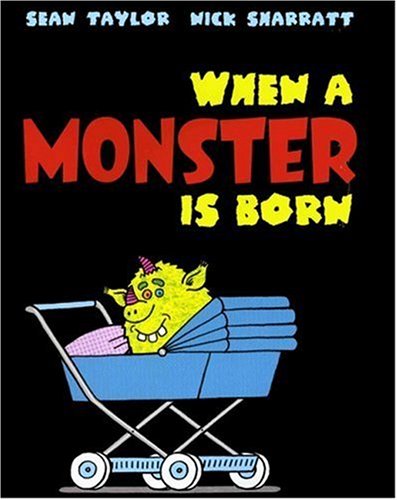
When a Monster is Born by Sean Taylor and Nick Sharatt

“When a monster is born, there are two possibilities: either it’s a Faraway in the Forests Monster or it’s an Under Your Bed Monster.” This book explores all the different things that might happen with each decision a monster might make, each with hilarious twists: it might eat the principal, it might meet a kitchen girl and fall in love. The kids love joining in on the repeated line, “There are two possibilities.” This one was quickly snatched up by one of my family storytime kids. The parents enjoyed it too, especially the line, “Hey, I’m a monster. You’re a monster. Let’s get married!”

peas

The Monster Who Ate My Peas by Danny Schnitzlein and Matt Faulkner

I love this book. It’s rare to find a long story in rhymed verse that reads so well all the way through, and is easy for the kids to follow. When a boy doesn’t want to eat his peas, a horrifying monster appears to offer a trade: he’ll eat the peas in exchange for the boy’s new soccer ball. The boy accepts, but the next time he has to eat peas, the monster returns asking for his bike. I had read this to two classes of second graders the morning before my family storytime, and I thought it was really interesting that, when I asked them if the boy should give up his ball or his bike, most of the older kids said, “Yes.” (The Kindergarten kids at family storytime said, “No” every time.). But when the monster demands the boy’s puppy, all the kids were emphatically against the deal, and also worried about what was going to happen to the dog. Luckily, the boy decides to eat the peas himself, and the monster disappears in a deliciously satisfying ending. A couple of the Kindergartners thought this one was scary, which surprised me because I remembered reading it to them a year or so before. But then I know from my own kids that they find different things frightening at different ages. The second graders loved it.

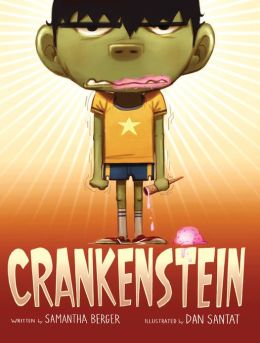
crankenstein

Crankenstein by Samantha Berger; illustrated by Dan Santat

This one was recommended by my friend Kerri, on her blog What is ML Reading? It’s a fun read-aloud because the kids get to make that Frankenstein “Mehrrr!” noise all the way through. It describes all the things that can turn a normal kid into Crankenstein: waiting in long lines, running out of maple syrup, getting ready for school, and bedtime. It would pair well with another of my favorite books: What are You so Grumpy About? by Tom Lichtenheld. This one got snatched up too.

CreepyCarrots1

Creepy Carrots by Aaron Reynolds; illustrated by Peter Brown

Always a hit! As I told the kids: this one’s only scary if you’re a rabbit. But it has all the hallmarks of a horror movie: dark shadows, creepy breathing, things that aren’t there when you turn around. In this case, the monsters are three creepy carrots, who stalk poor Jasper Rabbit until he decides to take matters into his own hands. It’s a fun read, with a funny twist at the end, and it works for a wide range of ages.

SONGS:

Jack-o-Lantern (For the tune, click here)

Jack-o-lantern, Jack-o-lantern,
You are such a spooky sight!
As you sit there in the window
Looking out at the night.

You were once a yellow pumpkin
Growing on a pretty vine.
Now you are a jack-o-lantern,
Let your candlelight shine!

1 Little, 2 Little, 3 Little Witches

1 little, 2 little, 3 little Witches (hold up three fingers)
Fly over haystacks, fly over ditches (fly your hand around)
Fly over moonbeams without any hitches
Hey ho! Halloween night! (Clap!)

1 little, 2 little, 3 little witches
Flew over barbed wire, tore their britches
Had to go home and get some stitches (mime sewing)
Hey ho! Halloween night! (Clap!)

On Halloween (to the tune of The Wheels on the Bus)

The ghosts in the house go, “Boo! Boo! Boo!”
“Boo! Boo! Boo! Boo! Boo! Boo!”
The ghosts in the house go, “Boo! Boo! Boo!”
On Halloween!

The witches in the house go “Hee hee hee!”…

The bats in the house go “Eee eee eee!”…

The kids at the door say “Trick or treat!”

I asked for suggestions from the kids for other spooky Halloween things, or things they plan to be for Halloween.

Five Little Pumpkins

Five Little Pumpkins sitting on a gate (hold up five fingers)
The first one said, “Oh my! It’s getting late!”
The second one said, “There are witches in the air!”
The third one said, “But we don’t care!”
The fourth one said, “Let’s run and run and run!”
The fifth one said, “It’s Halloween fun!”
Then “OOOOOOH” went the wind,
And out went the light! (Clap)
And the five little pumpkins rolled out of sight. (roll hands)

photo (46)

Q-Tip Skeleton by Olivia

CRAFT: Q-Tip Skeletons

I am grateful to the Crafts Ideas website for including a printable template for the skull. I cut those out ahead of time and broke up the Q-Tips into different sizes. One thing I learned the hard way: it’s much easier to break Q-tips with your hands than to cut them with scissors. With the scissors, I was wearing out my hands, and Q-tip bits were flying across the reference desk like tiny cotton missiles!

The kids used glue sticks to glue their skeletons to black paper. If you do a search for Q-Tip Skeletons online, you’ll see an astounding variety of styles. Some of them get pretty elaborate, and include fingers and toes.

OTHER HALLOWEEN BOOKS (with recommended ages):

Babies and Toddlers:

Halloween Countdown by Jack Prelutsky; illustrated by Dan Yaccarino

Wonderful counting rhyme in a board book format. The ghosts are adorable, and there’s a “Boo!” at the end. This one really works well for any age.

Five Little Pumpkins by Dan Yaccarino

A classic board book of the fingerplay, Five Little Pumpkins (see above). Most of the kids knew this one already.

Tucker’s Spooky Halloween by Leslie McGuirk

Tucker is an adorable white dog who would like to be something spooky for Halloween, but his owner has other plans. Simple, cute story in a board book format.

Preschool:

Big Pumpkin by Erica Silverman; illustrated by S. D. Schindler

A witch grows a pumpkin for pumpkin pie, but is unable to pull it off the vine. One by one, different Halloween creatures try their hand until a bat suggests the solution. Fun, repetitive story with great illustrations.

Pumpkin Trouble by Jan Thomas

When Duck gets his head stuck in a pumpkin, his friends Mouse and Pig think he is a monster. Short, funny read-aloud with a lot of visual humor. This is one of my daughter’s favorites.

Leonardo, the Terrible Monster by Mo Willems

Leonardo is a terrible monster. No matter how hard he tries, he can’t scare anyone, until he meets Sam. This is a sweet story, and perfect for storytime because of the large pages with lots of white space. You have to take a big breath when you get to the page where Sam explains why he’s crying. I love everything Mo Willems writes.

Elementary Grades:

The Skeleton in the Closet by Alice Schertle; illustrated by Curtis Jobling

Another wonderful rhyming story. I have actually read this one to younger kids, but I point out the cuteness of the skeleton and tone down the spookiness in my voice. A skeleton climbs up the stairs of a little boy’s house, saying it’s “Coming to get some skeleton clothes!” In the end, it raids the little boy’s closet and comes out fully clothed.

Zombie in Love by Kelly DiPucchio; illustrated by Scott Campbell

I’ve read this one for Valentine’s Day too. Poor Mortimer tries everything to meet the girl of his dreams: giving out chocolates (full of worms), hearts (the organ kind), and even diamond rings (with the finger still attached). But nothing works until he places a personal ad in the paper, and meets Millicent, who loses her shoe (and her foot) at the ball. This one got lots of appreciative “Ews!” and “Yucks” from the second grade, both for the gruesome bits and the romantic ones.

The Book that Eats People by John Perry; illustrated by Mark Fearing

The second graders and I had fun acting scared of this book, because IT EATS PEOPLE! Deliciously gruesome, but not for younger kids unless they have a high tolerance for horror.

Next week I will be doing Halloween books again, probably sticking with the lighter, funnier ones. I would love suggestions, so please send me your favorites and I’ll list them below.

My Love Affair with Superman

superman

Okay, so it wasn’t really Superman (although I have had a lifelong crush on 1978 Christopher Reeve).  That was just a tease to hide a much more embarrassing secret: my love affair was actually with Sonic the Hedgehog, and Garfield the Cat.

Twice in the past two weeks, I’ve heard well-meaning adults say something about “REAL books, not graphic novels or comics!”  In one case, it was a teacher telling me what books she lets her students check out in her school’s library.  The second time, it was a parent.  In both cases, I was privately horrified.

As a parent, I read to my son constantly throughout his preschool years, bringing him books on whatever his current obsession was: deep sea fish, reptiles, creepy crawly things, Star Wars.  I read him all my favorite childhood picture books, and many of my favorite chapter books too.  He was always an eager listener, but it was Sonic, the obnoxious speedy blue hedgehog from the planet Mobius, who made him want to READ.

My son got his first Sonic comic at Coastside Comics on Free Comic Book Day when he was six.  We read it together that night.  Personally, I found it challenging.  There was a lot of back story I didn’t know, and the characters were mostly new to me (although I knew Sonic and Tails from the old Sega video games).  But my son was hooked.  He worked at reading the comic on his own until he mastered it.

It wasn’t an easy read.  Comic books, on average, have about 53 rare words per 1000, as opposed to 30 rare words in a children’s chapter book (and 52 in an adult novel).  That means comics challenge kids with vocabulary they may never have heard, much less seen, before.  Luckily, the pictures help them decipher the meaning.

Once my son got hold of that Sonic comic, he had to have more.  Soon he was reading Scooby Doo, Garfield, Calvin and Hobbes, and then racing through chapter books in school.  Yes, Garfield isn’t the best role model, and we had to explain why it’s probably for the best that no one else can hear what that cat is thinking, or why we shouldn’t refer to Daddy as “Captain Obvious” (although kudos to Garfield for teaching him the word “obvious.”)  I was happy when he discovered Baby Blues because they sometimes let him see things from a parents’ point of view (plus they are hilarious!).

Three years later, my son is now hooked on the newest craze in children’s publishing: the hybrid cartoon/chapter books like Diary of a Wimpy Kid, Stick Dog, and Big Nate.  He still loves Garfield and Calvin and Hobbes, but he’ll read almost anything that comes his way.  Meanwhile, my four-year-old daughter and I are enjoying the My Little Pony comics, and I’m happy to see the ways that comics and graphic novels are growing and changing.

At the library where I work, we now have graphic novels for every level of reader, from preschool through adult.  And teachers are now exploring the benefits of using comics in the classroom, finding that they make information more memorable and easier to understand: http://www.readingwithpictures.org/2012/04/why-teach-with-comics/

Personally, I will always be grateful to comics for making my son want to read.  Reading is such a powerful tool for understanding the world and other people, and finding out what you need to know.  But it’s also so much fun.

You Be the Judge! The California Young Reader Medal

photo (44)

Star Wand by Ramona


This week I read the nominees for the 2013-2014 California Young Reader Medal for Primary Grades.  Every year, a committee composed of members from four different reading and literacy organizations selects five books in five age categories: Primary (grades K-3), Intermediate (grades 3-6), Middle School/Junior High (grades 6-8), Young Adult (grades 9-12) and Picture Books for Older Readers (grades 4 and up).  Kids all over the state have all year to read or listen to the books and vote for their favorite before the winning books are announced on May 1.

I had shared these books last week with two second grade classes, and was curious to see if I got the same result from my evening storytime group, which has a number of Kindergarteners.  They enjoyed all the books, and they scrambled to check them all out at the end, but there was definitely a clear favorite.

The five books were:

children

Children Make Terrible Pets by Peter Brown

When a bear named Lucille finds a little boy in the woods, she names him Squeaker, and begs her Mom to let her keep him.  But Squeaker proves to be a challenging pet, especially when he disappears.  Although this one only got one vote, the kids enjoyed it thoroughly.  I love the author’s note on the back jacket, where he says that as a kid he found a frog and asked his mom if he could keep it.  She asked him if he would like it if some animal took him home to be it’s pet.  His reply, “Absolutely!”

Ballgame_jacket

Bats at the Ballgame by Brian Lies

Great book for baseball fans.  This is a rhyming story about a baseball game between two rival teams of bats.   The illustrations of the bats are adorable, and the writing conveys the tension of watching a close game.  This one didn’t get any votes from my storytime group, but a couple of the second graders chose it as their favorite.

stars


Stars by Mary Lyn Ray, illustrated by Marla Frazee

This is a quiet book about the wonder of stars of all kinds: stars in the sky, stars in moss, snowflakes, pumpkin flowers.  The illustrations are large and lovely, and the language is beautiful.  I love the idea of keeping a star in your pocket, just to know it is there, for days when you don’t feel so shiny.   It’s a different style of book from the other four, and even though none of the storytime kids chose it as their favorite, several of them clamored to check it out, and it did get a couple of votes from the second grade.


chicken

Interrupting Chicken by David Ezra Stein

This one was the big winner with my storytime group, as well as with one of the second grade classes.  It’s one of my favorite read-alouds.  Little Chicken won’t go to bed without a story, and she promises her father not to interrupt.  He caves, and reads her Hansel and Gretel, Little Red Riding Hood, and Chicken Little, but every time he gets to the most exciting part of the story, Little Chicken can’t help jumping in to save the main characters: “Out jumped a little red chicken and she said, ‘Don’t go in!  She’s a witch!’  So Hansel and Gretel didn’t.  The End!”   This would be a great book for fairy tale units as well.

press

Press Here by Herve Tullet

This one surprised me.  I had read it before, but never shared it with a group of kids.  They LOVED it, especially in the second grade, where it was the overwhelming favorite with the first class, and a close contender in the second.  It got a few votes from my storytime group too.   It’s a simple, interactive book that reads a lot like an iPad app (and in fact, there is an app based on it).  Each page shows a series of different colored dots, with instructions like “tap five times on the yellow dot,” or “turn the book to the left.”  The instructions appear to change the dots in different ways, causing them to move, change color, or multiply.  Towards the end, it instructs you to clap once.  The dots get bigger.  Clap twice.  They get even bigger.  In both the second grade classes, the kids were practically screaming each time I turned the page to show the bigger dots.  They were so excited!   It was astonishing and hilarious, and I had such a good time reading it with them.  I could imagine lots of ways to use this book in a classroom, to accompany lessons on color, number, pattern, or direction.   It would also be fun to have kids experiment with making their own dot books.

CRAFT: Star Wands

photo (43)

Star Wand by Claire

I have very forgiving coworkers.  The storytime ended just before the library closed, and there was glitter everywhere!   But it couldn’t be helped.  We had to make the star wands described in the book Stars, because if you wave a magic wand, you might see a wish come true.  Who could pass up that possibility?

I cut out stars on yellow card stock ahead of time, and gave each child a chopstick and some tape to make the wand.  They decorated their stars with glitter (of course!), as well as stickers and markers.  Each one was unique.

Which book would you vote for?  This year’s California Young Medal Award winners won’t be announced until May, although the nominees for 2014-2015 will be revealed in February.  To learn more about the award, visit:  http://californiayoungreadermedal.org/

Burning Books: A Storytime about Firefighters

Image

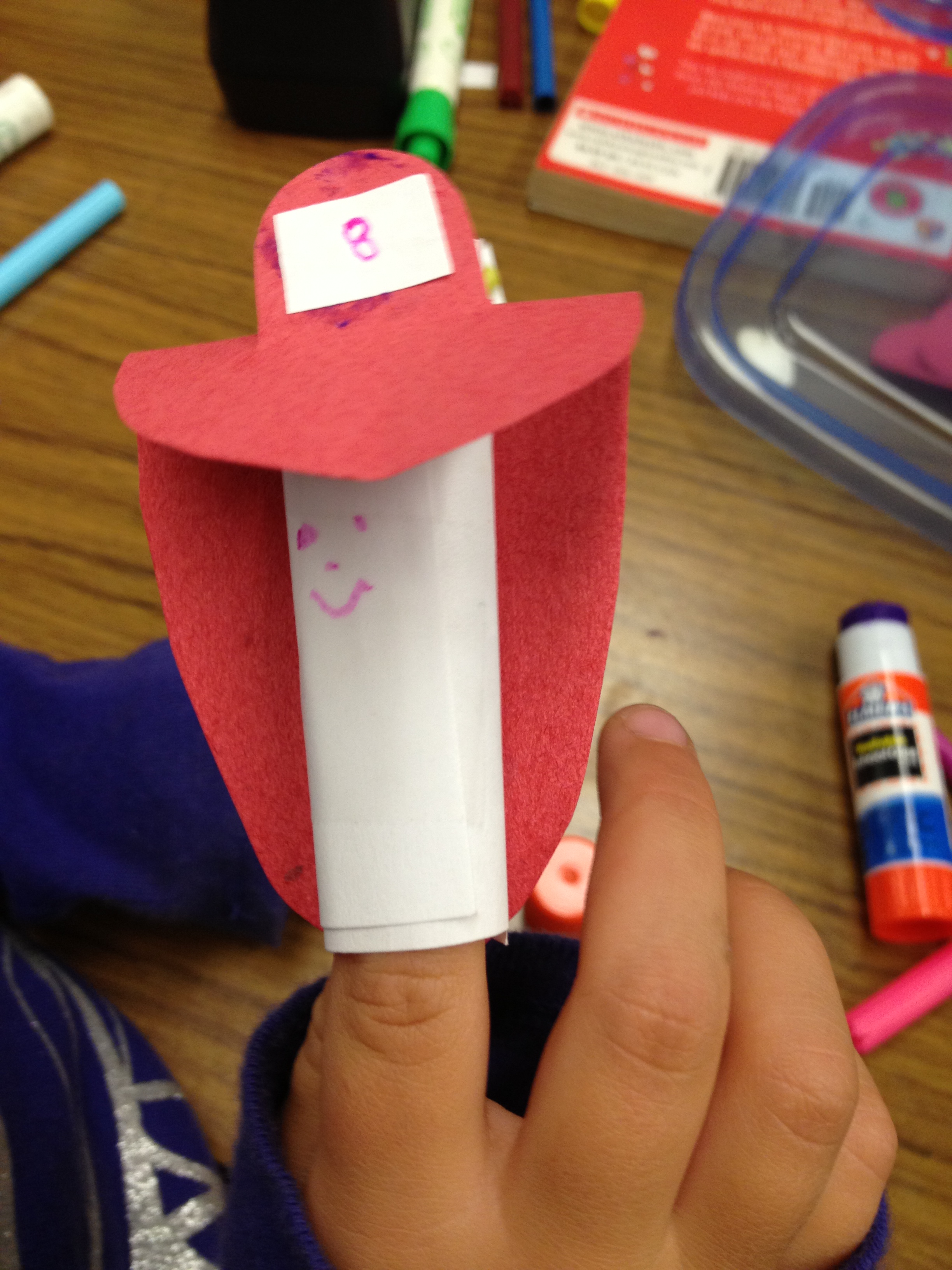
Firefighter Finger Puppet by Claire

This week is Fire Prevention Week, and there have been firetrucks parked at all the local schools for fire safety presentations.  We are also lucky here in Pacifica that every second Tuesday (if they don’t get called away), a group of firefighters comes to the 10:30am preschool storytime to read books.  (I admit that I’m as excited to see them as the kids are, although I’ve never gotten to climb in the truck.  Someday…)

So, in honor of our firefighters, I did a Firefighting Storytime with some of my favorite books.  They were:

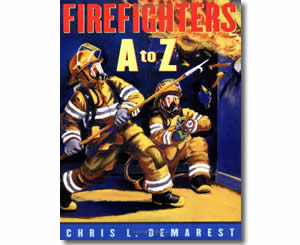
Image

Firefighters A to Z by Chris Demarest

I should have included this one in my ABC storytime a few weeks ago.  It’s an amazingly well-crafted alphabet book that follows the firefighters through all the steps of putting out a fire.  The illustrations are large and vivid.

Image

Firefighter Ted by Andrea Beaty, illustrated by Pascal Lamaitre

Several kids asked to check out each of the books that I read tonight, but this one was a brawler!  That’s when several want the book so desperately that all manners are forgotten and a little tug-of-war ensues.  It doesn’t happen often, but when it does, you know it’s a good book!  This book especially appealed to my Kindergarten kids.  When Ted the bear smells smoke one morning, he knows what he has to do: become a fireman!  Armed with a makeshift fire extinguisher (a can of whipped cream with a straw attached), he sets out to save his mother, his neighbors, and his principal from all sorts of dangers.  One boy in our group laughed himself silly at the picture of the principal in his underwear.  The parents enjoyed this one too.

Image

The Firefighters’ Thanksgiving by Maribeth Boelts; illustrated by Terry Widener

I sometimes get choked up at this one.  One of the firefighters who come to the library read it at the preschool storytime the day before and seemed to appreciate it too (I’m always curious what they think about how they’re portrayed in picture books). Firefighters at a busy fire station try repeatedly to cook their Thanksgiving dinner, but are constantly having to start over when they get called away to put out a fire.  Then, Lou, one of their team members is injured, and has to go to the hospital.  While they are out on their last call, people from the community deliver a Thanksgiving dinner to the station to say thank you.  The rhyming text is simple enough for almost any age.  A few weeks ago, I gave this one to a toddler who loves firetrucks, and his mom told me they read it together every day.

Image

Firefighters in the Dark by Dashka Slater; illustrated by Nicoletta Ciccoli

My daughter is in love with this book.  A little girl who lives near a fire station imagines all the emergencies the firefighters are called away too: a castle where a dragon has accidentally set the table on fire; a woman who ate a chili pepper so hot that flames shoot out of her mouth; a little boy who bounces into the sky and all the way to Jupiter.  The illustrations are vibrant and whimsical, and I love the language: “The clouds are full of water and we put them in our hoses, and spray away the fire in the stars.”  There was a minor skirmish over who was going to get to take this book home too.

SONGS: Hurry, Hurry! Drive the Fire Truck!

CRAFT: Firefighter Finger Puppets

Image

Firefighter Finger Puppet by Ella

I found this one on the Yakaberry web site.  Basically, the kids each wrapped a small rectangle of white paper around one of their fingers and taped it into a small cylinder to make the firefighter’s head.  Then they drew a face on the paper with markers.

The hat was a red construction paper “egg,” with a little flap cut in the middle for the head to poke through (I cut these out ahead of time).  The kids glued the paper cylinder head onto the long part of the hat, then glued a little white square with a number on it onto the part of the hat that was sticking up.

OTHER BOOKS:

Fireman Small by Wong Herbert Yee

Poor Fireman Small can’t get any sleep.  Every time he climbs in bed, he is called out to rescue a cat up a tree, a small bunny in a well, or a baker with a fire.  Just as he is finally drifting off for the night, there is a knock at the door: all of the people he helped coming to say thank you.  This is a rhyming story with cute illustrations, and the first of several books about Fireman Small.

Poinsettia and the Firefighters by Felicia Bond

Poinsettia the pig is afraid of the dark.  She worries about every sound she hears as she lies in bed in her new room.  But then she sees a light: utility line outside their neighbor’s house is burning!  Poinsettia raises the alarm, and the firefighters rush over to put out the fire.  She learns that there is always someone awake at the fire station, keeping watch, and it eases her fears of being alone in the dark.  This is a sweet story both for fans of firefighters and kids who have trouble sleeping.

What are your favorite books about firefighters?

Going to the Dogs

photo (38)

Envelope Dog Puppet by Olivia

I decided to do a dog-themed storytime this week.  For once I was faced with the problem of having too many great books to choose from!   The kids loved the four I read, and they all got checked out at the end, but there were so many others I didn’t get to:
how-much-is-that-doggie-in-the-window-trapani

How Much is That Doggie in the Window? by Iza Trapani (based on the song by Bob Merrill)

This is my daughter’s current favorite book, and one of my all time favorite read-alouds.  Parents often ask me if it’s the full version of the original song (which actually hit #1 on the Billboard charts in 1953).  It’s not.  The original song is about a woman leaving on a trip to California, who wants to buy a dog to protect her sweetheart from burglars.  The version in this book is by Iza Trapani (author/illustrator of the classic, The Itsy Bitsy Spider).  It’s about a little boy who hopes to raise $60 to buy the adorable puppy in the pet shop window, but ends up spending all his money to help his family.   The illustrations are adorable, and I still get choked up at the happy ending.   This one is always a hit.  Tonight it got snatched up immediately!

breath

Dog Breath by Dav Pilkey

Poor Hally Tosis, a cute, friendly dog with horrible breath.  When Mr. and Mrs. Tosis decide to find her a new home, their kids try everything they can think of to solve her bad breath problem.  Nothing works, until two burglars creep into the house one night.  Can Hally save the day, along with her place in the family?  Filled with groan-worthy puns, and lots of visual jokes, this one appeals to both kids and adults.  It was quickly claimed by one of the kids as well.

doghouse

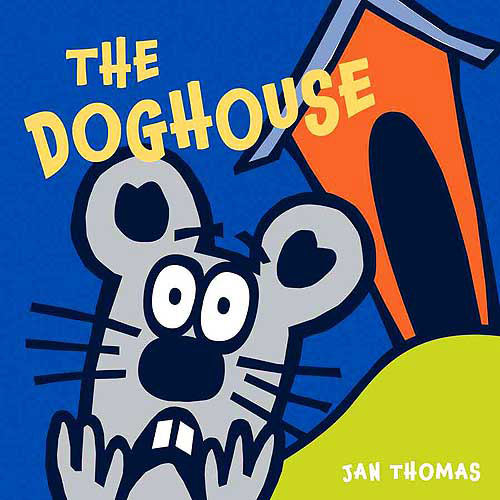
The Doghouse by Jan Thomas

Jan Thomas is a master of storytime read-alouds, always finding some way to interact with the audience.  In this one, several animal friends lose a ball IN THE DOGHOUSE!!  One by one, they venture inside to get it…but never come out!  The story is short, suspenseful, and funny, and the kids loved joining in on the phrase “IN THE DOGHOUSE!”

dogblue

Dog Blue by Polly Dunbar

Bertie has always wanted a dog.  A blue dog.  He wants one so badly that he often pretends to be a dog himself.  But then a real dog shows up: a perfect, beautiful, spotted dog who needs an owner.  But the new dog isn’t blue at all.  This is a sweet, funny story with Polly Dunbar’s characteristic quirky surprises.  (I also love her book Penguin).

SONGS: I did B-I-N-G-O with a dog hand puppet, who licked all the kids faces.  We barked the missing letters instead of clapping them.

CRAFT: Envelope Dog Puppets

photo (40)

Envelope Dog Puppet by Joaquin

I found this craft on the Twiggle Magazine web site, and was very happy because the instructions included a template you could print out for the ears, eyes, and nose.  Basically you fold a business-sized envelope in half down the middle, then cut it along the fold (I found it worked better if I sealed the envelope first).  Then you tape the inner halves of the cut envelope together (on the side where the seal is), so that you can slide your hand into the outer part of the envelope to make a puppet.  I cut out the ears, eyes, and noses ahead of time, and the kids glued them on, along with some wiggle eyes.  I gave them crayons to add spots and other decorations.  It’s always fun to see how differently everyone’s craft comes out.

OTHER BOOKS

Katie Loves the Kittens by John Himmelman

I wish I could have gotten hold of this one in time.  When Sarah Ann brings home three adorable kittens, her dog Katie loves them so much she can’t help but howl, scaring the kittens and upsetting her owner.  The illustrations in this book are priceless, and the howling makes it so much fun to read.

Harry, the Dirty Dog by Gene Zion and Margaret Bloy Graham

This one of my childhood favorites, about a dog who gets so dirty, his family no longer recognizes him.  I read it often at storytime.

Angus and the Ducks by Marjorie Flack

I remember my grandmother reading this to me, and I still have the copy she gave to me on my birthday when I was 3.  Angus is a curious Scottish Terrier who wonders about a strange noise he hears on the other side of the hedge, until one day he gets the rare opportunity to explore.   The illustrations are wonderful, and I’ve always loved the way Flack uses sound effects, capital letters, and pacing.  Great storytelling.

Bertie Was a Watch Dog by Rick Walton and Arthur Robins

One of many, many dog books about pets thwarting burglars, but this one is a lot of fun.  Bertie is a Watch Dog, but not because he is big, or mean, or scary.  It is because he is the size of a watch.  But of course, he still finds a way to save the day when a nasty burglar comes to call.  I can never read this book as well as my boss, Thom, who portrays the burglar with an hilarious heavy Cockney accent.   But I still love it as a read-aloud because the kids get to join in on all the barking.

Chewy Louie by Howie Schneider

Love this one, and not just because my own black lab ate not only the siding of our house, but also my 11th grade teacher’s copy of The Epic of Gilgamesh with all of her teaching notes inside.  As a puppy, Louie eats everything: sticks, toy trains, his dog dish.  His family hires several trainers, but nothing seems to work, and they fear they’ll have to give Louie away.  Of course, it all works out in the end.  The wry sense of humor is what makes this book, but the illustrations are hilarious too.

The Hallowiener by Dav Pilkey

Recommended by Thom Ball, branch manager of the Pacifica Libraries.  I wish I had remembered this one, since it is also perfect for Halloween.   Oscar the dachshund has enough problems with being called “Wiener Dog!” by the other dogs, and then his mother expects him to spend Halloween night dressed as…a hot dog.  Filled with Pilkey’s characteristic puns and visual humor, this is one of my favorite October read-alouds.

Walter the Farting Dog: Trouble at the Yard Sale by William Kotzwinkle

Recommended by local Mom Ria Tajbl.  When Walter ruins the family yard sale by driving away all the customers, his owner sells him for $10 to a clown with a secret plan to use Walter’s gas to inflate noxious balloons he plans to use to help him stun guards so he can rob banks.   Gotta love Walter!  Ria also recommended the classic easy reader Go, Dog, Go! by P.D. Eastman.

Stanley’s Party by Linda Bailey

Recommended by school media specialist Linda Anderson.  When Stanley the dog discovers that he can get away with lying on the forbidden couch while his people are out, he wonders what other liberties he can take.  Soon he is throwing a wild party with all the dogs in town!

Old Mother Hubbard by Jane Cabrera

Recommended by Christina Olson, who says it was one her kids read to pieces.  Funny extended version of the classic nursery rhyme with bright, whimsical illustrations.

Carl’s Afternoon in the Park by Alexandra Day

Recommended by Tanya Scoville.  The Carl books are sweet, beautifully-illustrated, mostly wordless adventures about a baby and a kind Rottweiler.  In this one they spend the day in the park together, riding on a carousel and going to a zoo.

No Roses for Harry by Gene Zion and Margaret Bloy Graham

Recommended by Barbara Beyer.  In this sequel to Harry, the Dirty Dog, Harry tries desperately to get rid of his new present from Grandma: a sweater with big roses all over it.

What are your favorite picture books about dogs?

Down on the Farm

photo (36)

Construction paper farm by Joaquin

This week’s storytime was lively and a lot of fun, even though I was fighting laryngitis, which always makes things a bit interesting. A coworker commented that I sounded like Peter Brady singing “Time to Change.” But the kids hung in there with me anyway.

The theme for this week was farm stories and farm animals. Here are the books we read:

Farmer-Duck

Farmer Duck by Martin Waddell and Helen Oxenbury

This was an interesting read-aloud. An unfortunate duck is forced to slave away every day while the farmer lies in bed and eats chocolates, until the other animals stage a rebellion and scare the lazy farmer away. It’s basically Animal Farm without all that unpleasant allegorical aftermath, and I was amused to see that a couple of horrified reviewers on Amazon declared it was “dangerous” Communist propaganda. That interpretation would never have occurred to me (and all the other Amazon reviewers loved the book). My storytime kids enjoyed the repeated line, “How Goes the Work?” and getting to yell out, “QUACK!” each time.

farmflu

Farm Flu by Teresa Bateman and Nadine Bernard Westcott

This one worked really well. It’s a rhyming book about a boy who is left in charge of his family’s farm when the cow comes down with the flu. He tucks her into bed and coddles her just like his Mom would do, but then all the other animals on the farm mysteriously come down with the flu as well. The kids love chiming in on the sneezes in different animals voices, and the pictures are colorful and hilarious.

Egan_SeriousFarm

Serious Farm by Tim Egan

I wasn’t sure how this one would go over because it was a bit lengthier than the other books, but the kids liked it a lot. Farmer Fred is always very serious, much to the dismay of his animals. They try everything they can think of to make him laugh: Edna the cow stands on the fence and tries to crow like a rooster; the pigs bark like dogs; and all the animals try on Farmer Fred’s clothes and dance around the farm yard. But nothing works, and the animals finally decide to seek out a more humorous place to live. In the course of their escape, they finally manage to make Farmer Fred lighten up, a little, but he still doesn’t think there’s anything funny about corn.

cowlick-christin-ditchfield-hardcover-cover-art

Cowlick by Christin Ditchfield; illustrated by Rosalind Beardshaw

This is a funny book that works well for toddlers as well as older kids. It describes in rhymed verse how a sneaky cow invades a little boy’s bedroom and leaves him with an unexpected gift. Always a hit.

SONGS:

Old MacDonald: One of the kids requested that we choose animals in alphabetical order, like we did the previous week. Our farm included an alligator, a baby(!), a cat, a dog, and an Ella (one of the storytime participants).

If You’re Happy and You Know It: We did this as a follow-up to Serious Farm. We added other emotions, and I asked the kids what they do when they felt that way. We ended up with, “When you’re sad and you know it, cry ‘Boohoo!'” “When you’re angry and you know it, go ‘ERRRRRRRR!'” and “When you’re shy and you know it, hide your eyes…peekaboo!'”

Baby Bumblebee: As usual, I asked the kids to suggest other animals they might bring home, which is always a fun challenge. We came up with: “I’m bringing home a baby skunk. Won’t my Mommy fall into a funk?” and “I’m bringing home a baby killer whale. Won’t my Mommy turn so very pale?”

I Bought Me a Rooster: My CD player broke last week, so I had to play my uke and sing for our instrument play time. This is a fun cumulative song, where the kids suggest animals and the sounds they make. The trick is remembering all the animals in order, as the song gets longer and longer.

CRAFT: Construction Paper Farm

photo (35)

Construction paper farm by Jonas

I adapted this craft from the one on Lines, Dots, and Doodles. I cut out the barns and grass ahead of time, and gave the kids a choice of adding cotton ball sheep and feather chickens (see Joaquin’s example at the top of the page). It was cute to see all the different ways they each constructed their farms.

OTHER BOOKS:

I had a stack of books to choose from, and let the kids pick the ones I actually read. Here are some of the ones we didn’t get to:

Duck on a Bike by David Shannon

You can’t go wrong with David Shannon. When a curious duck decides to test out a little boy’s bicycle, the other farm animals are intrigued. The illustration of all the animals on bikes always gets a big laugh.

Mrs. Wishy Washy’s Farm by Joy Cowley; illustrated by Elizabeth Fuller

I’ve always been impressed by Joy Cowley. She’s a New Zealand author who writes literally hundreds of books for the very beginning reader, including many of the Story Box and Sunshine Books (we have these in the library, but they are uncatalogued, so you just have to look for the collection of tiny paperbacks near the Easy Reader section). The beauty of these books is that they have basically the same sentence structure on each page, so kids can easily learn the pattern and read the book, building their confidence and sight word vocabulary at the same time. But somehow Cowley still manages to make these incredibly simple books entertaining, by throwing in a little twist at the end. Mrs. Wishy Washy’s Farm is a more typical picture book, but it’s a cute rhyming story about some farm animals who get fed up with their owner’s constant bathing, and run away to the city. The illustrations are adorable, especially the cow in the washtub. It would also work well for a bathtime theme.

Click Clack Moo! Cows that Type by Doreen Cronin; illustrated by Betsy Lewin

I couldn’t do a list of farm books without including the Click Clack Moo series about Farmer Brown and his scheming duck. I think Dooby Dooby Moo is my favorite. The humor in this one appeals to adults (who will understand the labor dispute references), as well as kids.

Two friends of mine, Neely Dean and Tanya Scoville, both pointed out a classic I forgot to mention: Big Red Barn by Margaret Wise Brown (author of Goodnight Moon).   A joyful, soothing poem about the sights and sounds of a cheerful farm.

Kim Day, a children’s librarian at the Burlingame Library, also recommended The Cow That Laid an Egg by Andy Cutbill, illustrated by Russell Ayto, an adorable story about Marjorie, a cow who wishes she had some special talent, and then one day appears to have laid an egg.  You can watch the book being read aloud on Youtube here.

What are your favorite farm books?