I’m finally catching up on posting some of the storytimes I did over the summer. July is Disability Pride Month, so a few weeks ago I did a Family Storytime featuring a variety of disabilities. I opened by talking very briefly about how everyone has different abilities, and things that they find easier or harder than others, and how some people rely on different types of tools to help them.
For this post, I’m experimenting with writing out everything we did in order, instead of breaking it up into books, songs, and Stay & Play activity. Please let me know if you prefer this format.
OPENING SONG: The Wheels on the Bus
For Family Storytime (which is on Wednesday nights, and tends to get a smaller crowd) I always put out a variety of animal puppets around the storytime area. When we sing the wheels on the bus, the kids hold up different animals they would like us to sing about: The cat on the bus goes “Meow, Meow, Meow!” etc. We always end by singing “The wheels on the bus go round and round” as fast as we can.
[C] The wheels on the bus go round and round.
[G7] Round and round, [C] Round and round.
The wheels on the bus go round and round,
[G7] All over [C] town.

OPENING BOOK: Best Day Ever by Marilyn Singer; illustrated by Leah Nixon
A dog describes the “best day ever,” which is spent with a little boy who happens to be in a wheelchair. This is an adorable, simple story that captures the way everyday moments can change your view of how good or bad the day is, especially for an energetic dog who sometimes gets into trouble. The wheelchair is never mentioned in the text, and the illustrations clearly demonstrate that kids who use wheelchairs can do most of the same day-to-day things as kids who don’t. A great example of a book that shows different life experiences without presenting them as a “problem.”
SONG: B-I-N-G-O
This is an old standby, but here’s a video from Super Simple Songs, just in case you’re not familiar with it. Traditionally, you leave out a letter each time you sing it, and clap instead. Sometimes, I have the kids bark instead of clapping. I also like to use the American Sign Language signs when I explain which letters we will be leaving out, for example, “This time we’re going to clap instead of singing the letters B and I.”
[C] There was a farmer [F] had a [C] dog,
And Bingo [G] was his [C] name-o.
[C] B-I- [F] N-G-O
[G] B-I- [C] N-G-O
[Am] B-I- [F] N-G-O
And [G] Bingo was his [C] name-o.
There was a farmer had a dog,
And Bingo was his name-o.
(Clap)-I-N-G-O!… etc.

My City Speaks by Darren Lebeuf & Ashley Barron
A visually impaired girl describes how she experiences a day in the city, including the sounds, smells, tastes, and feel of the world around her. The kids enjoyed pointing out details in the illustrations.
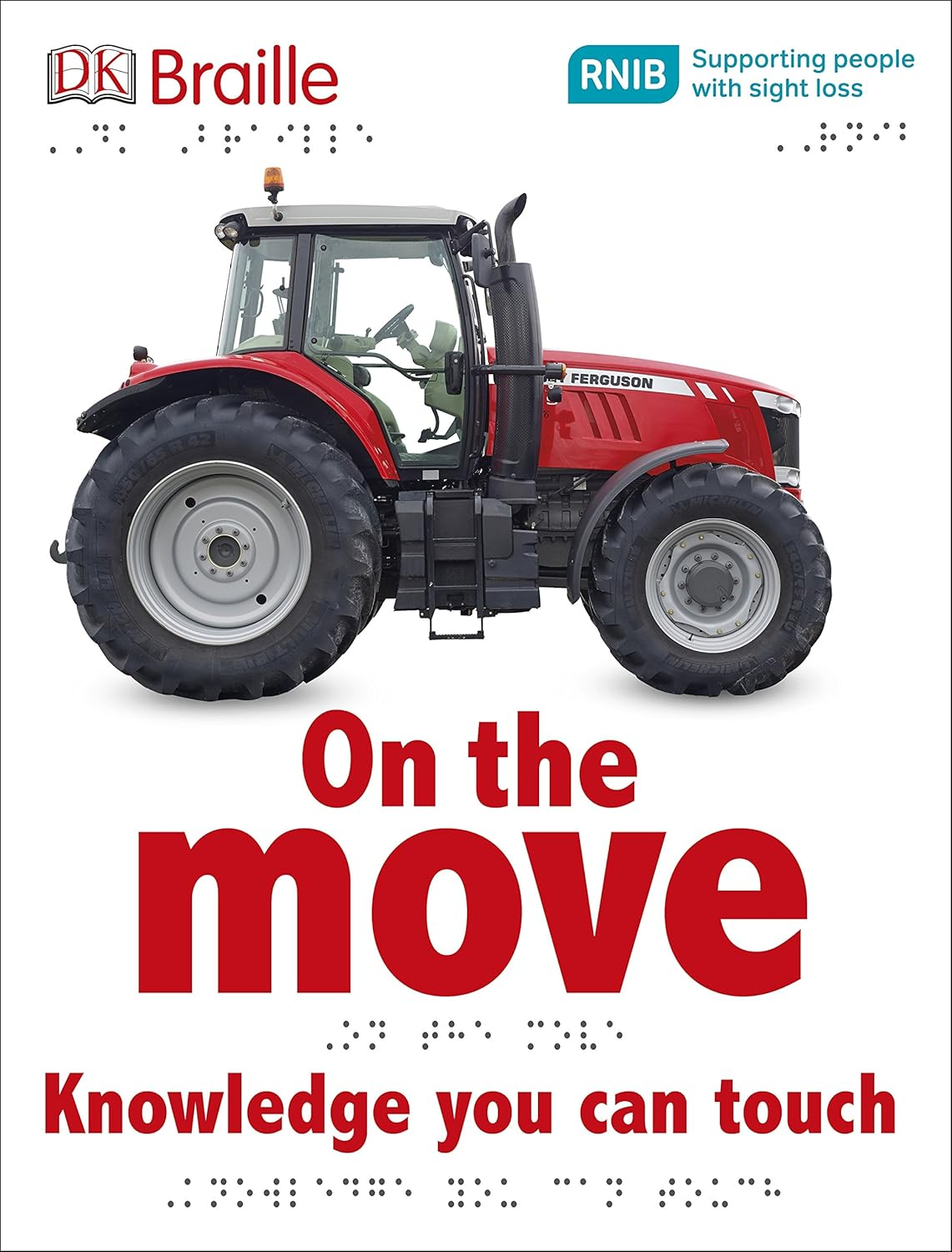
DEMO BOOK: DK Braille Books: On the Move by DK Publishing
I didn’t actually read this one, but I passed it around so the kids could touch the Braille letters, and explained that it was written in a special language that you read with your fingertips instead of your eyes. The kids were fascinated!
ACTIVITY: CAN YOU GUESS THE ANIMAL?
To go along with the idea of using senses other than sight, I put plastic animals in individual paper bags. The kids took turns reaching into the bag and trying to guess which animal it was, just based on their sense of touch. They got all of them wrong, except for the sheep, which has a distinctive knobbly coat.

THIRD BOOK: Can Bears Ski? by Raymond Antrobus & Polly Dunbar
A bear is confused when people keep asking him “Can bears ski?” and also when he doesn’t understand jokes that his friends are laughing at. But then one day, he is fitted with hearing aids, and discovers people have really been asking, “Can you hear me?”
SCARF PLAY: Snowball Fight
I usually do another song with the play scarves before we sing Popcorn Kernels (which we do every week), but this week, we had a pretend snowball fight with the scarves instead, bundling them up into balls and throwing them at each other. Always a hit!
SCARF SONG: Popcorn Kernels
To the Tune of Frere Jacques (Are You Sleeping?)
Popcorn Kernels, (hold scarf bunched up in one hand)
Popcorn Kernels,
In the Pot,
In the Pot.
Shake ’em, shake ’em, shake ’em, (shake hand)
Shake ’em, shake ’em, shake ’em.
Till they POP! (throw scarf in the air)
Till they POP!

FINAL BOOK: Oona and the Shark by Kelly DiPucchio; illustrated by Raissa Figueroa
I was planning to end with this book, and talk briefly about how some people have a hard time with loud sounds (we have a bin of headphones for kids with sound sensitivity). Unfortunately, we ran out of time before we got to it. It’s a cute story though, where Oona, the Mermaid, tries to befriend a shark, but discovers that her loud activities and the party she throws are scaring him away, and comes up with new activities instead.
INSTRUMENT PLAY: Baby Shark
Even though I didn’t get to read my final book, we still had time to hand out the egg shakers and sing Baby Shark.
[C] Baby shark, doo doo doo doo doo doo
[F] Baby shark, doo doo doo doo doo doo
[Am] Baby shark, doo doo doo doo doo doo
[G] Baby shark!
Mommy shark…
Daddy shark…
Grandma Shark…
Grandpa Shark…
Let’s go hunt!…
Run away!…
CLOSING SONG: The More We Get Together
I always end Family Storytime with The More We Get Together, which we do with the ASL signs. Here’s a Miss Rachel video to demonstrate:
The more we get together,
Together, together,
The more we get together,
The happier we’ll be.
‘Cause your friends are my friends,
And my friends are your friends.
The more we get together,
The happier we’ll be.
Stay & Play: Watercolor Painting
I just realized I didn’t get any photos of the watercolor painting, but the kids really enjoyed it. It always takes the little ones a few minutes to get the hang of dipping the brush in water before dipping it into the paint, but once they do, they don’t want to stop. It didn’t exactly tie-in to the theme, but it’s such a peaceful, sensory-filled experience, and everyone loves it.
RELATED BOOKS:
I did a similar theme at my Outdoor Musical Storytime this past week, and we asked a local agency called AbilityPath to table. AbilityPath is a nonprofit that provides free services to people who are neurodiverse or have developmental disabilities.
For this storytime, I focused more on books about neurodiversity, and how to respect other people’s individual differences and sensitivities. Here are the books I read:
Autism: Through the Eyes of a Child: Brayden’s Story by Jennifer Zuniga & Pia Reyes
I have a regular volunteer (a college student) who accompanies me on guitar for Outdoor Musical Storytime. She is on the autism spectrum, and had asked me if she could read this book aloud at storytime. Unfortunately, she able to read that day due to illness, but I’m hoping she will be able to share it this week, as part of our Friendship Week theme. The book is told from the point of view of a child who has just learned about autism, and is reminded of a classmate named Brayden, who would probably love to make friends.
This Beach is Loud by Samantha Cotterill (Part of the Little Senses series)
A boy who is excited to go to the beach with his Dad discovers that it is much too loud and crowded. His Dad helps him cope with the sensory overload by telling him to count to three and tap his fingers. The kids loved his monologue on the drive to and from the beach, which ends with “I have to pee!” both times. I like that this book, and the others in the series, provide real life scenarios for families with children with sensory processing disorders or similar conditions, but keep the stories general enough to apply to any child. I wanted to give a shoutout to the Storytime Solidarity group on Facebook, where I got this recommendation (from Sheri Shumaker), along with other great book suggestions from other members.
Don’t Hug Doug (He Doesn’t Like It) by Carrie Finison; illustrated by Daniel Wiseman
This book isn’t specifically about disabilities, but since many kids with sensory processing disorder or autism may be upset by unsolicited hugs, it seemed like a good one to include. It’s also just a great, funny, rhyming story for everyone about the importance of consent. I also read it at a lot of my preschool outreach sites, where it’s always a hit. The kids love giving Doug a high five on the last page.
Do you have any favorite books or songs about disabilities or neurodiversity? Please share them in the comments below.




 The Loudest Librarian!